Franz Josef Müller: A Legacy of Resistance and Remembrance
In the darkest hours of the Third Reich, courage often manifested in quiet, clandestine acts of defiance. Franz Josef Müller was one such individual, a member of the White Rose (Weiße Rose), a non-violent resistance group that sought to awaken the German people to the atrocities of the Nazi regime. Through the distribution of illegal pamphlets and the bravery to stand against totalitarianism, Müller helped forge a legacy of moral courage that continues to inspire today.
Early Resistance in Ulm
Born in Ulm on September 8, 1924, Müller became involved in the resistance during his youth. He played a critical logistical role, raising funds to purchase stamps and envelopes necessary for the dissemination of the White Rose's messages. Working in secrecy, he often met with his classmate, Hans Hirzel—the son of the local parish priest—within the hidden organ chamber of the Martin-Luther-Church in Ulm.
Alongside Hans and his older sister, Susanne Hirzel, Müller was instrumental in the production of the group's literature, specifically addressing and stamping 1,000 copies of the fifth White Rose pamphlet. His commitment to the cause continued until February 1943, when he was drafted into military service in France.
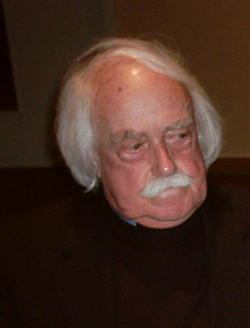
Arrest and the People's Court
The secrecy of the resistance was shattered in March 1943 when Müller was arrested by the Gestapo, the secret police of Nazi Germany. His identity had been revealed by another member of the White Rose who broke under torture. On April 19, 1943, Müller faced the People's Court in the Justizpalast (Palace of Justice) in Munich, presided over by the notorious judge Roland Freisler.
While many of his comrades were sentenced to death, Müller, Hans Hirzel, and Susanne Hirzel were sentenced to five years in prison. The exact reason for this leniency remains unknown, though Müller believed it was due to Freisler's adherence to Nazi racial ideals. Because the three of them were blond and blue-eyed, Freisler reportedly exclaimed, "You have a classic good look, how could you be against the Führer?" Müller remained imprisoned until the end of the war.
Post-War Life and the Weiße Rose Stiftung
Following the war, Müller initially planned to emigrate to the United States in 1947. However, he was persuaded to stay in Germany by Robert Scholl, the Lord Mayor of Ulm and father of the executed resistance leaders Hans and Sophie Scholl. This decision led Müller to pursue a legal education, studying law in Tübingen, Basel, and Freiburg im Breisgau.
Dedicated to ensuring the sacrifices of his friends were not forgotten, Müller began speaking to school classes in 1970 to share his experiences. In 1986, he co-founded the Weiße Rose Stiftung (White Rose Foundation) alongside other survivors and relatives of those executed. The foundation was established to preserve the legacy of the resistance group.
In recognition of his bravery and lifelong commitment to memory, Müller was awarded the München Leuchtet (Munich Shines) award and the Yad Vashem medal, an honor bestowed by Israel to acknowledge his resistance against the Nazi regime. He is also featured at the Ulmer DenkStätte Weiße Rose remembrance and exhibition center. Franz Josef Müller passed away in Munich on March 31, 2015, at the age of 90.
Key Facts
- Role: Member of the White Rose resistance group, focusing on funding and pamphlet distribution.
- Key Collaborators: Hans and Susanne Hirzel.
- Legal Battle: Sentenced to five years by the People's Court under Roland Freisler in 1943.
- Foundation: Co-founded the Weiße Rose Stiftung in 1986.
- Honors: Recipient of the Yad Vashem medal and the München Leuchtet award.
- Lifespan: September 8, 1924 – March 31, 2015.
| Period/Category | Details |
|---|---|
| Resistance Activity | Distributed pamphlets and raised funds in Ulm. |
| Imprisonment | Arrested March 1943; served five years in prison. |
| Education | Studied law in Tübingen, Basel, and Freiburg im Breisgau. |
| Legacy Work | Founded the White Rose Foundation (1986) and educated students. |
| Major Awards | Yad Vashem medal, München Leuchtet. |
Frequently Asked Questions
What was the role of Franz Josef Müller in the White Rose?
Müller was responsible for raising money for supplies and helped address and stamp 1,000 copies of the group's fifth pamphlet, working closely with Hans and Susanne Hirzel in Ulm.
Why was Müller not sentenced to death like other White Rose members?
The official reason is unknown, but Müller attributed his survival to the racism of Judge Roland Freisler, who praised Müller's "classic good look" (blond hair and blue eyes) during the trial.
What is the Weiße Rose Stiftung?
Founded in 1986 by Müller and other relatives and members of the resistance, the White Rose Foundation is dedicated to preserving the memory and legacy of the group's fight against the Nazi regime.
Which international honor did Franz Josef Müller receive?
He was awarded the Yad Vashem medal by Israel in recognition of his membership in the White Rose and his active resistance to the Nazi regime.
Where can people learn more about Müller's contributions today?
His life and work are featured at the Ulmer DenkStätte Weiße Rose, a remembrance and exhibition center located in Ulm.