Understanding Formaldehyde: Properties, Uses, and Safety
Formaldehyde, known scientifically as methanal, is a simple yet incredibly powerful chemical compound. While it may sound like a complex term from a laboratory manual, it is a substance that plays a massive role in both industrial manufacturing and our daily environments. From the resins used in particle board to its role in biological preservation, formaldehyde is a versatile molecule with significant chemical and biological implications.
In its pure form, formaldehyde is a colorless gas. However, it is most commonly encountered as formalin, which is an aqueous solution (a mixture of formaldehyde dissolved in water). Understanding its chemical structure and how it behaves is essential for anyone working in science, industry, or even home maintenance.

Key Facts
- Chemical Formula: CH₂O
- Common Forms: Colorless gas or aqueous solution (formalin).
- Primary Industrial Use: Production of resins, such as urea-formaldehyde, used in particle board.
- Biological Use: A widely used tissue fixative and embalming agent.
- Safety Profile: Classified as a hazardous substance; requires careful handling due to toxicity and potential carcinogenicity.
Chemical Structure and Properties
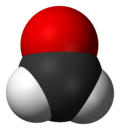
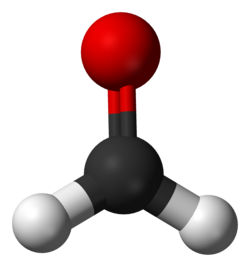
At the molecular level, formaldehyde has a trigonal planar shape, meaning its atoms are arranged in a flat, triangle-like geometry. It belongs to the organic compound class known as aldehydes. Because of its specific arrangement, it is highly reactive, allowing it to bond easily with many other substances through processes like hydroxymethylation.
Physical Characteristics
Formaldehyde possesses unique physical properties that dictate how it is stored and used. It has a very low melting point of −92 °C (−134 °F) and a boiling point of −19 °C (−2 °F). In its liquid state at −20 °C, it has a density of 0.8153 g/cm³.
| Property | Value/Description |
|---|---|
| Molar Mass | 30.026 g·mol |
| Appearance | Colorless gas |
| Boiling Point | −19 °C (−2 °F) |
| Melting Point | −92 °C (−134 °F) |
| Solubility in Water | 400 g/L |
| Flash Point | 64 °C (147 °F) |
Industrial and Biological Applications
The reactivity of formaldehyde makes it an indispensable tool in several sectors. One of its most significant industrial roles is in the creation of resins. For example, urea-formaldehyde resin is a critical component in the production of particle board, a common material in furniture and construction.

Preservation and Disinfection
In biological sciences, formaldehyde is a premier tissue fixative. It is used to preserve specimens by preventing decay, a process often seen in medical and scientific research. This makes it a standard agent in embalming and the preservation of biological samples.

Chemical Synthesis
Beyond resins, formaldehyde is used to synthesize various other chemicals. Through condensation reactions, it can produce pentaerythritol, a substance necessary for synthesizing PETN, a high explosive. It also reacts with amines to form hexahydro-1,3,5-triazines and with hydrogen sulfide to form trithiane.
Safety, Hazards, and Regulation
Despite its utility, formaldehyde is a hazardous substance. It is categorized under the GHS (Globally Harmonized System) with a "Danger" signal word. It can cause skin irritation, allergic reactions, and respiratory irritation. More seriously, it is recognized for its potential to cause cancer (carcinogenicity) and genetic defects.

Exposure and Health Risks
Human exposure can occur through inhalation, skin contact, or ingestion. Chronic inhalation is a particular concern in industrial settings. Because of these risks, organizations like NIOSH (National Institute for Occupational Safety and Health) set strict Permissible Exposure Limits (PEL) to protect workers.

Indoor Air Quality
Formaldehyde is often a concern in indoor environments, as it can be emitted from composite wood products, adhesives, and certain household items. To mitigate this, some air purifiers utilize specific filtering technologies designed to lower indoor formaldehyde concentrations.


Frequently Asked Questions
What is the difference between formaldehyde and formalin?
Formaldehyde is the pure chemical gas (CH₂O), whereas formalin is the name given to an aqueous solution of formaldehyde in water.
Is formaldehyde used in food?
While it is used as a preservative in some industrial contexts (listed as E240), its use in food is strictly regulated in many countries due to safety concerns regarding contamination.
How can I reduce formaldehyde exposure in my home?
Exposure can often be managed by ensuring good ventilation, choosing low-emission composite wood products, and using air purifiers equipped with technology designed to filter formaldehyde.
What are the main health risks of formaldehyde?
Formaldehyde can cause acute irritation to the eyes, skin, and respiratory tract. Long-term exposure is associated with more severe risks, including allergic reactions and cancer.
Why is formaldehyde used in embalming?
It acts as a powerful tissue fixative, meaning it chemically stabilizes proteins in biological tissues, preventing the natural process of decomposition.