Fisk University: A Legacy of Liberal Arts and Black Excellence
Founded in 1866, Fisk University stands as a beacon of academic achievement and cultural resilience in Nashville, Tennessee. As a private historically black liberal arts college, Fisk has spent over 160 years championing the intellectual growth of African American students, distinguishing itself through a rigorous commitment to the liberal arts during eras when vocational training was the norm for many similar institutions.
From its humble beginnings as the Fisk Freed Colored School to its current status as a globally recognized center of learning, the university has navigated the complexities of American racial history to foster a community of scholars, artists, and leaders.
Key Facts
- Established: 1866 in Nashville, Tennessee.
- Type: Private historically black liberal arts college (HBCU).
- Motto: "Her sons and daughters are ever on the altar."
- Accreditation: First HBCU accredited by the Southern Association of Colleges and Schools (1930).
- Academic Honor: First predominantly black college to earn a Phi Beta Kappa charter (1952).
- Campus: 40-acre urban campus featuring the Fisk University Historic District.
A History of Academic Resilience
Founding and Early Challenges
Fisk University emerged during the Reconstruction era, a time of profound social transition. Its early years were marked by the systemic barriers of the Jim Crow South. For instance, the Tennessee Constitution of 1870 explicitly prohibited public schools from enrolling both Black and White students. This led to unusual arrangements; between 1881 and 1883, the University of Tennessee—a federal land-grant university required to enroll all qualified citizens—paid tuition for Black students to attend Fisk University to circumvent integration requirements.
The Rise of Liberal Arts and Social Science
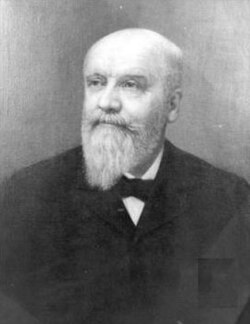
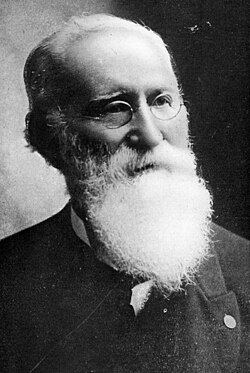
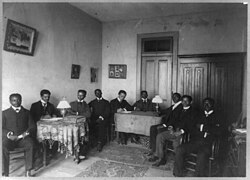
At the turn of the 20th century, Fisk carved out a unique identity by prioritizing a liberal arts education—a curriculum focused on critical thinking, humanities, and sciences—rather than purely vocational training. Under the leadership of James Griswold Merrill (President 1901–1908), the institution solidified this academic direction. In 1910, the university established a department of social science directed by George E. Haynes, creating the first social work training center for African-American graduate students.
Growth and Accreditation
The presidency of Fayette Avery McKenzie (1915–1925) was a period of significant institutional growth. McKenzie secured academic recognition from the Carnegie Foundation, Columbia University, and the University of Chicago, and raised a $1 million endowment. Although his strict disciplinary policies eventually led to student protests and his resignation, he laid the groundwork for future accreditation.
Following McKenzie, President Thomas Elsa Jones led the university to a historic milestone in 1930, when Fisk became the first HBCU accredited by the Southern Association of Colleges and Schools. By 1933, it was the first such institution approved by the Association of American Universities.
Leadership and Social Impact
The Era of Charles S. Johnson
In 1946, Charles S. Johnson became the first African-American president of Fisk. A renowned sociologist and editor of the Harlem Renaissance periodical Opportunity, Johnson expanded the Institute of Race Relations. This institute became a critical hub for researching racial disparity and developing strategies for the desegregation of the U.S. military, employment sectors, and public schools.
Academic Prestige and the Phi Beta Kappa Charter
Fisk's commitment to excellence culminated in 1952 when it became the first predominantly black college to earn a charter from Phi Beta Kappa, the oldest and most prestigious academic honor society in the United States. The Delta of Tennessee Chapter inducted its first members in April 1953.
Arts, Culture, and the Campus
The Fisk University Historic District
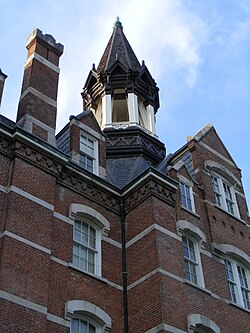
The campus is an architectural treasure, listed on the U.S. National Register of Historic Places. The district is characterized by Italianate and Queen Anne styles, featuring iconic structures such as the Fisk Memorial Chapel and Carnegie Hall.
World-Class Art Collections
Fisk is home to extraordinary artistic legacies. In 1930, Harlem Renaissance painter Aaron Douglas was commissioned to create murals in Cravath Hall, depicting the development of Black people in the New World. Additionally, the university holds the Stieglitz Collection, a prestigious assembly of modern art donated by photographer Alfred Stieglitz in 1949.
Institutional Overview
| Category | Details |
|---|---|
| President | Agenia Walker Clark |
| Student Population | 1,055 (Fall 2022) |
| Faculty | 70 full-time |
| Colors & Mascot | Gold and Blue; The Fisk Bulldog |
| Athletic Affiliations | NAIA – HBCUAC |
| Campus Size | 40 acres |
Frequently Asked Questions
What makes Fisk University's academic history unique?
Fisk distinguished itself early on by focusing on a liberal arts education rather than vocational training. It was also a pioneer in accreditation, becoming the first HBCU accredited by the Southern Association of Colleges and Schools in 1930.
Who was the first African-American president of Fisk University?
Charles S. Johnson became the sixth and first African-American president of the university in 1946. He was a prominent sociologist and a key figure in the Harlem Renaissance.
What are the most notable art collections at Fisk?
The university is famous for the Aaron Douglas murals in Cravath Hall and the Alfred Stieglitz Collection of modern art.
What is the significance of the Phi Beta Kappa charter at Fisk?
In 1952, Fisk became the first predominantly black college to receive a charter from Phi Beta Kappa, the oldest academic honor society in the U.S., signaling its high standing in American higher education.
How did the University of Tennessee interact with Fisk in the 19th century?
Due to state laws prohibiting integrated public schools, the University of Tennessee paid tuition for Black students to attend Fisk University between 1881 and 1883 to meet federal land-grant requirements for open enrollment.