First Pan-African Conference: The Birth of a Global Movement
In July 1900, a pivotal gathering in London laid the groundwork for one of the most significant political movements of the modern era. The First Pan-African Conference served as the catalyst for a global effort to unite people of African descent, challenging the systemic oppression of the time and advocating for fundamental human rights across the globe.
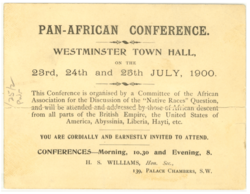
The event was the result of extensive organizing and travel by Williams and the African Association. To ensure the conference's success, supporters were mobilized across the United Kingdom, with 87 supporters in England, 37 in Scotland, and 28 in Dublin.
Organizing the Vision
Despite its historical importance, the conference faced significant financial hurdles, relying on the generosity of a few wealthy members to proceed. Williams had hoped for the attendance of Booker T. Washington or a representative; while Washington was unable to attend, he remained a key ally, helping to publicize the event.
During the preparatory stages in London, the program was carefully crafted to address the most pressing issues of the day. The agenda focused on existing conditions, the legacy of slavery, African history, and the demand for "Europe's atonement for wrongs" regarding the "organised plunder" carried out by European powers.
The Evolution of the Pan-African Association
The conference culminated on July 25, 1900, with a transformative decision: the African Association officially changed its name to the Pan-African Association (PAA). This was more than a name change; it represented a broadening of the organization's mission.
Core Objectives of the PAA
The newly renamed Association established a comprehensive set of goals aimed at global liberation and progress:
- Securing civil and political rights for Africans and their descendants worldwide.
- Promoting friendly relations between Caucasian and African races.
- Encouraging educational, industrial, and commercial enterprises among African people.
- Influencing government legislation to benefit black races.
- Improving the conditions of oppressed Black people globally.
To support these goals, the PAA established a permanent office at Room 416, 61–2 Chancery Lane in central London. They also created a dedicated bureau to collect data and statistics on the conditions of Africans globally and established branches in the United States, the West Indies, and Africa. The PAA planned general meetings every two years, alternating between the U.S. and Haiti.
Key Resolutions and Global Appeals
Beyond its structural changes, the conference passed several critical resolutions. The PAA aligned its vision with the work of the Anti-Slavery Society and expressed gratitude to the Native Races and Liquor Traffic United Committee for their efforts to prohibit the liquor trade among native Africans. Additionally, a memorial was sent to Queen Victoria requesting more "civilised" measures to address social conditions in South Africa.
The Address to the Nations of the World
A sub-committee led by W. E. B. Du Bois drafted a powerful document titled the "Address to the Nations of the World." This address urged European leaders to combat racism and disenfranchisement while protecting the right to self-government for African populations. It specifically criticized the treatment of Africans in the Congo Free State, the colonies of France and Germany, the US, Abyssinia, Haiti, Liberia, and various independent African tribes.
The document contained one of the most enduring observations of the era: "The problem of the 20th century is the problem of the colour-line"—questioning how racial differences in skin color and hair texture would continue to be used to deny over half the world the opportunities and privileges of modern civilization.
Reception and Media Response
The conference was generally well-received, with Bishop Walters receiving international letters of praise. However, the media response was mixed. While many newspapers reported on the "Address to the Nations of the World," they often omitted the call for self-government and the famous "colour-line" quote.
West Indian newspapers were particularly critical, arguing that the conference showed overconfidence regarding South African conditions because they were negotiated by colonists. Some reports also claimed that the experiences of Black people in North America were exaggerated and argued against the need for re-emigration to Africa.
Key Facts
- Date: 23–25 July 1900.
- Location: London, England.
- Key Figure: W. E. B. Du Bois, who led the sub-committee for the "Address to the Nations of the World."
- Organization: The African Association was renamed the Pan-African Association (PAA).
- Global Reach: Established branches in Africa, the West Indies, and the United States.
- Core Concept: Defined the "colour-line" as the central problem of the 20th century.
| Category | Details |
|---|---|
| Primary Goal | Securing civil and political rights for Africans and their descendants globally. |
| Key Document | Address to the Nations of the World. |
| Administrative Hub | 61–2 Chancery Lane, London. |
| Support Base | 87 (England), 37 (Scotland), 28 (Dublin). |
Frequently Asked Questions
What was the primary purpose of the First Pan-African Conference?
The conference aimed to organize a global political movement to secure civil and political rights for Africans and their descendants, promote education and commerce, and influence governments to improve the conditions of oppressed Black people worldwide.
Who was W. E. B. Du Bois and what was his role?
W. E. B. Du Bois headed the sub-committee that drafted the "Address to the Nations of the World," a document that called for an end to racism and the protection of self-government for African populations.
What is meant by the "problem of the colour-line"?
This term refers to the systemic use of racial differences—specifically skin color and hair texture—as a basis for denying people of African descent the rights, opportunities, and privileges of modern civilization.
How did the media react to the conference?
While generally positive, some media outlets—particularly in the West Indies—were critical of the conference's views on South Africa and North America. Many newspapers also censored the most radical calls for self-government and the "colour-line" quote.
What happened to the African Association after the conference?
On July 25, 1900, the African Association was renamed the Pan-African Association (PAA) and expanded its objectives to include a global network of branches and a data-collection bureau.