Atlantic Slave Trade: History, Mechanics, and Global Impact
Atlantic Slave Trade: History, Mechanics, and Global Impact The Atlantic slave trade, also known as the transatlantic slave trade, was a massive forced migration of enslaved African peopl...
Atlantic Slave Trade: History, Mechanics, and Global Impact
The Atlantic slave trade, also known as the transatlantic slave trade, was a massive forced migration of enslaved African people to the Americas. Spanning from the 15th to the 19th century, this system was operated by slave ships from Europe and the New World, creating a global network of human trafficking that fundamentally reshaped the demographics and economies of four continents.
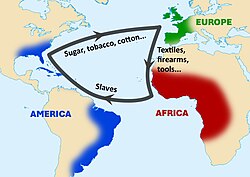
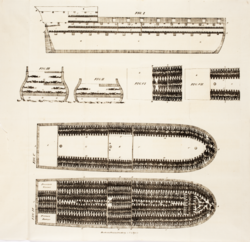
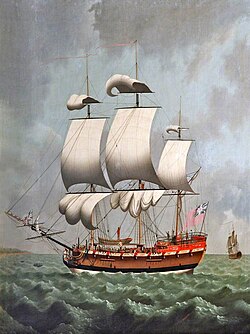
While early phases often utilized the triangular trade—a three-legged route connecting Europe, Africa, and the Americas—the trade evolved into a complex operation. The most harrowing leg of this journey was the Middle Passage, the voyage across the Atlantic where captives endured brutal conditions.
Diagram of triangular trade: Diagram of triangular trade
Key Facts
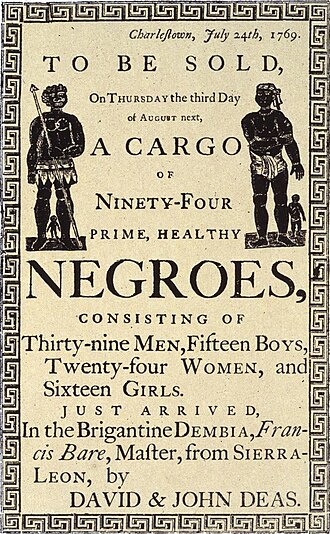
Reproduction of a handbill advertising a slave auction in Charleston, British Province of South Carolina, in 1769
Duration: The coastal trade began in the 15th century, with shipments to the Americas lasting through the 19th century.
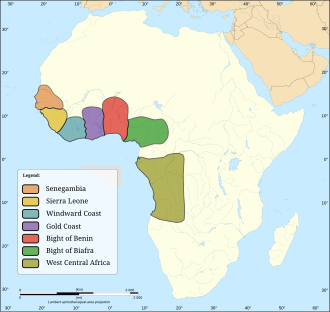
Primary Sources: Most enslaved people were taken from Central and West Africa.
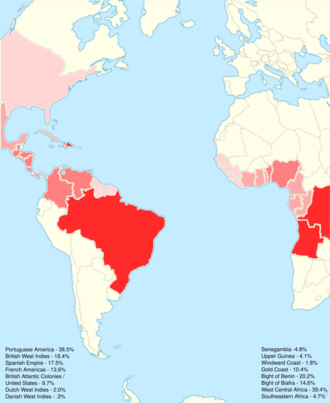
Top Destination: Portuguese America (Brazil) received the highest percentage of enslaved Africans (38.5%).
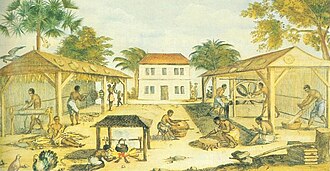
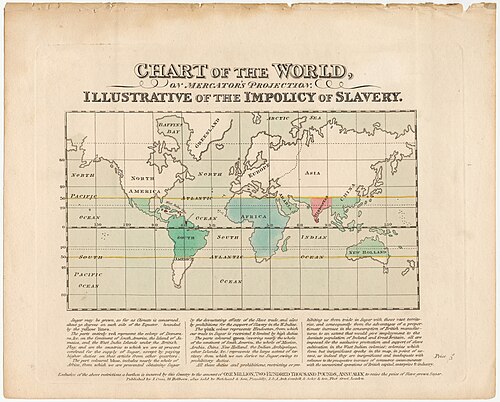
Economic Drivers: Demand for labor on sugar, coffee, tobacco, cocoa, and cotton plantations, as well as in gold and silver mines.
Legal Shift: By the mid-17th century, slavery transitioned into a racial caste system where status was inherited through the mother (partus sequitur ventrem).
The Mechanics of the Trade
Portuguese mariners used caravel ships and traveled south along the West African coast and colonized Cape Verde in 1462.[25]
African Procurement and Coastal Bases
Unlike some other historical slave trades, European traders generally purchased their captives from West and Central African slave merchants. While some raiding occurred, it was less common than commercial transactions with local leaders. To manage the flow of captives, the Portuguese constructed barracoons—temporary enclosures used to gather people before they were loaded onto ships.
Elmina Castle in the Guinea coast, present-day Ghana, was built in 1482 by Portuguese traders. Its primary purpose was trading in gold, but when the outward slave trade from the Gold Coast began, it was used in the slave trade. The Gold Coast was a late entrant to the outward slave trade (though there was an inward trade to supply workers in the gold mines).[63]: Elmina Castle in the Guinea coast, present-day Ghana, was built in 1482 by Portuguese traders. Its primary purpose was trading in gold, but when the outward slave trade from the Gold Coast began, it was used in the slave trade. The Gold Coast was a late entrant to the outward slave trade (though there was an inward trade to supply workers in the gold mines.)
Northern European traders often used their ships as primary bases for gathering cargo, which resulted in longer periods of confinement for the enslaved people on the African coast compared to those transported by Portuguese vessels.
Established in Ghana by the Swedish African Company, Cape Coast Castle was built in 1653 as a trading post that later expanded to other European nations. "Throughout the 18th century, the Castle served as a 'grand emporium' of the British slave trade."[70][71][72]: Established in Ghana by the Swedish African Company, Cape Coast Castle was built in 1653 as a trading post that later expanded to other European nations. "Throughout the 18th century, the Castle served as a 'grand emporium' of the British slave trade."
Labor Demand in the Americas
The Americas had a low population density compared to other inhabited continents. As European conquerors sought to exploit the land, the indigenous population plummeted due to the introduction of European diseases. With Europeans reluctant to emigrate in large numbers, they turned to Africa for labor, mirroring a system previously used on the sugar plantations of Madeira and the Canary Islands around 1450.
Enslaved Africans were deployed across various sectors, including:
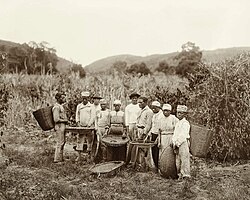
Agriculture: Sugar, coffee, tobacco, cocoa, and cotton plantations.
Mining: Gold and silver extraction.
Infrastructure: Construction and timber cutting for shipbuilding.
Domestic: Skilled labor and domestic service.
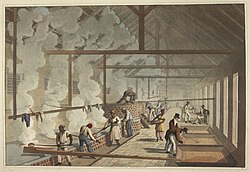
Enslaved people inside a sugar boiling house on the island of Antigua in 1823: Enslaved people inside a sugar boiling house on the island of Antigua in 1823
Global Distribution and Demographics
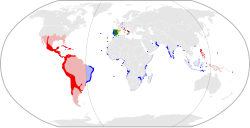
A map of the Spanish Empire (red) and Portuguese Empires (blue) in the period of their personal union (1581–1640)
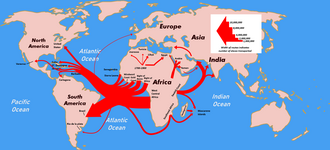
The distribution of enslaved people varied significantly by the colonial power managing the destination. Portuguese America was the primary recipient, followed by the British and Spanish empires.
Distribution of Enslaved Africans by Destination
Destination
Percentage of Total
Portuguese America (Brazil)
38.5%
British West Indies
18.4%
Spanish Empire
17.5%
French West Indies
13.6%
English / British North America / United States
9.7%
Dutch West Indies
2.0%
Danish West Indies
0.3%
Slave trade out of Africa, 1500–1900: Slave trade out of Africa, 1500–1900
Cultural and Social Legacies
Noah curses Ham by Gustave Doré – the curse of Ham was used as a justification to enslave Africans.[41]
The Emergence of Creole Cultures
The contact between Europeans and Africans on the coast and in the Americas led to the development of Creole languages and cultures. These blended identities emerged as a result of the forced mixing of diverse ethnic groups and the necessity of communication between the enslaved and their captors.
Creole languages and cultures emerged on the African coast because of European and African contact. Elmina was home to Atlantic Creoles in 1575. Europeans transported free and enslaved Atlantic Creoles to the Americas.[229]: Creole languages and cultures emerged on the African coast because of European and African contact. Elmina was home to Atlantic Creoles in 1575. Europeans transported free and enslaved Atlantic Creoles to the Americas.
The Path to Abolition
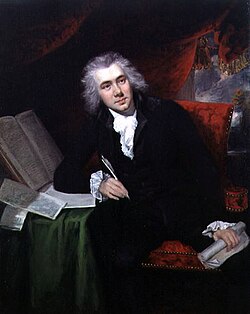
Opposition to the slave trade grew through the efforts of African abolitionists, such as the 'Sons of Africa' (including Olaudah Equiano), and European philanthropists like William Wilberforce. The movement combined moral arguments with economic shifts, eventually leading to the abolition of the trade in the early 19th century.
William Wilberforce (1759–1833), politician and philanthropist who was a leader of the movement to abolish the slave trade: William Wilberforce (1759–1833), politician and philanthropist who was a leader of the movement to abolish the slave trade
Frequently Asked Questions
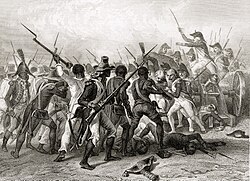
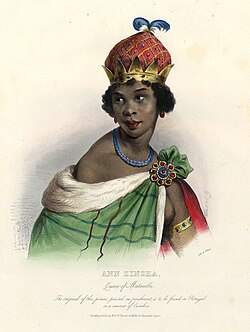
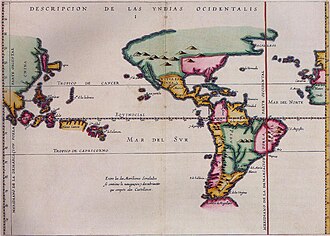
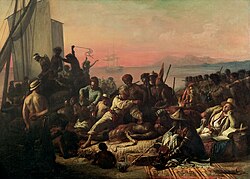
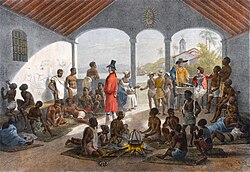
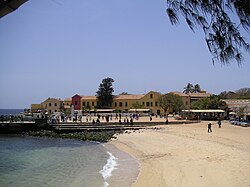
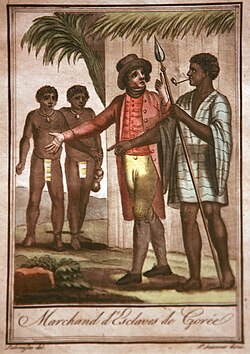
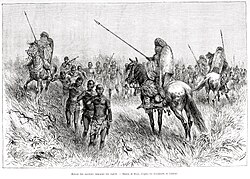
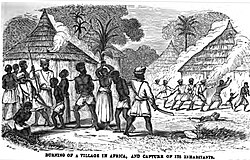
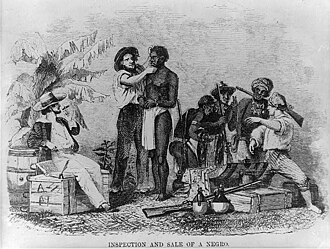
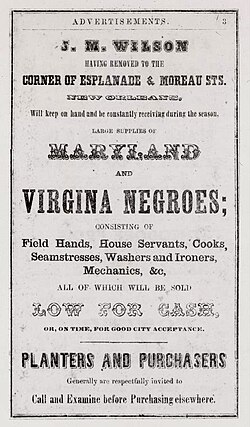
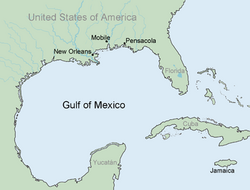
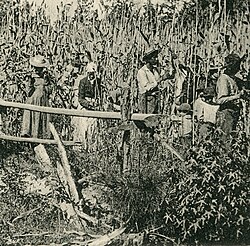
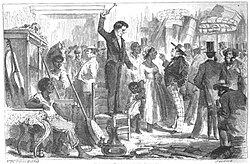
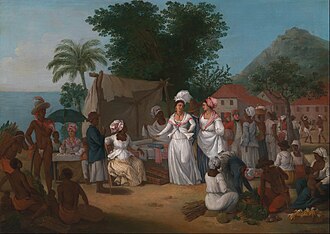
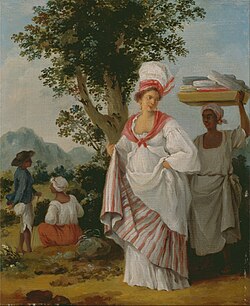
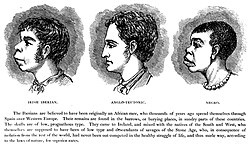
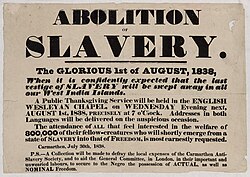
William Ansah Sessarakoo, the son of Eno Baisie Kurentsi (John Currantee) of Anomabu. Both father and son were active slave traders, with John Currantee being the political leader of this major slave exporting town.[73][74]Nzinga of Ndongo and Matamba fought against the expansion of the Portuguese Empire in a thirty-year war in present-day Angola.Map of Meridian Line set under the Treaty of TordesillasThe Slave Trade by Auguste François Biard, 1840A slave market in BrazilIsland of Gorée, SenegalA Wedgwood anti-slavery medallion, produced in 1787 by Josiah Wedgwood[126]Slave traders in Gorée, Senegal, 18th centuryBoukary Koutou's Mossi cavalry returning with captives from a raid, Ouagadougou-Burning of a village in Africa, and capture of its inhabitants. To escape slave raids some Africans escaped into swamp regions or to other areas.On July 1, 1839, enslaved Mende people aboard the Amistad revolted and took control of the ship. This incident led to a Supreme Court case in 1841.[146]A slave being inspectedMajor slave trading regions of Africa, 15th–19th centuriesDiagram of a large slave ship. Thomas Clarkson: The cries of Africa to the inhabitants of Europe, c. 1822A Liverpool Slave Ship by William Jackson. Merseyside Maritime MuseumEnslaved people working on a coffee plantation in BrazilAdvertisement from J. M. Wilson for sale of Maryland and Virginia slaves. Maryland and Virginia sold thousands of enslaved people to the Deep South.The Gulf of Mexico was utilized by privateers in Florida, Louisiana, and Texas to smuggle enslaved Africans from Cuba.Afro Cubans working in a sugar plantationA sugarcane plantation in Trinidad, 1836, lithograph. In 1834, Britain abolished slavery in its colonies.[250]Bunce Island in Sierra Leone exported tens of thousands of Africans to the Sea Islands of South Carolina and Georgia. Gadsden's Wharf in Charleston, South Carolina, received the majority of transported slaves from Bunce Island.[265] African Americans in the Sea Islands can trace their ancestry to Sierra Leone.[266]A slave sale transaction in Rio de JaneiroWest Central Africa was the most common source region of Africa, and Portuguese America (Brazil) was the most common destination.Slaves processing tobacco in 17th-century VirginiaCowrie shells were used as money in the slave trade.Slaving guns (Birmingham History Galleries). In the second half of the 18th century, Europeans sold 300,000 rifles a year in Africa, maintaining the endemic state of war in which men, who were taken prisoner, were sold to supply the demand for slaves.[294]This map argues that import prohibitions and high duties on sugar were artificially inflating prices and inhibiting manufacturing in England. 1823A Linen Market with enslaved Africans. West Indies, c. 1780Elmina Castle was a slave fort in Ghana built in 1482 by the Portuguese and later used by the British colonial administration as its headquarters from 1872 into the 20th century, following which they used it as a prison to incarcerate African citizens.[313]West Indian Creole woman, with her black servant, circa 1780A late-19th-century illustration from H. Strickland Constable's Ireland from One or Two Neglected Points of Views shows an alleged similarity between "Irish Iberian" and "Negro" features in contrast to the higher "Anglo-Teutonic"."Am I not a woman and a sister?" antislavery medallion from the late 18th century[334]Olaudah Equiano was a member of the 'Sons of Africa' an abolitionist group of 12 African men that campaigned against slavery and the slave trade.[337][338]Abolition of Slavery The Glorious 1st of August 1838Landscape by Adolphe Duperly showing the destruction of the Roehampton plantation during the Baptist War, January 1832HMS Black Joke (left) firing on the Spanish slave ship El Almirante on 1 February 1829[360]Battle between insurgent slaves and Napoleonic troops during the Haitian Revolution (1791–1804)
Which region received the most enslaved Africans?
Portuguese America, primarily modern-day Brazil, was the most common destination, receiving approximately 38.5% of all enslaved Africans transported across the Atlantic.
What was the Middle Passage?
The Middle Passage was the second leg of the triangular trade, referring to the brutal journey of enslaved Africans across the Atlantic Ocean to the Americas.
How did the legal status of enslaved people change over time?
In the early English colonies, some Africans were initially classified as indentured servants. However, by the mid-17th century, slavery became a hereditary racial caste, where children born to enslaved mothers were automatically born into slavery.
What roles did enslaved people fill in the Americas?
They worked primarily on plantations (sugar, cotton, tobacco, coffee), in gold and silver mines, in the construction industry, as skilled laborers, and as domestic servants.
Who were some of the key figures in the abolitionist movement?
Key figures included William Wilberforce in Britain and Olaudah Equiano, a member of the 'Sons of Africa' group, who campaigned against the trade from an African perspective.
![Portuguese mariners used caravel ships and traveled south along the West African coast and colonized Cape Verde in 1462.[25]](/images/40/ad/40ad15362cbcc5bea1ed58f655fbc2debf40fee2f3fc63d3fddbf682360192b1.jpg)
![Elmina Castle in the Guinea coast, present-day Ghana, was built in 1482 by Portuguese traders. Its primary purpose was trading in gold, but when the outward slave trade from the Gold Coast began, it was used in the slave trade. The Gold Coast was a late entrant to the outward slave trade (though there was an inward trade to supply workers in the gold mines).[63]](/images/93/8e/938eeb13eb4643a616ebd32b6fe44456f0fa0ae1f8bc6afdf5e364b19d21b5db.jpg)
![Established in Ghana by the Swedish African Company, Cape Coast Castle was built in 1653 as a trading post that later expanded to other European nations. "Throughout the 18th century, the Castle served as a 'grand emporium' of the British slave trade."[70][71][72]](/images/51/91/51911d54bbab844974561ef2a29a82b9060c9a8e845698b017a94316bf0fd27a.jpg)
![Noah curses Ham by Gustave Doré – the curse of Ham was used as a justification to enslave Africans.[41]](/images/29/a2/29a29afb7ecdf9b605124d2a60a9baafecc4618fc0c73b250ca655f882b481f5.jpg)
![Creole languages and cultures emerged on the African coast because of European and African contact. Elmina was home to Atlantic Creoles in 1575. Europeans transported free and enslaved Atlantic Creoles to the Americas.[229]](/images/0a/7a/0a7a506a75ca18ccdb2a82c71419ec01a05bc0272ed06a5553c29384c3629faf.jpg)
![William Ansah Sessarakoo, the son of Eno Baisie Kurentsi (John Currantee) of Anomabu. Both father and son were active slave traders, with John Currantee being the political leader of this major slave exporting town.[73][74]](/images/bf/5e/bf5e4d56f0779a5157bf695391729e79b1c645fe7313f0081bd81caff8e12176.jpg)
![A Wedgwood anti-slavery medallion, produced in 1787 by Josiah Wedgwood[126]](/images/39/9f/399ff19aaa873d0e25a08ca48b6d53f3a6f56cdbc7ee09dae4b1ace2256468e3.jpg)
![On July 1, 1839, enslaved Mende people aboard the Amistad revolted and took control of the ship. This incident led to a Supreme Court case in 1841.[146]](/images/0b/40/0b40ac06161a6bcc7f1393d87bdbf6609e5664e941dc35c1e4515c94be57c015.jpg)
![A sugarcane plantation in Trinidad, 1836, lithograph. In 1834, Britain abolished slavery in its colonies.[250]](/images/c6/88/c6886554aa88c4f56ba7adbc27756628d2e102c96cf762f49b3637d8b9db75fb.jpg)
![Bunce Island in Sierra Leone exported tens of thousands of Africans to the Sea Islands of South Carolina and Georgia. Gadsden's Wharf in Charleston, South Carolina, received the majority of transported slaves from Bunce Island.[265] African Americans in the Sea Islands can trace their ancestry to Sierra Leone.[266]](/images/ac/08/ac0856ddda8d071823ec8f73eb30a400e813aa73ad7ef90220420e08a71fcbbc.jpg)
![Slaving guns (Birmingham History Galleries). In the second half of the 18th century, Europeans sold 300,000 rifles a year in Africa, maintaining the endemic state of war in which men, who were taken prisoner, were sold to supply the demand for slaves.[294]](/images/4a/0c/4a0c9b7c6f784263a89abb3b42762df1ce24e9dd3c861630477a8ccadc8d1585.jpg)
![Elmina Castle was a slave fort in Ghana built in 1482 by the Portuguese and later used by the British colonial administration as its headquarters from 1872 into the 20th century, following which they used it as a prison to incarcerate African citizens.[313]](/images/29/f1/29f12c5670d1760ef8efbd0bef7f2d9aa6639f50ed182f9f07d997f3c90ff940.jpg)
!["Am I not a woman and a sister?" antislavery medallion from the late 18th century[334]](/images/69/f7/69f7caa043c1bd845b7d777703cf0c95e7e3aaa0fd1b8e31b407b6ca27864d82.jpg)
![Olaudah Equiano was a member of the 'Sons of Africa' an abolitionist group of 12 African men that campaigned against slavery and the slave trade.[337][338]](/images/64/d2/64d21c006cac35709ec50821213ff907e6c1bdcdfcd10555b1d652addf7d3a72.png)
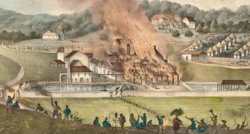
![HMS Black Joke (left) firing on the Spanish slave ship El Almirante on 1 February 1829[360]](/images/17/7a/177adb5284ace3fe3a6e733514eee029cb0e9642c21cd4e5520fb8a70be64f20.png)