Articles/American Chattel Slavery: History, Economics, and the Path to Abolition
American slaverychattel slaverytransatlantic slave tradeabolitionismEmancipation Proclamation
American Chattel Slavery: History, Economics, and the Path to Abolition
American Chattel Slavery: History, Economics, and the Path to Abolition From the founding of the United States in 1776 until 1865, the legal institution of chattel slavery—a system where ...
American Chattel Slavery: History, Economics, and the Path to Abolition
From the founding of the United States in 1776 until 1865, the legal institution of chattel slavery—a system where human beings are treated as personal property—was a defining feature of American life. While prevalent across European colonies in the Americas, it became deeply entrenched in the American South, creating a racial caste system primarily based on African ancestry. This institution influenced every facet of the nation's politics, economics, and social customs, leaving a legacy that persisted long after its legal end.
Under this legal framework, children were born into slavery, and enslaved individuals could be bought, sold, or gifted. While the system was most dominant in the South, it existed in various forms throughout the colonies and early states, shaping the trajectory of the American republic.
A map of the Thirteen Colonies in 1770, showing number of slaves in each colony and percentage of colony's total population held as slaves[20]
Key Facts
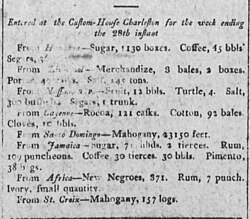
"Entered at the Custom-House Charleston for the week of the 28th instant...From Africa—New Negroes, 371. Rum, 7 punch. Ivory, small quantity" (Charleston Daily Courier, December 30, 1805)
Duration: Practiced in the U.S. from the early colonial period until 1865.
Legal Status: Enslaved people were legally classified as property (chattel) rather than persons.
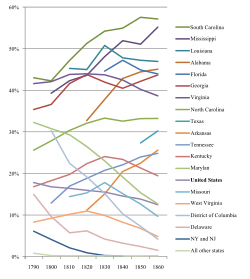
Demographics: By 1860, nearly 4 million people were enslaved in the United States.
Economic Value: In 1860, enslaved people were valued as property at over $3 billion (approximately $97 billion in 2022 dollars).
Abolition: Ended through a combination of state laws, the Emancipation Proclamation, and the 13th Amendment.
Slavery in the Early Republic and the Constitution
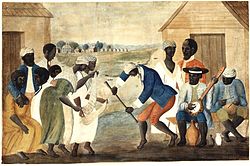
The Old Plantation, watercolor attributed to John Rose, possibly painted 1785–1795 in the Beaufort District of South Carolina (Abby Aldrich Rockefeller Folk Art Museum)
By the time of the American Revolutionary War, slavery had been institutionalized as a racial caste. The drafting of the U.S. Constitution in 1789 highlighted the deep divisions between Northern and Southern states. Two critical components emerged: the Three-Fifths Clause, which inflated the political power of slave states by counting three-fifths of the enslaved population for representation, and the Fugitive Slave Clause, which required that escaped enslaved people be returned to their claimants.
While most Northern states passed abolitionist laws by 1805, the process was often gradual, sometimes utilizing a transitional status of unpaid indentured servitude. In contrast, the South continued to rely on enslaved labor to fuel its agrarian economy.
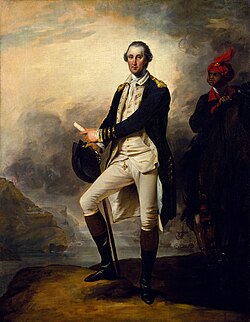
John Trumbull's 1780 portrait George Washington also depicts a man believed to be Washington's enslaved valet William Lee (Metropolitan Museum of Art 24.109.88)
The Economics of the Plantation System
This postage stamp, which was created at the time of the Bicentennial, honors Salem Poor, who was an enslaved African-American man who purchased his freedom, became a soldier, and rose to fame as a war hero during the Battle of Bunker Hill.[26]
The wealth of the white planter class was built on the forced labor of millions. Large plantations, such as Thomas Jefferson's Monticello, produced massive quantities of cash crops, particularly tobacco and cotton. This system was not only a social structure but a cornerstone of global economics.
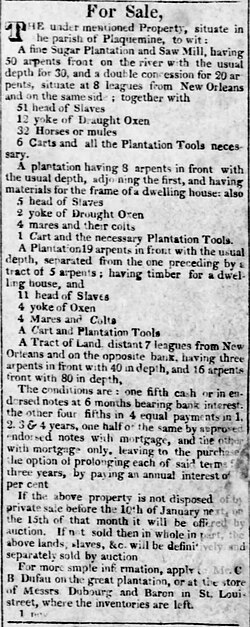
The commodification of human beings extended to every aspect of the trade. Enslaved people were often listed in advertisements alongside livestock, such as oxen and horses. The domestic slave trade saw the forced migration of hundreds of thousands of people from the Upper South to the Deep South to meet the demands of expanding cotton fields.
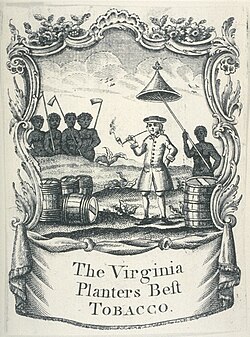
Image marketing 18th-century tobacco produced by enslaved laborers in the Colony of Virginia (Colonial Williamsburg Foundation)For sale: 51 head of slaves, 12 yoke of draught oxen, 32 horses or mules; 5 head of slaves, 2 yoke of draught oxen; 11 head of slaves, 4 yoke of oxen—in early America, slaves were treated legally and socially as if they were farm animals (Louisiana State Gazette, New Orleans, November 1, 1819)
The Transatlantic and Domestic Trade
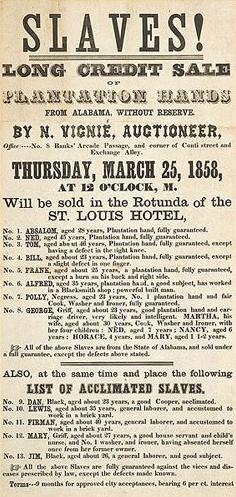
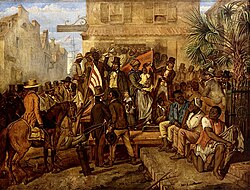
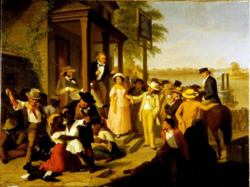
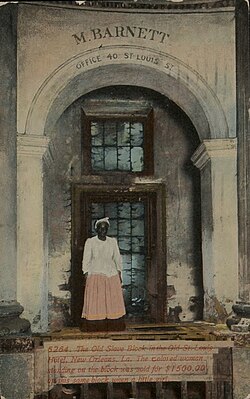
Although Congress banned the international slave trade in 1808, smuggling continued. The U.S. Revenue Cutter Service was tasked with enforcing this ban on the high seas, yet illegal shipments—such as the 1858 Wanderer voyage—still occurred. Domestically, slave markets in cities like New Orleans became hubs for the sale of human beings, often separating families in the process.
Newspaper listings for New Orleans slave depots at Barrone and Gravier Street, and at 54, 58, 68, and 78 Barrone represented but a slim fraction of the trade in the city[82] (New Orleans Crescent, January 10, 1861)Broadside for an 1858 slave sale at the St. Louis Hotel in New Orleans (Museum of African American History and Culture 2011.155.305)
Life Under Slavery: Control and Resistance
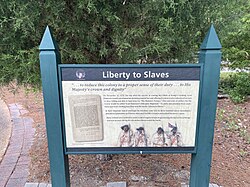
Memorial to Lord Dunmore's Ethiopian Regiment of Black Loyalists who wore clothing inscribed with the words "Liberty to Slaves"
Enslaved people faced systemic brutality, including physical torture, branding, and sexual exploitation. Slave codes were implemented to maintain control, and mandatory illiteracy was enforced to prevent communication and organization among the enslaved.
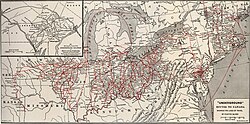
Despite these oppressive conditions, resistance was constant. This ranged from individual acts of defiance and escapes via the Underground Railroad to organized violent uprisings. Notable rebellions include Gabriel's conspiracy (1800), Denmark Vesey's conspiracy (1822), and Nat Turner's Rebellion (1831).
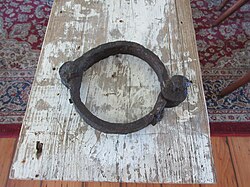
Slave shackle found while digging in a property on Baronne Street in New Orleans; donated to the Kid Ory Historic House museumMap of known Underground Railroad routes, as mapped by a historian of 1898Discovery of Nat Turner [in 1831], an 1881 wood-engraving by William Henry Shelton [wd]
The Rise of Abolitionism
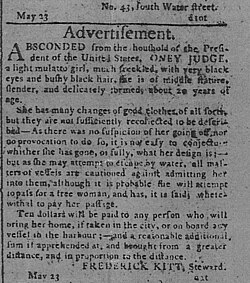
Advertisement in Pennsylvania Gazette, May 24, 1796, seeking the return of Oney Judge, a fugitive slave who had escaped from the household of George Washington
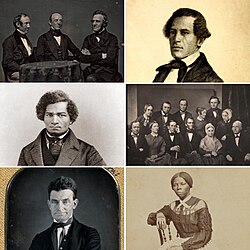
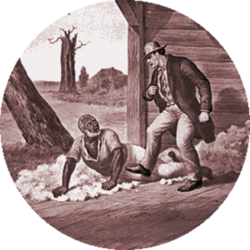
Abolitionism grew from a mixture of religious conviction, humanitarianism, and the efforts of free Black individuals. Figures like Frederick Douglass and Harriet Tubman became symbols of the struggle for freedom. In the North, activists like William Lloyd Garrison and Wendell Phillips pushed for immediate emancipation, while the influential novel Uncle Tom's Cabin brought the horrors of slavery to a wider public audience.
In the South, pro-slavery advocates shifted their rhetoric from calling slavery a "necessary evil" to claiming it was a "positive good," arguing that a paternalistic system benefited the enslaved.
Some 19th-century American abolitionists: Wendell Phillips and William Lloyd Garrison (with British abolitionist George Thompson), William Wells Brown, Frederick Douglass, 1851 meeting of the Pennsylvania Abolition Society (including Oliver Johnson, Mary Grew, Robert Purvis, and Lucretia Mott), John Brown, and Harriet TubmanSimon Legree and Uncle Tom: a scene from Uncle Tom's Cabin (1852), an influential abolitionist novel
Civil War and the End of Legal Slavery
One of the many defenses of American slavery was that the imagined "benevolent paternalism" of planters was beneficial or necessary[70][71][72] (Detail, Anti-Slavery Almanac, 1840)
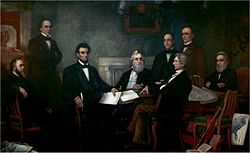
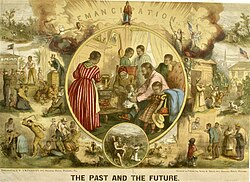
The tension between the free and slave states culminated in the American Civil War. A pivotal moment occurred in 1863 with the Emancipation Proclamation, which declared that all persons held as slaves within the rebellious states "are, and henceforward shall be free." The war eventually led to the total abolition of slavery across the United States, formalized by the 13th Amendment.
First Reading of the Emancipation Proclamation of President Lincoln (1864) oil painting by Francis Bicknell Carpenter (U.S. Senate Collection 33.00005.000)Color lithograph of Thomas Nast's 1863 woodblock etching Emancipation: The Past and the Future (Library Company of Philadelphia 1865-3 variant 101540.F)
Legacy and Post-War Realities
Confederate $100 bill, 1862–63, showing slaves farming; there were over 125 carefully wrought etchings of laboring slaves made for currency issued by 19th-century Southern banks and the Confederate States,[77] images that provided reassurance that slavery "was protected both by law and by tradition."[78] In 1860, Southern slaveholders held slaves as personal property[a] collectively valued at more than $3 billion (about $97 billion in 2022)[80] (National Numismatic Collection, National Museum of American History)
The end of legal slavery did not bring immediate equality. During and after Reconstruction (which ended in 1877), new systems of oppression emerged. Sharecropping tied Black farmers to the land through debt, and convict leasing allowed the state to lease prisoners—disproportionately Black men—to private companies, effectively continuing involuntary servitude.
Prisoners pick cotton c. 1900 at Angola Prison Farm in Louisiana, which was built on land that had formerly been plantations owned by hugely successful interstate slave trader Isaac Franklin[311]
Demographic Summary of Enslaved Populations
Census Year
Enslaved Population
Free Africans
Total African Population
% of Total US Population
1790
697,681
59,527
757,208
19%
1820
1,538,022
233,634
1,771,656
18%
1840
2,487,355
386,293
2,873,648
17%
1860
3,953,760
488,070
4,441,830
14%
Frequently Asked Questions
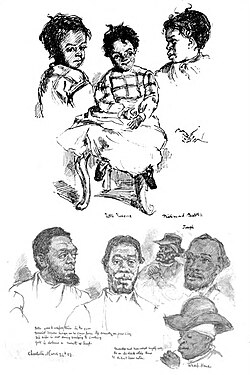
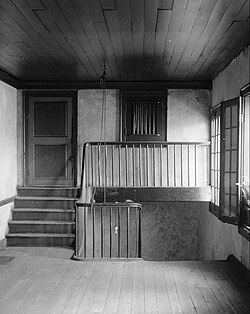
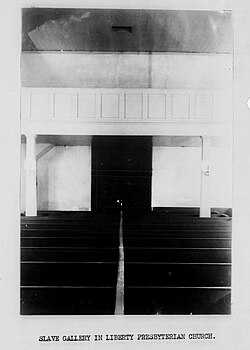
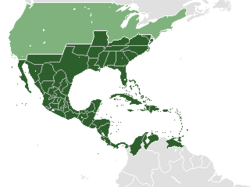
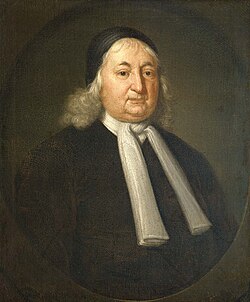
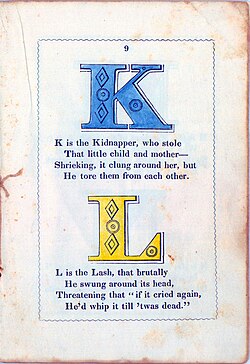
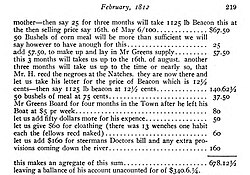
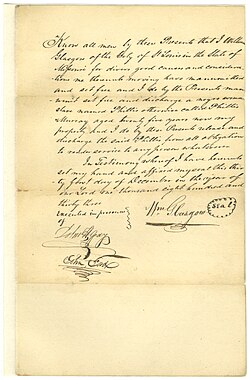
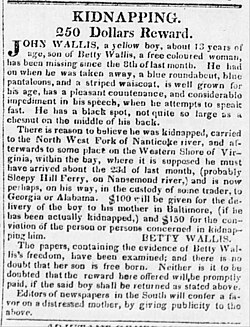
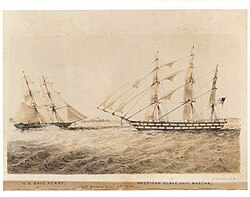
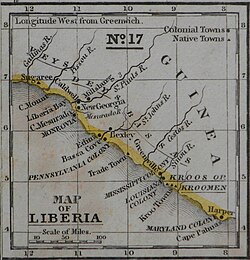
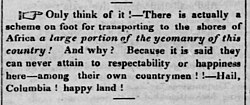
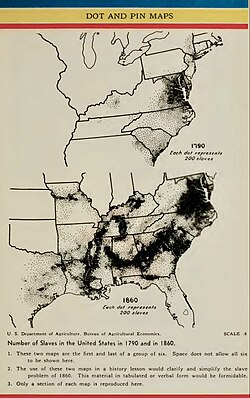
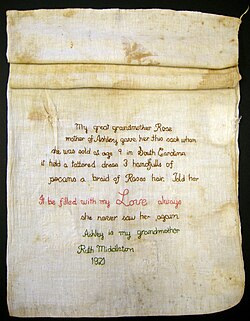
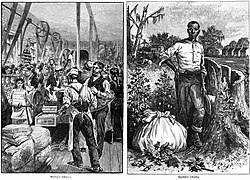
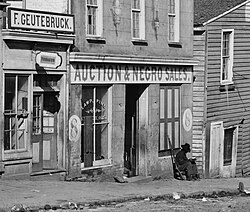
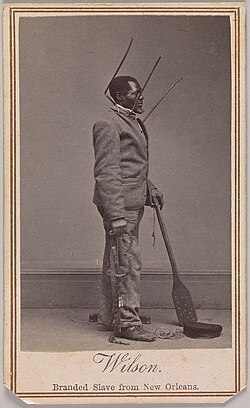
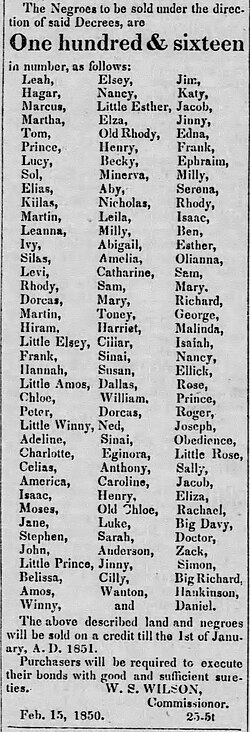
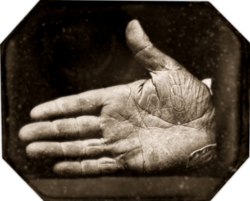
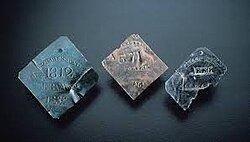
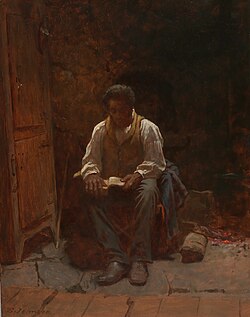
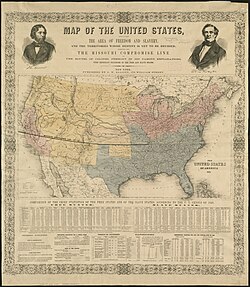
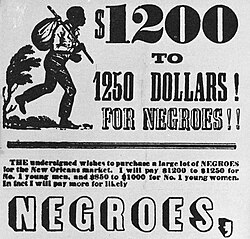
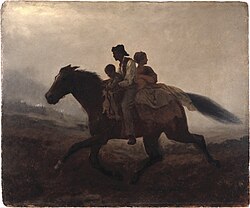
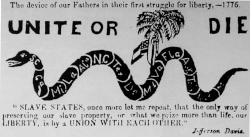
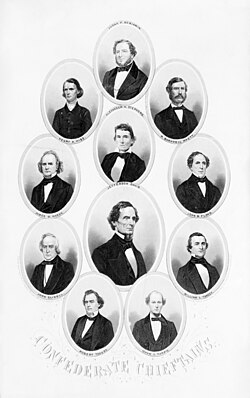
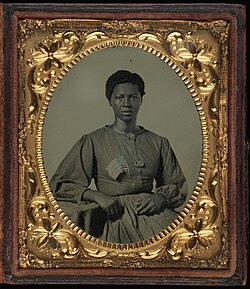
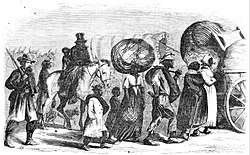
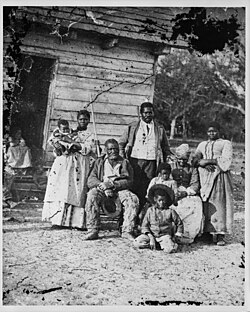
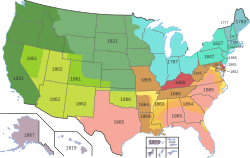
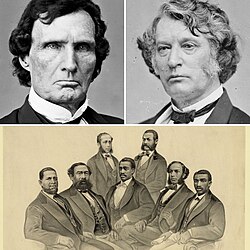
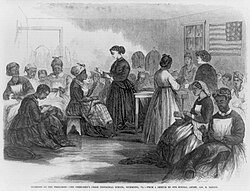
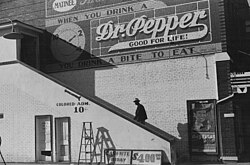
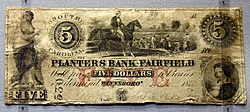
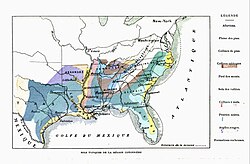
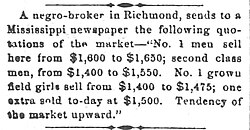
Dark green indicates the reach of the Golden Circle, an aspirational empire for American slave ownersAbolitionist Samuel Sewall was chief justice of the Massachusetts Superior Court of Judicature, the highest court in Massachusetts. (Museum of Fine Arts, Boston, Massachusetts)Abolitionist and politician Joshua Reed Giddings was censured in the U.S. House of Representatives in 1842 for introducing anti-slavery resolution deemed to be incendiary, and in violation of the House's gag rule prohibiting discussion of slavery.[109]Page from The Anti-Slavery Alphabet (1846–1849)The shipping news in Charleston in December 1805 included 900 newly imported enslaved Africans from the Gold Coast, Windward Coast, and Bonny, plus cotton shipping out for Liverpool, and a delivery of salampore cloth, which was traded for "prime negroes" in regions of Africa where Islamic dietary laws made American rum undesirable[117]Andrew Jackson and the slave trade in the United States: Jackson, soon to be the "Hero of New Orleans", explains how much it should cost to take a shipment of slaves to Natchez for sale ( The Correspondence of Andrew Jackson, 1926)Manumission papers of Phillis Murray, a black woman about 25 years old, signed by William Glasgow, December 31, 1833 (Missouri History Museum)The slave trade made kidnapping children of color a profitable criminal business—the Patty Cannon gang was at work in Northwest Fork Hundred, Delaware until 1829, when four bodies were found buried on property they had owned ("Kidnapping 250 Dollars Reward" Constitutional Whig, April 27, 1827)U.S. brig Perry confronting the slave ship Martha off Ambriz on June 6, 1850 (Sarony & Co. lithograph, Andrew H. Foote's Africa and the American Flag, 1854)The 1839 Mitchell map of Liberia shows colonial settlements including New Georgia, Pennsylvania Colony, Mississippi Colony, Louisiana Colony, and Maryland Colony"Only think of it!—There is actually a scheme on foot for transporting to the shores of Africa a large portion of the yeomanry of this country! And why? Because it is said they can never attain to respectability or happiness here—among their own countrymen!!—Hail, Columbia! happy land!" (The Liberator, December 1, 1832)Slaves Waiting for Sale: Richmond, Virginia [wd], painting by Eyre Crowe based on a sketch made 1853 while visiting the United States with William ThackerayMovement of slaves between 1790 and 1860Ashley's Sack is a cloth that recounts a slave sale separating a mother and her daughter. The sack belonged to a nine-year-old girl Ashley and was a parting gift from her mother, Rose, after Ashley had been sold. Rose filled the sack with a dress, braid of her hair, pecans, and "my love always". (Middleton Place Foundation, South Carolina)"Northern Industry" and "Southern Industry" before the American Civil War (Scribner's Popular History of the United States, 1896)Crawford, Frazer & Co., a slave trading business in Georgia, photographed by George N. Barnard just before the 1864 burning of AtlantaPeter, formerly enslaved on a cotton plantation along the Atchafalaya River, photo taken at Baton Rouge, Louisiana, 1863; after the whipping, Peter's wounds were salted, a common practice;[191][192] the overseer who whipped Peter was fired by slave owner Capt. John Lyons[193] (original carte de visite by McPherson & Oliver)Wilson Chinn, a branded slave from Louisiana—also exhibiting instruments of torture used to punish slaves (carte de visite by Charles Paxson, Metropolitan Museum of Art 2019.521)Sale at auction, by Alonzo J. White on the plaza north of the Exchange Building in Charleston on March 10, 1853, of 96 people who had previously been enslaved near the Combahee River (Eyre Crowe, Museo Nacional de Bellas Artes, Havana, Cuba)"The negroes to be sold" including America and Obedience, The Port Gibson Herald, March 1, 1850The Quadroon Girl (1878) oil painting by Henry Mosler; scholars of slavery have described the image of the "quadroon bride" and the Southern "fixation on interracial sex and violence" as a form of folk pornography[228] (Cincinnati Art Museum 1976.25)Andreas Byrenheidt, a 70-year-old physician,[232] placed an unusually long and detailed runaway slave ad in two Alabama newspapers in hopes of recovering a 20-year-old enslaved woman, whom he had purchased four years earlier, and her four-year-old daughter, who sometimes called herself Lolo ("$100 Reward" Cahawba Democrat, Cahaba, Alabama, June 16, 1838)The inscription on the back of the case reads: This Daguerreotype was taken by Southworth Aug. 1845 it is a copy of Captain Jonathan Walker's hand as branded by the U.S. Marshall of the Dist. of Florida for having helped 7 men to obtain 'Life Liberty, and Happiness.' SS Slave Saviour Northern Dist. SS Slave Stealer Southern Dist.Tags to be used for identifying and tracking enslaved people of Charleston, South Carolina (National Museum of American History 1993.0503)Eastman Johnson's 1863 oil painting painting The Lord is My Shepherd (Smithsonian American Art Museum 1979.5.13)Former slave reading, 1870. After slavery ended, illiteracy rates among black people dropped from 80% in 1870 to 30% in 1910.[273]Allegorical liberation of a slave entering a free state, wood-engraving from Narrative of the Life and Adventures of Henry Bibb, An American Slave, 1849[281]Map of the United States in 1856, showing the areas where slavery was still present, and those where it wasn't1853 advertisement by a slave trader seeking to buy slaves to resell in the lucrative New Orleans slave marketA Ride for Liberty – The Fugitive Slaves, oil on paperboard, c. 1862 by Eastman Johnson (Brooklyn Museum 40.59a-b)Modification by G. W. Falen of Ben Franklin's Join, or Die graphic, advocating a confederation of slave states, with a quote from Jefferson Davis: "SLAVE STATES, once more let me repeat that the only way of preserving our slave property, or what we prize more than life, our LIBERTY, is by a UNION WITH EACH OTHER." (New-York Historical Society)Pro-slavery activists Judah P. Benjamin, Henry A. Wise, R. Barnwell Rhett Jr., Alexander H. Stephens, James M. Mason, Jefferson Davis, John B. Floyd, John Slidell, William L. Yancey, Robert Toombs, and Isham G. Harris ("Confederate chieftains" engraving by J.C. Buttre, 1864)Ambrotype of African-American woman with a flag, "believed to be a washerwoman for Union troops quartered outside Richmond, Virginia" (National Museum of American History 2005.0002)Contrabands accompanying the line of Sherman's march through Georgia (unidentified war artist "F", Frank Leslie's Illustrated News, March 18, 1865)Four generations of a formerly enslaved family, photographed by Timothy H. O'Sullivan on J. J. Smith's confiscated plantation at Beaufort, South Carolina (now U.S. Naval Hospital Beaufort) during the Port Royal Experiment, 1862Abolition of slavery in the various states of the United States over time: Abolition of slavery during or shortly after the American Revolution Effective abolition of slavery by Mexican or joint US/British authority Abolition of slavery by Congressional action, 1861 Abolition of slavery by Congressional action, 1862 Subsequent operation of the Emancipation Proclamation in 1863 Abolition of slavery by state action during the Civil War Operation of the Emancipation Proclamation in 1864 Operation of the Emancipation Proclamation in 1865 Territory incorporated into the U.S. after the passage of the Thirteenth AmendmentAgainst (often physically) brutal opposition from the whites of the late rebel states, Radical Republicans like Thaddeus Stevens and Charles Sumner, and black representatives elected by newly enfranchised former slaves, including Hiram Revels, who took Jefferson Davis's old Senate seat, worked to realize the lofty goals of the abolitionists through Congressional legislationNathan Bedford Forrest transitioned from being a slave trader before the war[309] to using convict labor on his farm on President's Island near Memphis after the war[310] (glass copy negative, Library of Congress LC-BH821-3061)An industrial school set up for ex-slaves in Richmond during Reconstruction (Frank Leslie's illustrated newspaper, September 22, 1866)Original caption: "Negro going in colored entrance of movie house on Saturday afternoon, Belzoni, Mississippi Delta, Mississippi" (Marion Post Wolcott 35mm nitrate negative, Farm Security Administration, October 1939)Prices noted in pencil on slave sale broadside with listing of names, ages and special skills; a note was made on an outer page "average $623.45"[321](Hutson Lee papers, South Carolina Historical Society via Lowcountry Digital Library)Plantations featuring the forced labor of large numbers of black slaves, such as Monticello owned by Thomas Jefferson, produced wealth for the white elite, the planter class.[341]"Weighing cotton after the day's picking" c. 1908 in Monticello, Florida, with a black man in a sack used as the counterweight; when a New York reporter visited a cotton gin in South Carolina in 1851, the managers reported that it cost an average of $75 a year to staff the gin with black slaves, whereas it would have cost $116 to use free whites[345]Survivors of the Wanderer: Ward Lee, Tucker Henderson, and Romeo—born Cilucängy, Pucka Gaeta, and Tahro in the Congo River basin—were purchased at a Portuguese-run African slave market in 1858 for an estimated US$50 (equivalent to $1,861 in 2025) each, and resold in the United States where the fair-market price for a healthy young enslaved male was easily US$1,000 (equivalent to $37,212 in 2025)[351] (Charles J. Montgomery, American Anthropologist, 1908)Five-dollar banknote showing a plantation scene with enslaved people in South Carolina. Issued by the Planters Bank, Winnsboro, 1853. On display at the British Museum in London.Soils of the cotton-growing regions of the United StatesMarket update, published on the eve of the American Civil War: Here the sell-side (Virginia) prepares the buy-side (Mississippi) for expected prices in the 1860–61 slave-trading season (The Wheeling Daily Intelligencer, August 11, 1860).Slave Market, artist unknown, date unknown (Carnegie Museum of Art, Pittsburgh)Divided-back era postcard: "The Old Slave Block in the Old St. Louis Hotel, New Orleans, La. The colored woman standing on the block was sold for $1500.00 on this same block when a little girl.""Fugitive Negroes, fording Rappahannock river following Pope's retreat, Aug. 1862" (New York Public Library)Map showing the distribution of the slave population of the southern states of the United States (1861) created by Edwin Hergesheimer of the United States Coast Survey; Lincoln kept a copy of this map in the White House and studied it often, using it to track Union troop movements[373]Evolution of the enslaved population of the United States as a percentage of the population of each state, 1790–1860Sketches of enslaved Americans in Richmond and Charleston, made by British artist Eyre Crowe, March 1853"Window grating of old slave prison cell" at Girod House, 500–506 Chartres, New Orleans (Richard Koch, Historic American Buildings Survey, April 1934)Slave gallery, Liberty church
What was the Three-Fifths Compromise?
The Three-Fifths Compromise was an agreement reached during the 1787 Constitutional Convention. It stipulated that three-fifths of the enslaved population would be counted for determining both direct taxation and the number of seats a state would have in the House of Representatives, effectively increasing the political power of slave-holding states.
How did the domestic slave trade differ from the transatlantic trade?
The transatlantic trade involved the forced transport of Africans from Africa to the Americas. The domestic trade occurred within the U.S., moving enslaved people from the Upper South (like Virginia) to the Deep South (like Mississippi and Louisiana) to support the growing cotton industry.
What was the purpose of the Emancipation Proclamation?
Issued by President Abraham Lincoln in 1863, the Emancipation Proclamation declared that all enslaved people in Confederate-held territory were free. While it did not immediately free all enslaved people, it shifted the purpose of the Civil War to include the abolition of slavery and allowed Black men to enlist in the Union Army.
What happened to former slaves after the Civil War?
While legally free, many faced extreme poverty and systemic racism. Many became sharecroppers, while others sought education through newly established industrial schools. In some regions, the legal system was used to re-enslave Black men through convict leasing.
What was the Underground Railroad?
The Underground Railroad was a clandestine network of routes and safe houses used by enslaved African Americans to escape to free states in the North or to Canada, often aided by abolitionists and free Black citizens.
![A map of the Thirteen Colonies in 1770, showing number of slaves in each colony and percentage of colony's total population held as slaves[20]](/images/5e/32/5e32bc60ecc493146dbad14a092878f28ab132011be9e82272e939eac08170fe.jpg)
![This postage stamp, which was created at the time of the Bicentennial, honors Salem Poor, who was an enslaved African-American man who purchased his freedom, became a soldier, and rose to fame as a war hero during the Battle of Bunker Hill.[26]](/images/78/a5/78a54c1389f845dc2574a430ebab20d9a4ee22f5b339f26cbe15a98f4de9c7de.jpg)
![Newspaper listings for New Orleans slave depots at Barrone and Gravier Street, and at 54, 58, 68, and 78 Barrone represented but a slim fraction of the trade in the city[82] (New Orleans Crescent, January 10, 1861)](/images/20/d8/20d80858cc44da882c555c3d82f4ec95b1a87f926c75c167003bbba3ef1a00de.jpg)
![Discovery of Nat Turner [in 1831], an 1881 wood-engraving by William Henry Shelton [wd]](/images/5e/d7/5ed71249e4946dc7c5c5ce5402f2685c522fa073349d5dc87559357320f87949.jpg)
![One of the many defenses of American slavery was that the imagined "benevolent paternalism" of planters was beneficial or necessary[70][71][72] (Detail, Anti-Slavery Almanac, 1840)](/images/6f/d1/6fd1d48a7eab326dad81792108600718bbb22bda8441500235724d5e55f99a7f.jpg)
![Confederate $100 bill, 1862–63, showing slaves farming; there were over 125 carefully wrought etchings of laboring slaves made for currency issued by 19th-century Southern banks and the Confederate States,[77] images that provided reassurance that slavery "was protected both by law and by tradition."[78] In 1860, Southern slaveholders held slaves as personal property[a] collectively valued at more than $3 billion (about $97 billion in 2022)[80] (National Numismatic Collection, National Museum of American History)](/images/e2/49/e249a33367fdbb2e048331bf6fe370596418f0116471c46391b918f78d293d2c.jpg)
![Prisoners pick cotton c. 1900 at Angola Prison Farm in Louisiana, which was built on land that had formerly been plantations owned by hugely successful interstate slave trader Isaac Franklin[311]](/images/bf/a4/bfa4f3c21ebfcbce8c2117b49c0e52665de9e97184456674d53e4ea91cd11979.jpg)
![Abolitionist and politician Joshua Reed Giddings was censured in the U.S. House of Representatives in 1842 for introducing anti-slavery resolution deemed to be incendiary, and in violation of the House's gag rule prohibiting discussion of slavery.[109]](/images/fa/f9/faf9fa821157ec1e4faf95111730bf149facbefcf79ad489e8b3d0ea70b71e6b.jpg)
![The shipping news in Charleston in December 1805 included 900 newly imported enslaved Africans from the Gold Coast, Windward Coast, and Bonny, plus cotton shipping out for Liverpool, and a delivery of salampore cloth, which was traded for "prime negroes" in regions of Africa where Islamic dietary laws made American rum undesirable[117]](/images/fb/6b/fb6b7ef530c09926fd2cf67535d8af6a9994419e12e77f430bd370cd4b7740d0.jpg)
![Slaves Waiting for Sale: Richmond, Virginia [wd], painting by Eyre Crowe based on a sketch made 1853 while visiting the United States with William Thackeray](/images/6b/76/6b764c885ae9188e4c78cfea3208a0bbf8bb15789a08fc47068a1e8947be06e5.jpg)
![Peter, formerly enslaved on a cotton plantation along the Atchafalaya River, photo taken at Baton Rouge, Louisiana, 1863; after the whipping, Peter's wounds were salted, a common practice;[191][192] the overseer who whipped Peter was fired by slave owner Capt. John Lyons[193] (original carte de visite by McPherson & Oliver)](/images/2b/d8/2bd83a6d10d4e783ea7703cf80fb0465317821f786b88436e58a6796432d1a3d.jpg)
![The Quadroon Girl (1878) oil painting by Henry Mosler; scholars of slavery have described the image of the "quadroon bride" and the Southern "fixation on interracial sex and violence" as a form of folk pornography[228] (Cincinnati Art Museum 1976.25)](/images/88/08/8808526dcccae36ec62d2b0d5b95df0653e38228d47a041f5542870907b6c754.jpg)
![Andreas Byrenheidt, a 70-year-old physician,[232] placed an unusually long and detailed runaway slave ad in two Alabama newspapers in hopes of recovering a 20-year-old enslaved woman, whom he had purchased four years earlier, and her four-year-old daughter, who sometimes called herself Lolo ("$100 Reward" Cahawba Democrat, Cahaba, Alabama, June 16, 1838)](/images/77/00/77007e9b2ac824dcb443a23cdc4366607a5a160eccd70418065e883cd277ccec.jpg)
![Former slave reading, 1870. After slavery ended, illiteracy rates among black people dropped from 80% in 1870 to 30% in 1910.[273]](/images/88/93/889372353a1b386355767c5cc6f49969e511a630d33949a455b2301425b072f5.jpg)
![Allegorical liberation of a slave entering a free state, wood-engraving from Narrative of the Life and Adventures of Henry Bibb, An American Slave, 1849[281]](/images/b8/25/b82536518b3f2189a28fea9b1bfa06afd007a20b0629db7468286d902f3fedd8.png)
![Nathan Bedford Forrest transitioned from being a slave trader before the war[309] to using convict labor on his farm on President's Island near Memphis after the war[310] (glass copy negative, Library of Congress LC-BH821-3061)](/images/20/d1/20d187188a63e6b174ae2c034b0c9a8f7d349c8cb145f3ee9c6f2a2cb441a62e.jpg)
](/images/85/65/856549d5d5b13e2edac0fb283550c460d9608809e898a1d2b03781ec085022e7.jpg)
![Plantations featuring the forced labor of large numbers of black slaves, such as Monticello owned by Thomas Jefferson, produced wealth for the white elite, the planter class.[341]](/images/97/ba/97baddb65ae0bf46954b97986be63ff2b0cf8621c071dec048f13915f097b294.jpg)
!["Weighing cotton after the day's picking" c. 1908 in Monticello, Florida, with a black man in a sack used as the counterweight; when a New York reporter visited a cotton gin in South Carolina in 1851, the managers reported that it cost an average of $75 a year to staff the gin with black slaves, whereas it would have cost $116 to use free whites[345]](/images/a9/35/a9357d97603eea21a39262572c87e596d1c00aafe597ec360445ec2024764f48.jpg)
![Survivors of the Wanderer: Ward Lee, Tucker Henderson, and Romeo—born Cilucängy, Pucka Gaeta, and Tahro in the Congo River basin—were purchased at a Portuguese-run African slave market in 1858 for an estimated US$50 (equivalent to $1,861 in 2025) each, and resold in the United States where the fair-market price for a healthy young enslaved male was easily US$1,000 (equivalent to $37,212 in 2025)[351] (Charles J. Montgomery, American Anthropologist, 1908)](/images/47/cc/47ccbe8e79ebb6a76b7da1ac29300f8cb0011688a17c7388501149501e37fadc.jpg)
![Map showing the distribution of the slave population of the southern states of the United States (1861) created by Edwin Hergesheimer of the United States Coast Survey; Lincoln kept a copy of this map in the White House and studied it often, using it to track Union troop movements[373]](/images/4b/6c/4b6c3b71db5b7cd16b9d58015ebd2ae5f3909bad82e75014c548ece57f2231e5.jpg)