African Americans: History, Demographics, and Cultural Legacy
African Americans are an integral part of the United States' social, political, and cultural fabric. With a history marked by resilience in the face of systemic adversity, the community has shaped the American identity through profound contributions to music, science, politics, and civil rights. From the forced migrations of the transatlantic slave trade to the modern era of political leadership, the journey of Black Americans is a testament to the enduring pursuit of freedom and equality.
Key Facts
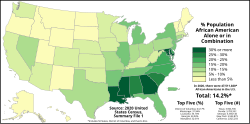
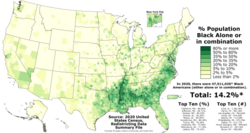
- Population: Approximately 46.9 million people identify as Black or African American (alone or in combination), making up 14.16% of the U.S. population as of the 2020 Census.
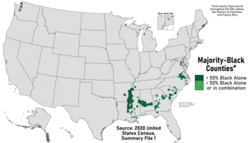
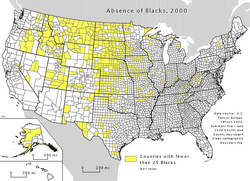
- Geographic Concentration: The largest populations are found in the Southern United States and major urban centers, with Texas, Georgia, Florida, New York, and California having the highest numbers.
- Religion: Christianity is the majority faith, practiced by 73% of the population.
- Political Influence: There is a strong historical trend of supporting the Democratic Party, with high percentages of the Black vote consistently favoring Democratic candidates since 1980.
- Cultural Hubs: New York City hosts the world's largest Black population outside of Africa, with Harlem serving as a historic epicenter of culture.
Demographic Profile
![1774 image of a fugitive slave in a New York newspaper, offering a $10 reward (equivalent to $295 in 2025). Slave owners, including George Washington and Thomas Jefferson, placed around 200,000 runaway slave adverts in newspapers across the US before slavery ended in 1865.[38][39]](/images/c2/92/c29234842180ef5430cc43beedce17d268fc8f4e65727405445a2e0abb376a62.gif)
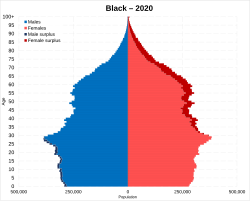
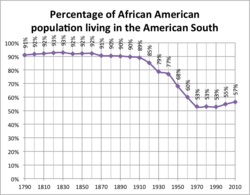
According to the 2020 U.S. Census, the Black population is composed of those identifying as a single race (41,104,200) and those identifying in combination with other races (5,832,533). While the absolute majority of African Americans have historically resided in the American South, significant shifts occurred during the 20th century.
The composition of the community is also evolving through immigration. While the majority are descendants of enslaved people (often referred to as ADOS), the proportion of Black immigrants has grown from 6.9% in 2000 to an estimated 13.6% by 2024.
Population Distribution and Trends
The movement of the Black population has been characterized by the Great Migration—the mass movement of African Americans from the rural South to the urban North and West to escape Jim Crow laws and seek economic opportunity. Although there has been a reverse trend since 1970, the South remains the primary region of residence.
| Year | Total Population | % of Total U.S. Population | % in Slavery |
|---|---|---|---|
| 1790 | 757,208 | 19.3% | 92% |
| 1860 | 4,441,830 | 14.1% | 89% |
| 1920 | 10.5 Million | 9.9% | — |
| 2020 | 41.1 Million | 12.4% | — |
Historical Journey
Colonial Era and the Slave Trade
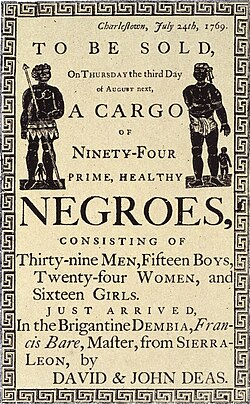
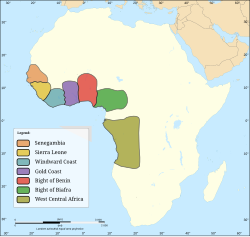
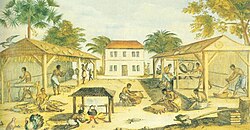
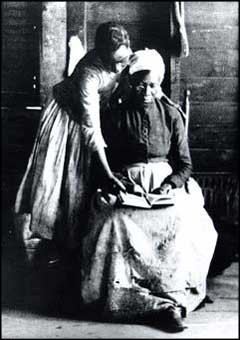
The presence of African people in the Americas began with the transatlantic slave trade, which forcibly brought millions from various African regions to the colonies. In the 17th century, enslaved people were central to the labor-intensive economies of the South, particularly in tobacco and cotton production.
From Revolution to the Civil War
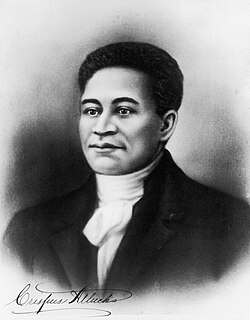
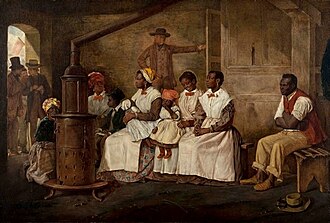
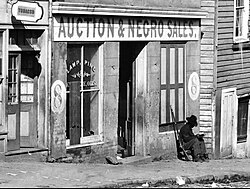
During the American Revolution, individuals of African descent fought for liberty, exemplified by figures like Crispus Attucks. However, the institution of slavery persisted and expanded until the American Civil War. The domestic slave trade frequently tore families apart, treating human beings as commodities in public auctions.
![The first slave auction at New Amsterdam in 1655; illustration from 1895 by Howard Pyle[27]](/images/ca/46/ca46d9ad9fe979edc54897e146e37b33c1145a9ae32971dfa37e36b2bca474f0.jpg)
Reconstruction and the Jim Crow Era
Following the abolition of slavery, the Reconstruction era offered a brief window of political progress. This was followed by the Jim Crow era, a period of state and local laws that enforced racial segregation and systemic disenfranchisement. This era was marked by extreme violence, including lynchings used as tools of terror.
![A group of White men pose for a 1919 photograph as they stand over the Black victim, Will Brown, who had been lynched and had his body mutilated and burned during the Omaha race riot of 1919 in Omaha, Nebraska. Postcards and photographs of lynchings were popular souvenirs in the US.[70]](/images/cf/1b/cf1badf5d481dd2b82a136108365a589f39dd4b7ab9e1a9625b927f6aafc4858.jpg)
The Civil Rights Movement
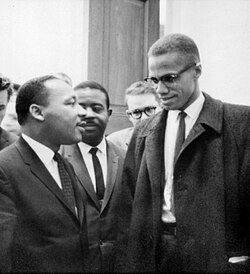
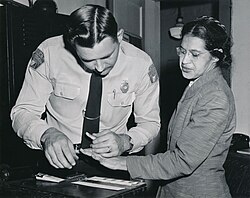
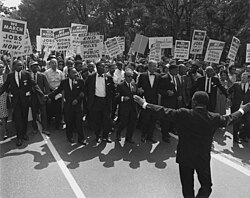
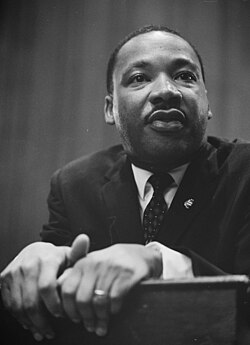
The mid-20th century saw a surge in organized resistance against segregation. Led by figures such as Dr. Martin Luther King Jr., Malcolm X, and Rosa Parks, the movement utilized nonviolent protest and legal challenges to dismantle segregation. The 1963 March on Washington for Jobs and Freedom stands as a pivotal moment in this struggle for equality.
Culture, Education, and Society
Education and Economic Status
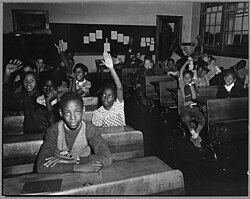
Historically Black Colleges and Universities (HBCUs) were established to provide quality education to Black students when they were excluded from white institutions. Despite these advancements, economic disparities persist in areas such as median household income and homeownership rates.
![This graph shows the real median US household income by race: 1967 to 2011, in 2011 dollars.[158]](/images/ff/2c/ff2cd504ac8f052be19f0d825330205e00a342ca67ccf1c9fab8555bb85c332f.png)
![The US homeownership rate according to race[180]](/images/60/08/60082f24d732349fb7d4bf3996948345e7744d6ec545317291bb5cbec1aa02a0.png)
Cultural Contributions
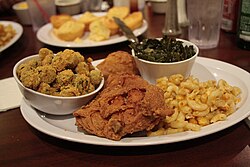
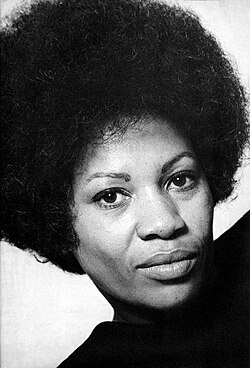
African American culture has had a global impact. This includes the development of unique linguistic patterns like African-American Vernacular English (AAVE), the creation of soul food, and a profound influence on global music and literature. From the Nobel Prize-winning literature of Toni Morrison to the scientific achievements of astrophysicists like Neil deGrasse Tyson, the contributions are vast.

Religion and Identity
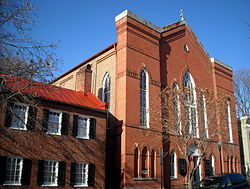
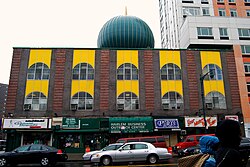
While Christianity is the dominant religion, the community is diverse, including significant populations of Muslims and irreligious individuals. Faith has often served as a cornerstone for community organization and social justice movements.
Political Legacy
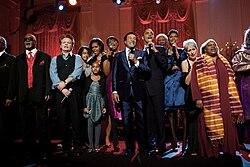
The political trajectory of African Americans has moved from total disenfranchisement to the highest levels of government. The election of Barack Obama as the 44th U.S. President and the service of Michelle Obama as First Lady marked a historic milestone in American history.


Frequently Asked Questions
![Band rehearsal on 125th Street in Harlem, the historic epicenter of African American culture. New York City is home by a significant margin to the world's largest Black population of any city outside Africa, at over 2.2 million. African immigration to New York City is now driving the growth of the city's Black population.[101]](/images/14/24/14243cd6a295937cde036685eaca92e4380bf30278dbee4e5836de14683f4671.jpg)
![Genetic clustering of 128 African Americans, by Zakharia et al. (2009). Each vertical bar represents an individual. The color scheme of the bar plot matches that in the PCA plot.[265]](/images/47/cc/47cce4800b18ccb3aadd82736c15ada7d7c85f34f6a0867005db19f4ab2c12bd.png)


What percentage of the U.S. population is African American?
As of the 2020 Census, 14.16% of the total U.S. population identifies as Black or African American, either alone or in combination with another race.
What was the Great Migration?
The Great Migration was the movement of millions of African Americans from the rural Southern United States to the urban North and West between roughly 1910 and 1970 to escape racial segregation and find better economic opportunities.
What are HBCUs?
HBCUs are Historically Black Colleges and Universities, institutions of higher education established specifically to serve the Black community during eras of legal racial segregation.
Which U.S. states have the largest African American populations?
The states with the largest populations include Texas, Georgia, Florida, New York, and California.
What is the significance of the 2020 Census undercount?
The 2020 Census had an estimated undercount rate of 3.3% for the African American population, which is an increase from the 2.1% undercount recorded in 2010.