Atlanta: The Resilient Capital of Georgia
Known by many names—from the professional "ATL" and "The A" to the evocative "City in a Forest"—Atlanta serves as the vibrant capital of the U.S. state of Georgia. Defined by its motto Resurgens (Latin for "rising again"), the city embodies the spirit of a phoenix, having evolved from a small railroad terminus into a global hub of commerce, culture, and civil rights.
Today, Atlanta is a sprawling metropolis that balances a rich, often turbulent history with a forward-looking economy. It is a city of contrasts, where modernist skyscrapers in Midtown stand alongside historic neighborhoods and lush urban canopies.
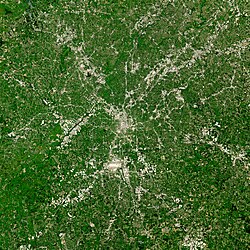
Key Facts
- Founded: Originally established as Terminus in 1837.
- Population: Approximately 498,715 (2020 Census), with a metro population of over 6.4 million.
- Economic Power: Metro GDP reached $604.282 billion in 2024.
- Global Reach: Home to the world headquarters of The Coca-Cola Company and Norfolk Southern Railway.
- Cultural Legacy: A central site of the American Civil Rights Movement and host of the 1996 Summer Olympic Games.
A Journey Through History
Foundations and the Civil War
Atlanta's origins are rooted in transportation. Founded in 1837 as Terminus, it grew rapidly due to the Western and Atlantic Railroad. However, this strategic importance made it a primary target during the American Civil War. The city underwent significant destruction before entering a period of Reconstruction in the late 19th century.


The 20th Century and Civil Rights
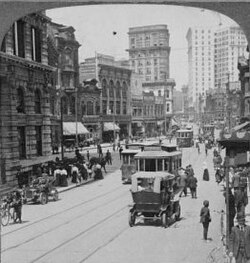
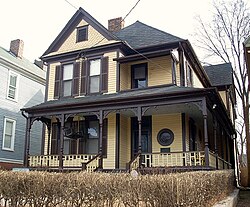
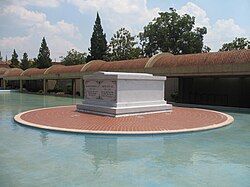
As the city expanded into the 1900s, it became a bustling center for streetcars and early automobiles. By the mid-20th century, Atlanta emerged as the heart of the Civil Rights Movement, largely driven by the leadership of Dr. Martin Luther King Jr., whose childhood home and final resting place remain pivotal landmarks in the city.
Modernization and Global Recognition
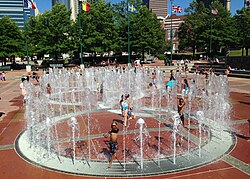
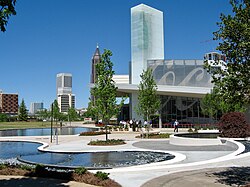
The late 20th century saw Atlanta transition into an international city. The 1996 Summer Olympic Games brought global attention and significant infrastructure development, including the creation of Centennial Olympic Park.

Geography and Urban Landscape
Cityscape and Architecture
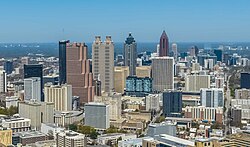
The city is divided into several distinct hubs. Downtown serves as the traditional center, while Midtown has evolved into a major growth center since the turn of the 21st century, characterized by modernist architecture like Colony Square (built in 1972).

Neighborhoods and Nature
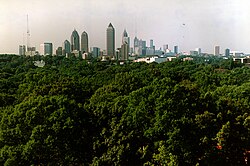
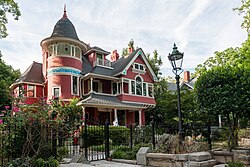
From the historic Beath-Dickey House in Inman Park to the sprawling campus of Georgia Tech, Atlanta's neighborhoods are diverse. The city is also noted for its significant tree canopy, earning it the nickname "The City in a Forest."
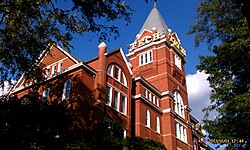
Demographics and Society
Atlanta is a diverse metropolitan area. According to the 2020 Census, the racial composition includes a significant Black or African American population (46.7%) and a White (Non-Hispanic) population (38.5%), with growing Asian (4.5%) and Hispanic or Latino (6.0%) communities.
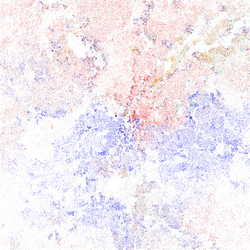
The city is also a center for LGBTQ+ culture, highlighted by annual events such as Atlanta Pride.

Economy and Infrastructure
Atlanta's economy is driven by corporate headquarters, education, and transportation. It is a major logistics hub, anchored by the Hartsfield-Jackson International Airport and the headquarters of global brands.
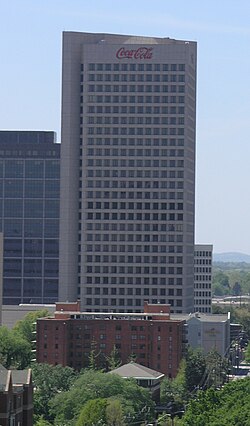
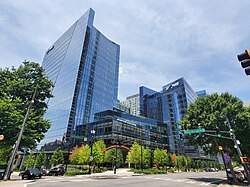
City Overview Summary
| Category | Detail |
|---|---|
| Government Type | Strong-mayor council |
| Elevation | 1,050 ft (320 m) |
| Metro GDP (2024) | $604.282 Billion |
| Urban Population | 5,100,112 (9th in US) |
| Metro Population | 6,411,149 (8th in US) |
Arts, Culture, and Recreation
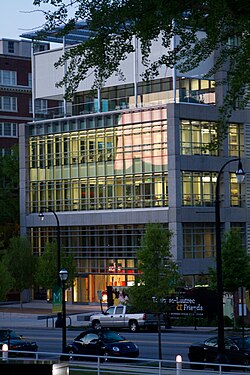
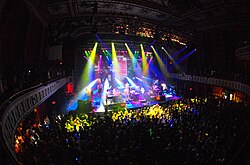
The city offers a rich array of cultural experiences, from the Museum of Design Atlanta (MODA) to live performances at the Tabernacle. Sports are also a cornerstone of the city's identity, with professional teams and world-class venues like the Mercedes-Benz Stadium.
Frequently Asked Questions
What does the motto "Resurgens" mean?
Resurgens is Latin for "rising again," which refers to the city's ability to rebuild and thrive after the destruction of the American Civil War, similar to a phoenix.
What are some of Atlanta's most famous corporate headquarters?
Atlanta is home to the world headquarters of The Coca-Cola Company and the Norfolk Southern Railway.
How significant is Atlanta's role in the Civil Rights Movement?
Atlanta was a central hub for the movement, most notably as the home of Dr. Martin Luther King Jr., whose childhood home and grave are located within the city.
What is the population of the Atlanta metropolitan area?
As of the provided data, the metro population is approximately 6,411,149, ranking it as the 8th largest metropolitan area in the United States.
Which major global event did Atlanta host in 1996?
Atlanta hosted the 1996 Summer Olympic Games, which left a lasting legacy on the city's infrastructure and international profile.