Ferdinand von Zeppelin: The General Who Revolutionized Aviation
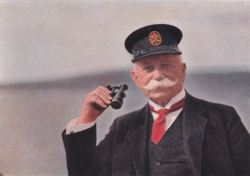
Count Ferdinand von Zeppelin was a man of two distinct lives: first as a high-ranking German military officer and later as the visionary inventor of the rigid airship. His name eventually became synonymous with the massive dirigibles—steerable balloons—that dominated long-distance flight from the early 20th century until the 1930s. Through the founding of Luftschiffbau Zeppelin, he transformed the dream of aerial navigation into a tangible industrial reality.
Born on July 8, 1838, in Konstanz, Baden, Ferdinand was the son of Friedrich Jerôme Wilhelm Karl Graf von Zeppelin, a Württemberg Minister. Educated by private tutors at the Girsberg manor, his early life was rooted in the nobility and military tradition of the Kingdom of Württemberg.
Military Career and Early Fame
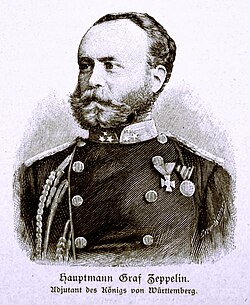
Zeppelin's professional life began in the cavalry. By 1865, he had risen to the position of adjutant to the King of Württemberg. He served as a general staff officer during the Austro-Prussian War of 1866, earning the Knight's Cross of the Military Merit Order of Württemberg. However, it was during the Franco-Prussian War (1870–1871) that he gained widespread fame for a daring reconnaissance mission behind enemy lines.
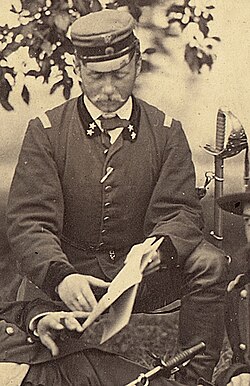
Despite his early successes, his military career ended in controversy. After serving as the envoy of Württemberg in Berlin and later commanding a Prussian cavalry brigade, his leadership during the 1890 autumn manoeuvres was heavily criticized. This led to his forced retirement in 1891 with the rank of generalleutnant (Lieutenant General).
The Vision of the Rigid Airship
Zeppelin's interest in aviation began long before his retirement. In a diary entry from March 1874, inspired by a lecture on world postal services, he conceptualized a large airship featuring a rigidly-framed outer envelope containing multiple separate gasbags. This design differed from existing balloons by providing a structural skeleton that maintained the ship's shape regardless of the gas pressure.
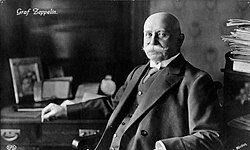
After leaving the army at age 52, Zeppelin dedicated himself entirely to this invention. He faced numerous technical hurdles, including the search for lightweight engines and high-purity hydrogen gas. He collaborated with engineers like Theodor Gross and later Theodor Kober to refine a design consisting of an aluminum framework covered in fabric, with modular sections that allowed the craft to be expanded.
From LZ 1 to the Zeppelin Foundation
The first successful rigid airship, the LZ 1, took its maiden flight on July 2, 1900, over Lake Constance. While it flew for 20 minutes, it was damaged upon landing. Financial struggles followed, but support from the King of Württemberg and a state lottery allowed him to build the LZ 2 and LZ 3. The LZ 3 proved the concept's viability, reaching speeds of 36 miles per hour (58 km/h) by 1907.
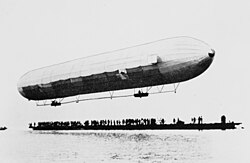
The ultimate financial breakthrough occurred after the LZ 4 was destroyed by fire in a storm. The public's fascination with the craft led to a massive collection campaign that raised over 6 million German marks. These funds established the Luftschiffbau-Zeppelin GmbH and the Zeppelin Foundation, ensuring the project's longevity.
Legacy and Later Years
By 1914, the German Aviation Association (DELAG) had safely transported over 37,000 passengers. However, the outbreak of World War I shifted the use of Zeppelins toward military applications, where they were deployed as long-distance bombers against Belgium, France, and the United Kingdom.
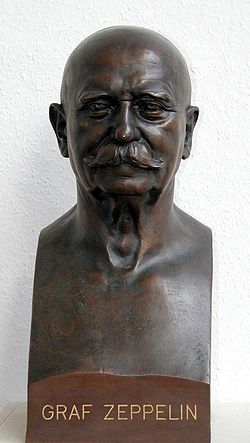
Count Zeppelin passed away on March 8, 1917, at the age of 78. He did not live to see the post-war restrictions of the Treaty of Versailles or the later resurgence of airships under Hugo Eckener. His name continues to be honored through various aircraft and monuments.
Key Facts
- Full Name: Ferdinand Adolf Heinrich August Graf von Zeppelin.
- Primary Invention: The rigid airship (dirigible) with an aluminum framework.
- First Flight: The LZ 1 flew on July 2, 1900, over Lake Constance.
- Military Rank: Attained the rank of General der Kavallerie.
- Company Founded: Luftschiffbau Zeppelin.
- Death: March 8, 1917, in Charlottenburg, Germany.
| Airship | First Flight | Key Outcome/Status |
|---|---|---|
| LZ 1 | July 2, 1900 | First flight (20 mins); damaged on landing. |
| LZ 2 | January 17, 1906 | Engine failure; dismantled after crash near Kisslegg. |
| LZ 3 | 1906 | Successful flights; reached 36 mph (58 km/h). |
| LZ 4 | June 20, 1908 | Destroyed by fire; sparked massive public funding. |
Frequently Asked Questions
What made the Zeppelin airship different from other balloons?
Unlike traditional balloons, the Zeppelin used a rigid aluminum framework. This structure supported the outer fabric envelope and held multiple internal gas cells, allowing the ship to be much larger and more stable than non-rigid airships.
Why did Ferdinand von Zeppelin leave the army?
Although he had a distinguished early career, he was forced to retire in 1891 after his handling of the 1890 autumn manoeuvres was severely criticized.
How was the Zeppelin project funded after the LZ 1?
Funding came from several sources, including a state lottery authorized by the King of Württemberg, contributions from Prussia, the mortgaging of his wife's estates, and eventually a massive public collection campaign that raised over 6 million marks.
What role did Zeppelins play in World War I?
Imperial Germany utilized Zeppelins as long-distance bombers to launch attacks on the United Kingdom, France, and Belgium.
Who succeeded Count Zeppelin in leading the project?
Following the Count's death and the subsequent restrictions of the Treaty of Versailles, the project saw a second resurgence under the leadership of Hugo Eckener.