Feeding Strategies and Evolutionary Adaptations in Animals
Feeding is the fundamental biological process by which organisms, primarily animals, obtain the nutrients necessary for survival. In scientific terminology, these behaviors are often described using Latin and Greek roots. The Latin vorare (to devour) gives us suffixes like -vore, -vory, or -vorous, while the Greek phagein (to eat) provides -phage, -phagy, or -phagous.
From the simplest filter feeders to complex apex predators, the way an animal eats is a direct reflection of its evolutionary journey and its role within an ecosystem.
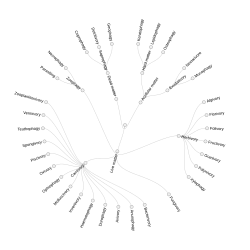
Evolutionary History of Feeding
The evolution of feeding strategies is a diverse process, with similar methods often evolving independently across different lineages. Approximately 400 million years ago, the earliest terrestrial vertebrates were large amphibious piscivores (fish-eaters). While amphibians continued to rely on fish and insects, early reptiles expanded their dietary horizons.
Reptiles began exploring two primary new food sources: other tetrapods (carnivory) and plants (herbivory). For medium and large tetrapods, the transition from insectivory to carnivory was relatively straightforward, requiring minimal biological adaptation. In contrast, evolving the ability to consume highly fibrous plant materials required a complex set of physiological adaptations to break down tough cellulose.
Evolutionary Adaptations for Nutrition
Specialization toward specific food sources is a primary driver of evolution, shaping both the form and function of an organism's body. These adaptations manifest in several key areas:
- Mouthparts and Teeth: Specialized structures have evolved for specific tasks, such as the teeth of felines, the mouthparts of mosquitoes, or the unique dental arrangements of whales and vampire bats.
- Avian Beaks: Birds exhibit a vast array of beak shapes tailored to their diet, including the specialized beaks of hummingbirds, hawks, pelicans, and woodpeckers.
- Appendages: Claws and fingers (such as those in primates) have evolved to help animals apprehend or kill prey.
- Camouflage: Changes in body color allow animals to disguise themselves, set traps, or sneak up on prey.
- Digestive Systems: Herbivores have developed complex stomach systems to process plants, often relying on commensalism (a relationship where one benefits and the other is unaffected) or symbiosis (a mutually beneficial relationship) with microbes.
Classification of Feeding Modes
By Mode of Ingestion
Animals employ various methods to bring food into their bodies:
- Filter feeding: Straining small organisms or particles randomly from water.
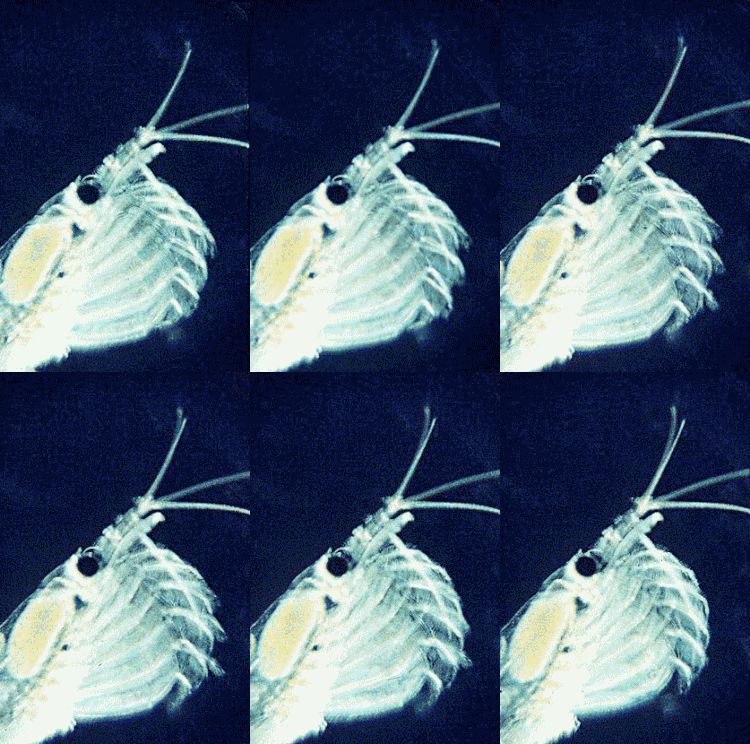
A krill filter feeding - Deposit feeding: Extracting nutrients from particles suspended in soil.
- Fluid feeding: Consuming the fluids of other organisms.
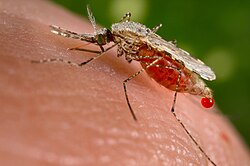
A mosquito drinking blood (hematophagy) from a human (note the droplet of plasma being expelled as a waste) - Bulk feeding: Eating an entire organism.
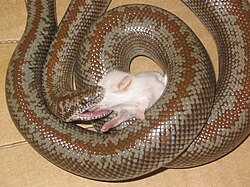
A rosy boa eating a mouse whole - Ram and Suction feeding: Using the surrounding fluids to pull prey into the mouth.
By Mode of Digestion
Once food is acquired, it is processed in different ways:
- Extra-cellular digestion: Excreting enzymes outside the body to break down food before reabsorbing the products.
- Myzocytosis: Using a feeding tube to pierce another cell and suck out its cytoplasm.
- Phagocytosis: Engulfing food matter directly into living cells for digestion.
Dietary Specializations
Animals are often categorized by the variety of food they can tolerate. Polyphagy refers to animals that eat a wide variety of foods (generalists), while monophagy describes those that can only tolerate one specific food type (specialists). Oligophagy is the intermediate state, where animals eat a small range of foods due to preference or necessity.
Common Dietary Classifications
| Category | Primary Food Source | Example/Specific Term |
|---|---|---|
| Carnivore | Animals | Piscivore (fish), Insectivore (insects) |
| Herbivore | Plants | Folivore (leaves), Frugivore (fruit) |
| Omnivore | Plants, Animals, Fungi, Bacteria | Generalist "all-eaters" |
| Detritivore | Decaying organic matter | Saprophage, Scavenger |
| Specialized | Specific materials | Haematophage (blood), Xylophage (wood) |
Within carnivory, animals are further classified by the percentage of meat in their diet: hypercarnivores (over 70%), mesocarnivores (30–70%), and hypocarnivores (under 30%).
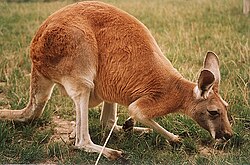
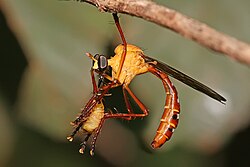
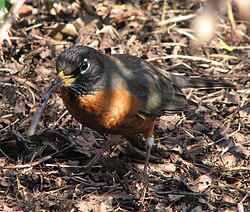
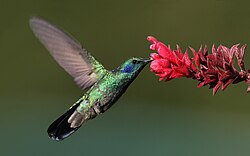
Examples of specialized feeders include the red kangaroo (graminivore)
Unusual and Pathological Feeding Behaviors
Some animals exhibit behaviors that are opportunistic or pathological:
- Cannibalism: Feeding on members of the same species, which can include filial (offspring), sexual (after mating), or intrauterine (embryo eating sibling eggs/embryos) forms.
- Kleptoparasitism: Stealing food from another animal.
- Pica: An appetite for non-nutritive substances like clay or hair, often seen in pathological states.
- Zoopharmacognosy: The act of self-medicating by eating specific plants, soils, or insects to treat disease.
- Trophallaxis: Consuming food regurgitated by another member of the species.
Additionally, some species utilize hoarding and caching, storing food in hidden locations for future use.
Key Facts
- Feeding terminology is derived from Latin (-vore) and Greek (-phage).
- The earliest terrestrial vertebrates were piscivores appearing 400 million years ago.
- Hypercarnivores consume more than 70% meat in their diet.
- Polyphagy describes generalist eaters, while monophagy describes specialists.
- Zoopharmacognosy is the biological process of self-medication through diet.
Frequently Asked Questions
What is the difference between a detritivore and a scavenger?
A detritivore consumes particulate decaying organic matter, while a scavenger typically feeds on carrion, refuse, or other decaying organic matter.
What is the difference between polyphagy and oligophagy?
Polyphagy is the habit of eating a wide variety of foods, whereas oligophagy refers to animals that eat a relatively small, restricted range of foods.
What is myzocytosis?
Myzocytosis is a mode of digestion where one cell pierces another using a feeding tube to suck out the cytoplasm.
What are the different types of cannibalism mentioned?
Cannibalism can take several forms, including filial (eating young), sexual (after mating), intrauterine (embryos eating siblings), and autocannibalism (eating one's own body).
How is a hypercarnivore defined?
A hypercarnivore is an animal whose diet consists of more than 70% meat.