Zebra Mussels: The Invasive Bivalve Reshaping Aquatic Ecosystems
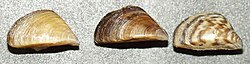
The zebra mussel (Dreissena polymorpha) is a small, prolific freshwater mollusk that has become one of the most significant invasive species in the world. Originally native to Eurasia, these bivalves—mollusks with two hinged shells—have rapidly colonized waterways across Europe and North America, fundamentally altering the biological and chemical makeup of the environments they inhabit.
Biological Profile and Life Cycle
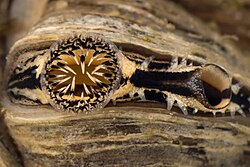
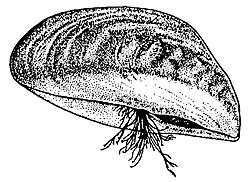
Zebra mussels belong to the family Dreissenidae and are characterized by their ability to attach themselves to hard surfaces using byssus, a bundle of strong fibers. Their life cycle is built for rapid expansion and high survival rates.
Reproduction and Development
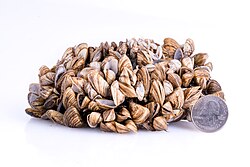
A single adult female can produce between 30,000 and 40,000 eggs in one reproductive cycle, totaling over 1 million eggs per year. Once released, the microscopic larvae, known as veligers, drift freely in the water column for several weeks. Upon settling, they attach to any available hard substrate. The lifespan of an individual zebra mussel typically ranges from three to five years.

Resilience and Adaptability
These organisms are remarkably hardy. They can tolerate a wide variety of environmental conditions and are even capable of surviving out of water for approximately seven days. This resilience facilitates their spread through various vectors, including human activity and commercial transport.
Ecological Impact: The Filter-Feeding Effect
As filter feeders, zebra mussels play a massive role in water chemistry. Each individual can process up to 1 litre of water per day, removing particles from the water column. While some particles are consumed as food, others are expelled as pseudofaeces—non-food matter combined with mucus and deposited on the lake floor.
This intense filtration has a profound effect on water clarity. In Lake Erie, for example, water clarity has increased from 15 cm to as much as 1 m in certain areas. While clearer water might seem positive, it allows sunlight to penetrate deeper, fueling the growth of submerged macrophytes (aquatic plants). When these plants die and decay, they wash up on shorelines, fouling beaches and creating water-quality issues.
![Changes in the spatial distribution of some fish species in the littoral (1), sublittoral (2) and pelagic (3) zones of Lake Pleshcheyevo before (a, c) and after (b, d) the introduction of zebra mussels: a - roach in 1978-1981, b - the same in 2014-2016, c - bream (black) and silver bream (grey) in 1978-1981, d - the same in 2014-2015.[77]](/images/04/3e/043e4810abcd9c2b291d448a8bc9fe14e063ddb2cc1148b269b11dc8b672d256.png)
Natural Predators
In some ecosystems, natural enemies help manage mussel populations. In Europe, wintering waterbirds can reduce zebra mussel biomass in shallow areas by more than 90%. Additionally, crayfish can consume roughly 105 mussels per day. In North American habitats like the Great Lakes, fish such as the smallmouth bass also act as predators, though their effectiveness varies by region.
Global Spread and Economic Costs
The movement of zebra mussels has been facilitated by artificial waterways, such as canals in Europe, and more recently, through the aquarium trade. In 2021, the U.S. Geological Survey discovered zebra mussels in marimo moss balls sold in pet stores, leading to detections across 30 U.S. states.
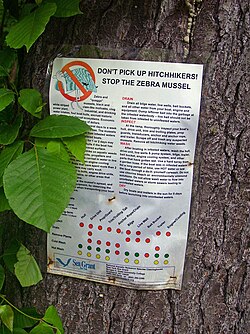
In North America, they have established themselves in the Great Lakes, the Mississippi, Hudson, and St. Lawrence rivers, and various other major water bodies. However, their spread is not universal; for instance, they have failed to establish reproducing populations in Kentucky Lake, potentially due to low dissolved calcium levels.
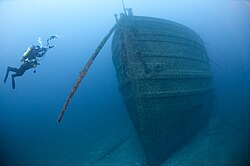
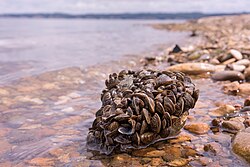
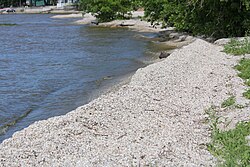
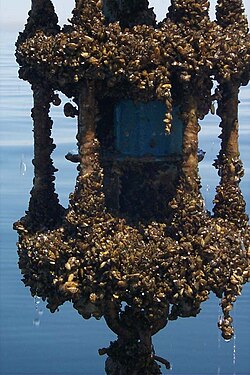
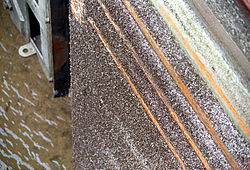
The economic burden of managing these pests is immense. Controlling zebra mussels in power plants and water-treatment facilities is a massive undertaking. Estimates for management costs in the Great Lakes alone exceed $500 million annually, while a U.S. Department of State study estimated the total cost of the invasion could reach $3.1 billion over a ten-year period.
Key Facts
- Scientific Name: Dreissena polymorpha
- Reproduction: Up to 1 million eggs per female, per year.
- Water Filtration: Up to 1 litre of water processed per mussel, per day.
- Lifespan: 3 to 5 years.
- Primary Impact: Increased water clarity leading to excessive plant growth and shoreline fouling.
- Economic Cost: Management in the Great Lakes exceeds $500 million annually.
Summary of Zebra Mussel Characteristics
| Feature | Description |
|---|---|
| Feeding Type | Filter feeder |
| Larval Stage | Veligers (free-swimming) |
| Attachment Method | Byssus (fibrous threads) |
| Environmental Effect | Increased water clarity and macrophyte growth |
| Survival Capability | Can survive out of water for ~7 days |
Frequently Asked Questions
How do zebra mussels spread to new locations?
Zebra mussels spread through various vectors, including the movement of water through canals, the transport of infested vessels, and even through the sale of aquatic plants like marimo moss balls in the pet trade.
Why does increased water clarity cause problems?
While clear water looks cleaner, it allows sunlight to reach much deeper into the water column. This promotes the overgrowth of submerged plants, which can decay and cause water-quality issues and beach fouling.
Can zebra mussels survive in all freshwater environments?
No. Their ability to establish a population can be limited by environmental factors. For example, low levels of dissolved calcium have prevented them from establishing reproducing populations in Kentucky Lake.
What are veligers?
Veligers are the microscopic, free-swimming larval stage of the zebra mussel. They drift in the water for several weeks before settling onto a hard surface to grow into adults.
Are there any natural predators for zebra mussels?
Yes, several species act as predators, including certain fish (like smallmouth bass), crayfish, and various species of waterbirds.