Falconry: The Ancient Art of Hunting with Birds of Prey
Falconry is the traditional practice of hunting wild animals in their natural habitats using trained birds of prey. This ancient partnership between humans and raptors—birds of prey such as hawks, falcons, and eagles—is used to hunt small game, most commonly rabbits and squirrels. While often used interchangeably with the term "hawking" or "gamehawking," falconry represents a sophisticated blend of animal husbandry, patience, and ecological understanding.
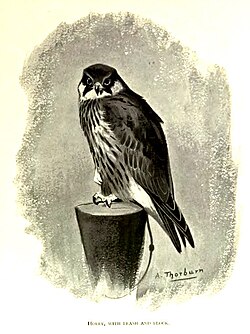
Historically, the terminology was more specific. A falconer specifically flew falcons, while an austringer (a term of Old French origin) kept and used accipiters, such as the Eurasian goshawk. In early English literature, a "falcon" referred exclusively to a female peregrine falcon, and a "hawk" referred to a female hawk. Males, which are typically about one-third smaller than females, were known as tiercels.
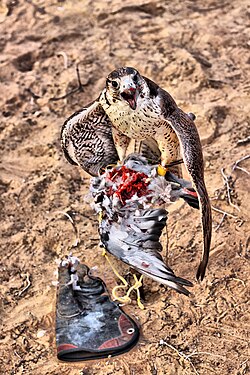
Key Facts
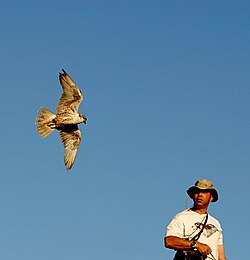
- Global Heritage: Recognized by UNESCO as an Intangible Cultural Heritage of Humanity.
- Arabian Significance: The Saker falcon is a national emblem for the UAE, Saudi Arabia, Qatar, Oman, and Yemen, with roots in the region dating back over 9,000 years.
- Conservation Impact: Captive breeding programs led by falconers were instrumental in saving the peregrine falcon from extinction in North America.
- Diverse Raptors: Modern practitioners use a variety of birds, including the red-tailed hawk, Harris's hawk, and various falcon species.
Birds Used in Contemporary Falconry
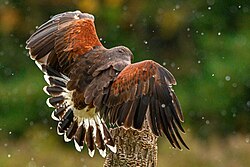
Raptors used in modern falconry are generally categorized by their wing shape and hunting style:
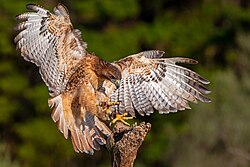
Broadwings
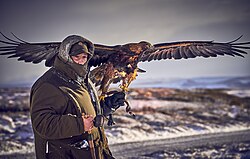
This group includes eagles and species from the Buteo and Parabuteo genera. Common examples include the red-tailed hawk, Harris's hawk, and golden eagles.
Shortwings
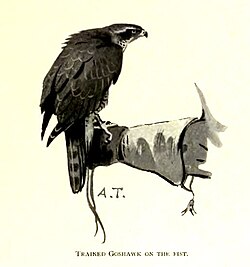
These are primarily Astur and Accipiter species, such as the Eurasian goshawk, Cooper's hawk, and Eurasian sparrowhawk, known for their agility in wooded areas.
Longwings
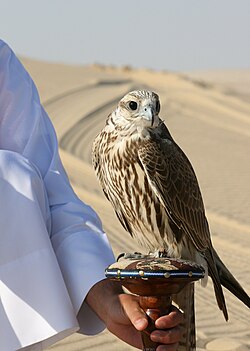
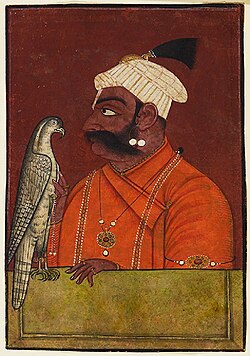
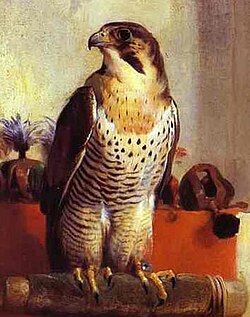
This category comprises the falcons (Falco), including the peregrine falcon, kestrel, gyrfalcon, and saker falcon, prized for their incredible speed.
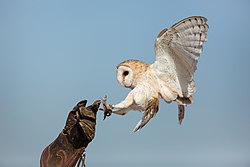
Other birds occasionally used in the sport include harriers (Circus), owls (Strigidae), and various sea eagles (Haliaeetus).
Husbandry, Training, and Equipment
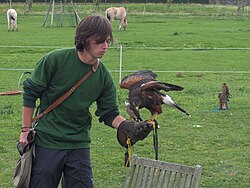
Successful falconry requires specialized equipment and rigorous training to ensure the bird remains conditioned and healthy. This process involves a deep understanding of raptor behavior and biology to create a bond of trust between the falconer and the bird.

Falconry Around the World
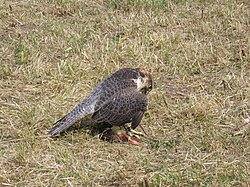
The Arabian Peninsula
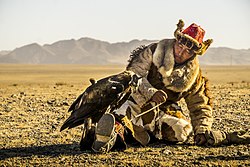
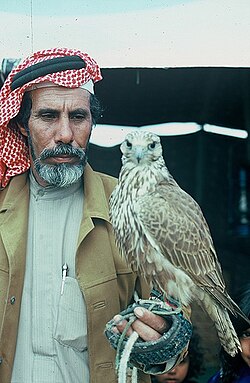
Falconry is a cornerstone of Arabian culture. The Saker falcon, referred to as "Hur" (meaning Free-bird), has been integral to the heritage of the region since ancient times.
![Falconer from Al Ain, Abu Dhabi[21]](/images/7e/a8/7ea8e36c96e461845dc1dd005e248224a67876b838741ddaa22a79701f48e660.jpg)
The United Kingdom
The UK has a rich history of hawking. The British Falconers' Club (BFC), founded in 1927, is the oldest and largest club in the country, focusing on education, sustainable practice, and raptor conservation.
North America
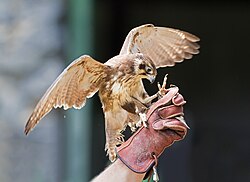
In the United States, falconry is strictly regulated under the Migratory Bird Treaty Act of 1918. This law protects migratory birds and their nests, requiring falconers to obtain special permits from the U.S. Fish and Wildlife Service and state agencies.
Conservation and Captive Breeding
Falconers have played a pivotal role in wildlife conservation. In the early 1970s, the Peregrine Fund and individual breeders like Heinz Meng, David Jamieson, and Les Boyd pioneered the captive breeding of peregrine falcons using artificial insemination. This effort, supported by the Endangered Species Act of 1972, helped supplement wild populations of peregrines, golden eagles, and bald eagles.
Due to these efforts, the peregrine falcon was removed from the U.S. endangered species list on August 25, 1999. By the mid-1980s, the falconry community had become largely self-sufficient in sourcing captive-bred birds, reducing the pressure on wild populations.
Historical Timeline and Cultural Influence
| Date/Period | Event/Reference |
|---|---|
| 722–705 BC | Assyrian bas-reliefs potentially depicting raptor capture. |
| 680 BC | First Chinese records describing falconry. |
| Early 16th Century | Japanese warlord Asakura Norikage succeeds in captive breeding of Eurasian goshawks. |
| 1486 | Publication of the Boke of Saint Albans, detailing social hierarchies of birds. |
| 1970 | Peregrine falcons listed as endangered in the U.S. due to DDT. |
| 1999 | Peregrine falcon removed from the U.S. Endangered Species List. |
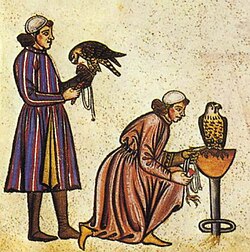
The cultural prestige of falconry is evident in the 15th-century Book of St Albans, which assigned specific birds to social ranks: eagles for emperors, gyrfalcons for kings, and kestrels for servants.
Linguistic Legacy
Many common English idioms originate from the practice of falconry:
- Haggard: Originally referring to a wild adult hawk; now means exhausted or unwell.
- Lure: Originally a bait used to call a hawk; now means to tempt with a reward.
- Pounce: Referring to a hawk's strike; now means to jump forward and seize.
- Turn tail: Originally describing a bird flying away; now means to run away in fear.
Frequently Asked Questions
![Three panels depicting hawking in England from various time periods, as reprinted in Joseph Strutt's 1801 book, The Sports and Pastimes of the People of England from the Earliest Period: The middle panel is from a Saxon manuscript dated to the late 10th century – early 11th century, as of 1801 held in the "Cotton Library", showing a Saxon nobleman and his falconer. The top and bottom panels are drawings from a manuscript held, as of 1801, in the Royal Library, dating from the early 14th century, showing parties of both sexes hawking by the waterside; the falconer is frightening the fowl to make them rise and the hawk is in the act of seizing upon one of them.[45]](/images/88/da/88dab235a532c4e73e1d630158ea777ddce37fe3e0d40ffb4cb5bbd6964793f7.jpg)
What is the difference between a falconer and an austringer?
A falconer is a person who flies falcons, whereas an austringer is a person who keeps and hunts with accipiters, such as the Eurasian goshawk.
Why was the peregrine falcon endangered in the 1970s?
The decline of the peregrine falcon was primarily caused by the use of DDT, a pesticide that contaminated the food chain and affected the birds' ability to reproduce.
Which birds are most common in modern falconry?
The most commonly used birds today include the red-tailed hawk, Harris's hawk, and the peregrine falcon.
Is falconry legal in the United States?
Yes, but it is highly regulated. Under the Migratory Bird Treaty Act, falconers must obtain special permits from the U.S. Fish and Wildlife Service and state wildlife agencies to possess birds of prey.
What is a "tiercel"?
A tiercel is a male hawk or falcon, so named because it is typically about one-third smaller than the female of the same species.