Species Reintroduction: Restoring Biodiversity and Ecological Balance
Species reintroduction is the deliberate release of animals or plants into the wild, sourced either from captivity or from other areas where the organism is capable of survival. The primary objective is to establish a healthy, genetically diverse, and self-sustaining population in a region where the species has been extirpated (locally extinct) or to augment a population that is currently struggling to survive.
While humans have moved species across landscapes for thousands of years for food and pest control, the modern practice of reintroduction for conservation purposes only gained momentum in the 20th century. Today, these efforts are often part of broader rewilding initiatives aimed at restoring natural processes and ecological health.
Key Facts
- Primary Goal: To create self-sustaining, genetically diverse populations of threatened or endangered species.
- Alternative Purpose: Reintroduction can be used for pest control, such as introducing wolves to manage deer overpopulation.
- Terminology: Some conservationists prefer the term reestablishment when returning native species to their original localities.
- Global Scope: Programs are active across every continent, targeting everything from insects and plants to large mammals.
- Governance: The Reintroduction Specialist Group (RSG) provides expert guidance on these complex biological processes.
The Science of Reintroduction
Successfully returning a species to the wild requires more than just releasing animals into a forest or prairie. Conservationists must navigate several critical biological and environmental factors to ensure the population does not collapse.
Sourcing Individuals
There are two primary methods for obtaining the individuals used in these programs. In situ sourcing involves taking individuals from a wild population in a different location. Ex situ sourcing involves using animals bred in captivity, such as in zoos or specialized breeding centers.
Genetic and Ecological Considerations
Genetic diversity is paramount; without it, a population may suffer from inbreeding, making them more susceptible to disease. However, there is often a genetic trade-off: animals bred in captivity may undergo adaptation to captivity, losing the survival instincts or physical traits necessary for the wild. Therefore, ensuring ecological similarity between the source environment and the release site is vital for the animals' transition.
To mitigate these risks, modern programs employ rigorous genetic monitoring and improved research techniques to track the health and integration of the released individuals.
Global Reintroduction Programs
Reintroduction efforts vary by region, targeting species that play pivotal roles in their respective ecosystems.
Asia and the Middle East
In Asia, efforts range from the successful return of the Pygmy hog in India to the ongoing release of Przewalski's horse across Mongolia, China, and Kazakhstan.
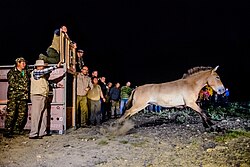
In the Middle East, the Nubian ibex and Persian onager have seen successful reestablishments in Israel, Jordan, and Saudi Arabia.
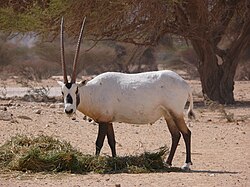
Europe and Africa
Europe has seen significant success with the European beaver and the Alpine ibex. In the Netherlands and Belgium, the Black-bellied hamster (also known as the European hamster) has been successfully reintroduced.
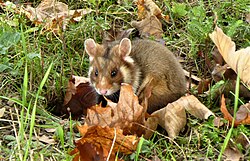
African programs have focused on iconic species, including the Angolan giraffe in Iona National Park and the South African cheetah in Malawi and Eswatini.
The Americas and Oceania
North American efforts include the ongoing recovery of the California condor and the successful return of the Fisher to Washington state.
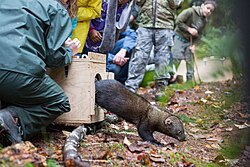
In South America, the Iberá Project in Argentina has been instrumental in returning the Giant anteater, Jaguar, and Giant otter to the wetlands. Other efforts include the release of the Chaco tortoise in Santiago del Estero.
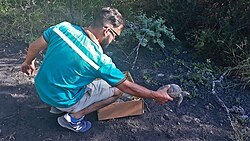
Oceania has focused on unique marsupials, with the Greater bilby seeing success in South Australia and the Tasmanian devil being reintroduced to the mainland.
Summary of Notable Reintroduction Outcomes
| Species | Region | Status/Outcome |
|---|---|---|
| Alpine Ibex | Europe (Alps) | Successful |
| Pygmy Hog | India | Successful |
| Black-footed Ferret | North America | Successful (USA), Failure (Mexico/Canada) |
| North African Ostrich | Middle East | Successful (Saudi Arabia), Failure (Israel) |
| Greater Bilby | Australia | Successful |
| Przewalski's Horse | Ukraine | Successful |
Frequently Asked Questions
What is the difference between reintroduction and reestablishment?
While often used interchangeably, reintroduction is the general term for releasing a species into the wild. Reestablishment specifically refers to returning a native species to a locality where it had been previously extirpated.
Can species reintroduction be used for something other than conservation?
Yes. Reintroduction can be used for pest control. An example is the reintroduction of wolves to certain areas to curb the overpopulation of deer, which helps maintain the balance of the vegetation.
Why do some reintroduction programs fail?
Failures can occur due to a lack of ecological similarity between the source and release sites, poor genetic diversity, or the animals' inability to adapt after being bred in captivity (adaptation to captivity).
What is the role of the Reintroduction Specialist Group (RSG)?
The RSG provides the scientific framework and expertise necessary to plan and execute reintroduction programs, ensuring that genetic and ecological risks are minimized.
What are in situ and ex situ sourcing?
In situ sourcing involves taking individuals from existing wild populations in other areas. Ex situ sourcing involves using individuals bred in controlled environments, such as zoos or botanical gardens.