Extinct in the Wild: Conservation Challenges and Recovery Efforts
When we think of extinction, we often imagine a total disappearance of a species from Earth. However, there is a critical intermediate classification used by the International Union for Conservation of Nature (IUCN) known as Extinct in the Wild (EW). A species is categorized as EW when its only surviving members exist in captivity or as naturalized populations outside their original historic range.
Determining this status is a rigorous process. It requires exhaustive surveys of the species' known habitats, with scientists carefully accounting for life cycles, time of day, and seasonality to ensure no wild individuals remain. Once a species reaches this status, the only path back to a wild existence is through a process called reintroduction.
Key Facts
- Definition: Species that survive only in captivity or outside their historic range.
- Recovery Path: The only way to downgrade an EW status is through successful reintroduction.
- Diversity: EW species range from rare animals to widely cultivated plants, such as the Brugmansia genus.
- Challenges: Loss of survival instincts and genetic inbreeding are primary obstacles to recovery.
- Measurement: The IUCN Green Status provides a 0%–100% scale to track species recovery.
Examples of Species Extinct in the Wild
Many diverse organisms have fallen into the EW category. Some are the result of habitat loss, while others face threats from invasive species or disease.
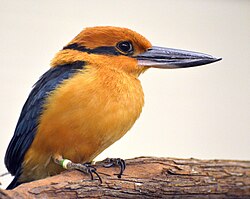
The Guam kingfisher is a poignant example of this status, having been listed as extinct in the wild since 1986.
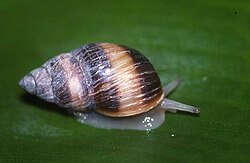
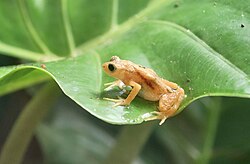
Other notable examples include the Kihansi spray toad, listed since 2009, and the Moorean viviparous tree snail, listed since 2009.
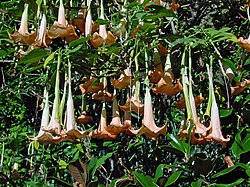
Not all EW species are animals. The Brugmansia versicolor (angel's trumpet) has been listed as extinct in the wild since 2014, despite being widely cultivated by humans.
Summary of Selected EW Species
| Species Name | EW Listing Year | Notes |
|---|---|---|
| Guam kingfisher | 1986 | Bird species |
| Kihansi spray toad | 2009 | Amphibian species |
| Brugmansia versicolor | 2014 | Widely cultivated plant |
| Spix's macaw | 2019 | Bird species |
| Dabry's sturgeon | 2022 | Fish species |
The Complexity of Species Reintroduction
Reintroduction, also known as translocation, is the deliberate release of captive individuals back into the wild. While it sounds straightforward, it is fraught with biological and environmental hurdles.
One major issue is the loss of survival techniques. Many animals learn how to hunt, forage, and avoid predators from their parents; when a species is bred in captivity, these essential behaviors may vanish. Additionally, climate change can render a species' historic range unsuitable, meaning that even if the habitat is restored, the current climate may no longer support the population.
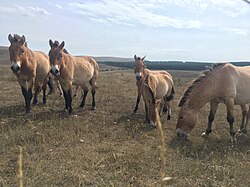
The Przewalski's horse serves as a success story, having been downgraded from EW to Endangered in 2011. However, challenges remain; in China, they are still considered EW because they require supplemental winter feeding to survive.
Genetic Bottlenecks and Inbreeding
Conservationists often struggle with inbreeding depression, which occurs when a population descends from very few ancestors. This can lead to shorter lifespans and higher mortality rates. Experts monitor the effective population size—a measure of genetic diversity loss—to determine if a population is viable. If the effective population size is too low, the growth rate of the species may be permanently stunted.
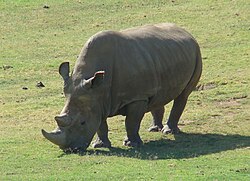
The northern white rhino represents one of the most extreme conservation challenges. With only two females left, scientists are attempting to use cryopreserved cells to create stem cell lines and embryos for surrogate Southern white rhinos.
Measuring Success: The IUCN Green Status
In 2012, the IUCN introduced the Green Status, a system that scores species recovery from 0% (extinct/EW) to 100% (fully recovered). To reach 100%, a species must be present, viable, and performing its ecological niche across its entire current and historical range.
The system uses several specific metrics:
- Conservation Legacy: How previous work has maintained or changed a species' status.
- Conservation Dependency: The projected status in 10 years if current efforts stop.
- Conservation Gain: The projected status in 10 years if current efforts continue.
- Recovery Potential: The estimated amount of range that can still house functional populations.
Flagship Species: The Case of Lonesome George
Some species become flagship species, serving as symbols to rally public support for conservation. Lonesome George, the last Pinta Island tortoise, became a global icon for the Galapagos Islands.
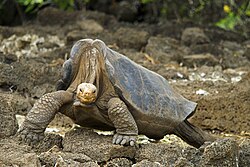
Though George died in 2012, leaving the subspecies believed to be extinct, hope remains. The discovery of 17 hybrid Pinta tortoises at Wolf Volcano has led to plans to breed the subspecies back into a pure state.
Frequently Asked Questions
What is the difference between Extinct and Extinct in the Wild?
A species is Extinct when no individuals exist anywhere. A species is Extinct in the Wild (EW) when individuals exist only in captivity or in areas outside their original natural range.
Can a species ever stop being Extinct in the Wild?
Yes, through successful reintroduction. For example, Przewalski's horse was downgraded from EW to Endangered in 2011 after decades of effort.
Why is it hard to release captive animals back into nature?
Animals may have lost critical survival skills usually passed from parents to offspring. Additionally, climate change may have made their original habitats unsuitable for survival.
What is the IUCN Green Status?
It is a scoring system (0% to 100%) used to measure the recovery of a species based on its range, viability, and ecological function.
What is effective population size?
It is a measurement used by biologists to quantify the loss of genetic diversity within a population, which is often a more accurate predictor of population trends than the total number of individuals.