IUCN Red List: Tracking Global Biodiversity and Extinction Risks
Since its inception in 1964, the IUCN Red List of Threatened Species—often referred to as the Red Data Book—has served as the world's most comprehensive inventory of the global conservation status and extinction risk of biological species. Managed by the International Union for Conservation of Nature (IUCN), this vital scientific resource provides the data necessary to understand the magnitude of threatened biodiversity and to influence international policy and conservation actions.
By providing scientifically based information on species and subspecies, the Red List helps guide efforts to protect the planet's biological diversity. While the primary focus is global, various countries and organizations also produce Regional Red Lists to assess extinction risks within specific political or geographic management units.
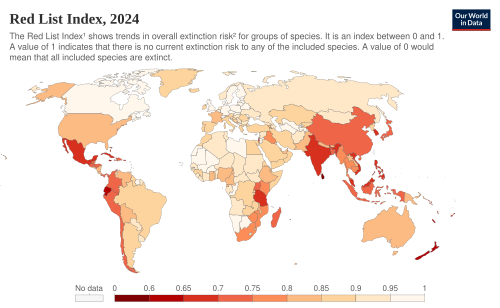
Key Facts
- Founded: 1964
- Headquarters: Cambridge, England
- Primary Goal: To provide scientifically based information on species extinction risk to guide conservation.
- Scope: Covers a vast array of species, including mammals, birds, reptiles, amphibians, plants, and fishes.
- Assessment Frequency: The IUCN aims to re-evaluate every species at least every ten years, and every five years whenever possible.
- Threatened Categories: Includes Critically Endangered, Endangered, and Vulnerable species.
The Evolution of Species Assessment
The Red List has undergone significant transformations since its early days. Initially, the Red Data Lists were designed for specialists and were issued in a loose-leaf format to allow for easy updates. The first volumes, published in 1966, focused on mammals and birds, followed by subsequent volumes covering reptiles, amphibians, plants (specifically angiosperms), and freshwater fishes.
In 1969, the first attempt to reach the general public was made with The Red Book: Wildlife in Danger. As the methodology matured, the system moved toward the rigorous, peer-reviewed framework used today. Since 2001, all new assessments have utilized version 3.1 of the categories and criteria, ensuring a standardized approach to measuring extinction risk.
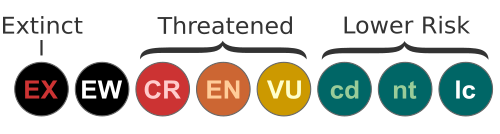
Major Contributors and Partners
The accuracy of the Red List relies on a massive collaborative network. Major species assessors include BirdLife International, the Institute of Zoology (part of the Zoological Society of London), and the World Conservation Monitoring Centre. Additionally, many Specialist Groups within the IUCN Species Survival Commission (SSC) contribute significantly, with these organizations collectively accounting for nearly half of all species listed.
Understanding the Red List Categories
Species are classified into nine distinct groups based on specific criteria, such as population size, rate of decline, geographic distribution, and the degree of population fragmentation. When a species is categorized as "threatened," it falls into one of three specific sub-categories: Critically Endangered, Endangered, or Vulnerable.
| Category | Abbreviation | Description |
|---|---|---|
| Extinct | EX | No reasonable doubt that the species no longer exists. |
| Extinct in the Wild | EW | Survives only in captivity, cultivation, or outside its native range. |
| Critically Endangered | CR | Facing an extremely critical risk of extinction. |
| Endangered | EN | Very high risk of extinction in the wild. |
| Vulnerable | VU | High risk of extinction without human intervention. |
| Near Threatened | NT | Close to being endangered in the near future. |
| Least Concern | LC | Widespread and abundant in the wild. |
| Data Deficient | DD | Inadequate information to assess extinction risk. |
| Not Evaluated | NE | Has not yet been assessed. |
![The percentage of species in several groups by their conservation status according to the IUCN Red List.[7]](/images/97/e7/97e7bd5b895af75d660df4fd83e016682e2d27da77fd09eb765eb44fc2dae0d0.png)
Historical Trends and Challenges
The history of the Red List is marked by increasing awareness of the extinction crisis. For example, the 2008 Blue List confirmed that nearly one in four mammals was at risk of disappearing forever. By 2012, assessments revealed that 41% of amphibian species and 33% of reef-building corals were under threat.
As of 2023, out of 150,388 species surveyed, 42,108 are considered at risk of extinction. Human activities—specifically overfishing, hunting, and land development—are identified as primary drivers of this decline.
![Number of species in each IUCN Red List Category as of March 2026[7]](/images/07/84/078465c623d4aaeb168bd4e0c98131db763fd7551c7a9317f500949b2bb68fdb.png)
Scientific Rigor and Criticism
While the Red List is the global standard, it has faced scrutiny. In 1997, concerns were raised regarding data documentation and secrecy. In response, the IUCN improved its peer-review processes and documentation quality. More recently, researchers have suggested that the categorization process could be improved by integrating more geospatial data, such as satellite and aerial imaging, to more accurately reflect species' geographic shifts and risks.
Frequently Asked Questions
What does it mean when a species is "threatened"?
In the context of the IUCN Red List, the term "threatened" specifically refers to species that fall into the Critically Endangered, Endangered, or Vulnerable categories.
How is a species' extinction risk determined?
Assessments are based on scientific criteria including the rate of population decline, total population size, the area of geographic distribution, and how fragmented the population is.
What is the difference between Extinct and Extinct in the Wild?
Extinct (EX) means there is no reasonable doubt that the species no longer exists. Extinct in the Wild (EW) means the species only survives in managed settings like captivity or cultivation, outside its natural habitat.
Who is responsible for assessing species for the Red List?
Assessments are conducted by Red List Authorities (RLA) within the IUCN Species Survival Commission (SSC) Specialist Groups, along with major partners like BirdLife International.
Why are some species listed as Data Deficient?
A Data Deficient (DD) status is assigned when there is inadequate information available to make a scientifically sound assessment of the species' extinction risk.