Eugene Wigner: The Architect of Symmetry in Quantum Physics
Eugene Paul Wigner (1902–1995) was a towering figure in 20th-century science, a Hungarian-American theoretical physicist whose work bridged the gap between abstract mathematics and the physical reality of the atomic nucleus. His profound insights into symmetry principles—the idea that certain properties of a physical system remain unchanged under specific transformations—revolutionized our understanding of elementary particles and the fundamental laws of nature.
Wigner's legacy is not only found in the Nobel Prize he received in 1963 but also in the vast array of theorems, distributions, and effects that bear his name. From the design of the first nuclear reactors to philosophical inquiries into the role of consciousness in physics, Wigner's intellectual curiosity spanned the entirety of the physical and mathematical sciences.
Key Facts
- Nobel Prize: Awarded the 1963 Nobel Prize in Physics for his contributions to the theory of the atomic nucleus and elementary particles.
- Manhattan Project: Led the team that designed the production nuclear reactors used to create weapons-grade plutonium.
- Mathematical Legacy: Introduced group theory into quantum mechanics, making it accessible to the wider physics community.
- Philosophical Contribution: Authored the influential paper "The Unreasonable Effectiveness of Mathematics in the Natural Sciences."
- Key Discovery: Identified the law of conservation of parity.
Early Life and Academic Foundations
Born as Wigner Jenő Pál in Budapest, Austria-Hungary, Wigner grew up in a Jewish family. His early education was marked by a strong mathematical foundation, aided by the instruction of László Rátz. During his youth, he was a contemporary of the legendary mathematician János von Neumann; the two would later become lifelong collaborators.
Wigner's academic journey took him to the University of Göttingen, where he served as an assistant to David Hilbert. While the experience was personally disappointing due to Hilbert's shifting interests, Wigner used the time for independent study. This period was pivotal, as he began laying the groundwork for the theory of symmetries in quantum mechanics and introduced the Wigner D-matrix in 1927.
Along with Hermann Weyl, Wigner was instrumental in integrating group theory—the mathematical study of symmetry—into quantum mechanics. While Weyl's early texts were dense, Wigner's 1931 publication, Group Theory and Its Application to the Quantum Mechanics of Atomic Spectra, became the definitive resource that made these complex concepts accessible to other physicists.
Migration and the American Era
The rise of Nazism in Germany pushed Wigner toward the United States. In 1930, he was recruited by Princeton University for a lectureship, a move that coincided with the recruitment of von Neumann. To better integrate into their new environment, both scientists anglicized their names to Eugene and John.
Wigner's path was not without personal tragedy. After a period at the University of Wisconsin, where he married physicist Amelia Frank, her unexpected death in 1937 left him devastated. He eventually returned to Princeton and became a naturalized U.S. citizen on January 8, 1937.
Contributions to the Manhattan Project
During World War II, Wigner played a critical role in the Manhattan Project. He led the team responsible for designing the production nuclear reactors necessary to convert uranium into plutonium. Facing the challenge of designing reactors that had previously existed only in theory, Wigner opted for a conservative 100 MW design utilizing water cooling and a graphite neutron moderator (a material used to slow down fast neutrons to sustain a chain reaction).
On December 2, 1942, Wigner witnessed a historic milestone at the University of Chicago's Stagg Field: the first controlled, self-sustaining nuclear chain reaction achieved by Chicago Pile One (CP-1).

Scientific Legacy and Mathematical Influence
Wigner's technical contributions are vast, spanning nuclear physics, solid-state physics, and mathematics. He is particularly noted for the Wigner-Eckart theorem, which simplifies the calculation of matrix elements in quantum mechanics by utilizing symmetry.
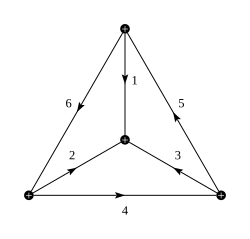
In the realm of mathematics, he developed the 6-j and 9-j symbols, which are essential for calculating the coupling of angular momenta in atomic and nuclear physics.
Summary of Major Contributions
| Field | Key Contribution / Concept | Significance |
|---|---|---|
| Quantum Mechanics | Group Theory Application | Standardized the use of symmetry in atomic spectra. |
| Nuclear Physics | CP-1 Reactor Design | Enabled the first controlled nuclear chain reaction. |
| Mathematical Physics | Wigner-Eckart Theorem | Simplified calculations of quantum transitions. |
| Theoretical Physics | Conservation of Parity | Defined fundamental symmetry in particle interactions. |
| Philosophy of Science | Effectiveness of Mathematics | Explored why math describes the physical world so accurately. |
Later Years and Philosophical Reflections
In his later life, Wigner turned his attention toward the intersection of physics and philosophy. He famously pondered the "unreasonable effectiveness of mathematics," questioning why mathematical structures so perfectly mirror the laws of nature. He also explored the role of the observer, suggesting that the laws of quantum mechanics could not be fully consistent without reference to consciousness.
Wigner remained active in the scientific community until his death on January 1, 1995, leaving behind a legacy of intellectual rigor and a profound sense of wonder regarding the mysteries of the universe.
Frequently Asked Questions
What was Eugene Wigner's primary contribution to physics?
Wigner is most renowned for his application of symmetry principles and group theory to the atomic nucleus and elementary particles, for which he received the Nobel Prize in Physics in 1963.
What role did Wigner play in the Manhattan Project?
He led the team that designed the first production nuclear reactors, specifically the 100 MW graphite-moderated, water-cooled design used to produce weapons-grade plutonium.
What is the "unreasonable effectiveness of mathematics"?
This is a philosophical concept proposed by Wigner in a 1960 paper, arguing that the ability of mathematics to accurately describe and predict natural phenomena is a surprising and unexplained miracle.
What is the Wigner-Eckart theorem?
It is a powerful tool in quantum mechanics that allows physicists to separate the geometric (symmetry-based) part of a matrix element from the physical (system-specific) part, greatly simplifying complex calculations.
Who were some of Wigner's notable collaborators?
Wigner had a long-standing professional relationship with mathematician János von Neumann and worked alongside other giants of physics such as Paul Dirac and Hermann Weyl.