Ernst Toller: The Revolutionary Dramatist of the Weimar Era
Ernst Toller was a pivotal figure in early 20th-century German literature and politics, blending his experiences as a soldier and a revolutionary into powerful dramatic works. Born in 1893 in Samotschin, Germany (now Szamocin, Poland), to a Jewish family, Toller was the son of Max Toller, a pharmacist, and Ida Kohn. Growing up in a household that operated a general store, he would eventually move from the quiet life of a provincial town to the center of Germany's most turbulent political upheavals.
The Impact of World War I
When World War I broke out, Toller volunteered for the German Army. However, the brutality of the conflict took a severe toll on him. After serving 13 months on the Western Front, he suffered a complete physical and psychological collapse. This trauma became the catalyst for his artistic career; his first drama, Transformation (Die Wandlung, 1919), was directly inspired by his harrowing wartime experiences.
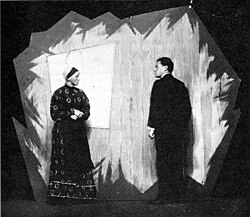
Political Activism and the Bavarian Soviet Republic
Following the war, Toller became deeply involved in radical politics through the Independent Social Democratic Party of Germany (USPD). He collaborated with prominent anarchists, including Gustav Landauer and B. Traven, to establish the short-lived Bavarian Soviet Republic in 1919.
Toller served as the president of this republic from April 6 to April 12, 1919. During his brief tenure, he issued several decrees aimed at social reform, including the socialization of the press and mining industries, the implementation of a legally binding eight-hour workday, and measures against exorbitant rents. To prevent capital flight by major capitalists, he limited bank withdrawals to 100 marks per day.
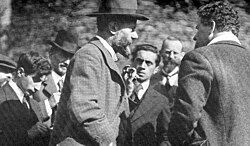
Despite his efforts, Toller's administration faced internal strife. Communists agitated against his councils, and some speakers even encouraged soldiers not to defend the republic. The government also suffered from eccentric appointments, such as Foreign Affairs Deputy Franz Lipp, who famously cabled Vladimir Lenin to report that the fleeing Minister-President Johannes Hoffmann had accidentally taken the ministry toilet key with him. On April 13, 1919, the Communist Party, led by Eugen Leviné, seized power, and by May, the republic was defeated by the Freikorps (paramilitary volunteer units).
Imprisonment and Literary Legacy
Toller was tried for his role in the revolution. During the trial, renowned authors Max Weber and Thomas Mann testified on his behalf. He was sentenced to five years in prison, serving time in Stadelheim, Neuburg, and Eichstätt. A significant portion of his sentence was spent in the fortress of Niederschönenfeld, where he endured 149 days of solitary confinement and a 24-day hunger strike.
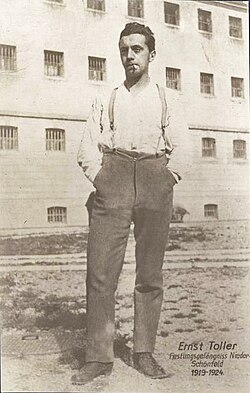
While imprisoned, Toller continued to write, though his plays were not performed until after his release in July 1925. One of his most significant later works, Hoppla, We're Alive! (Hoppla, wir Leben!), premiered in Berlin in 1925 under the direction of Erwin Piscator. The play tells the story of a revolutionary released from a mental hospital after eight years, only to find his former comrades had compromised their ideals. In a state of despair, the protagonist commits suicide.
Key Facts
- Born: 1893 in Samotschin, Germany (now Poland).
- Military Service: Volunteered for WWI; collapsed after 13 months on the Western Front.
- Political Role: President of the Bavarian Soviet Republic (April 6–12, 1919).
- Imprisonment: Sentenced to five years; spent 149 days in solitary confinement at Niederschönenfeld.
- Major Works: Transformation (1919) and Hoppla, We're Alive! (1925).
| Period/Year | Event/Work | Significance |
|---|---|---|
| 1914-1915 | WWI Service | Led to psychological collapse and later artistic inspiration. |
| 1919 | Transformation | First drama based on wartime experiences. |
| April 1919 | Bavarian Soviet Republic | Served as President for six days. |
| 1920-1925 | Imprisonment | Wrote several plays while incarcerated. |
| 1925 | Hoppla, We're Alive! | Explored the disillusionment of revolutionaries. |
Frequently Asked Questions
What was Ernst Toller's role in the Bavarian Soviet Republic?
Toller served as the president of the Bavarian Soviet Republic from April 6 to April 12, 1919. He attempted to implement social reforms, such as the socialization of industry and the press, before the government was overtaken by the Communist Party and eventually defeated by the Freikorps.
How did World War I influence Toller's writing?
Toller's 13 months of service on the Western Front ended in a complete physical and psychological collapse. This trauma served as the primary source material for his first play, Transformation (1919).
Who supported Toller during his legal trials?
The famous authors Max Weber and Thomas Mann provided testimony on Toller's behalf during his trial for his involvement in the 1919 revolution.
What is the plot of the play "Hoppla, We're Alive!"?
The play follows a revolutionary who is released from a mental hospital after eight years. Upon his return, he discovers that his former comrades have become complacent and have compromised their revolutionary ideals, leading him to commit suicide in despair.
What hardships did Toller face during his imprisonment?
Toller served a five-year sentence across several locations. At the fortress of Niederschönenfeld, he spent 149 days in solitary confinement and conducted a hunger strike lasting 24 days.