People's State of Bavaria: The Rise and Fall of a Socialist Republic
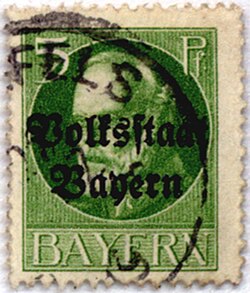
Between November 1918 and April 1919, the region of Bavaria underwent a tumultuous political transformation. The People's State of Bavaria (German: Volksstaat Bayern) emerged as a socialist republic during the wider German Revolution, attempting to replace the long-standing Kingdom of Bavaria and its role within the German Empire.
This brief but intense period was characterized by a struggle between moderate socialists, radical revolutionaries, and conservative monarchists, ultimately serving as a bridge between the collapse of the monarchy and the establishment of the Weimar Republic.
Key Facts
- Duration: November 8, 1918, to April 6, 1919.
- Capital: Munich.
- Primary Leader: Kurt Eisner (Minister-President).
- Key Reforms: Implementation of the eight-hour workday and granting women the right to vote.
- Preceded by: Kingdom of Bavaria.
- Succeeded by: Bavarian Soviet Republic.
The German Revolution in Bavaria
The collapse of the People's State was rooted in the German Empire's defeat in World War I. In late 1918, naval mutinies in Kiel sparked a nationwide revolution, with workers' and soldiers' councils seizing power across Germany.
In Munich, the radical left Independent Social Democratic Party of Germany (USPD) initiated protests on November 3, 1918. On November 7, a massive rally at the Theresienwiese, attended by 40,000 to 60,000 people, became the catalyst for change. Kurt Eisner, a USPD orator, demanded the abdication of King Ludwig III and Emperor Wilhelm II, alongside comprehensive social welfare reforms.
Eisner and his allies successfully convinced soldiers at the Munich army barracks to join their cause. Together, they occupied the railway station, telegraph office, and the Landtag (the Bavarian parliament building), effectively seizing control of the city.
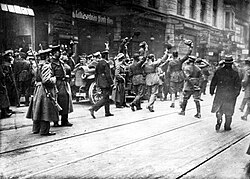
King Ludwig III became the first monarch of the German Empire to lose his throne, fleeing to Salzburg, Austria. On November 12, he signed the Anif declaration, releasing civil and military personnel from their oath of loyalty. This act effectively ended the 738-year dynasty of the House of Wittelsbach.
The Eisner Government
Kurt Eisner assumed the role of Minister-President on November 8, 1918. Despite his lack of administrative experience, he led a government that sought a non-revolutionary transition to socialism. To maintain stability, Eisner collaborated with the moderate Social Democratic Party (SPD) and middle-class parties.
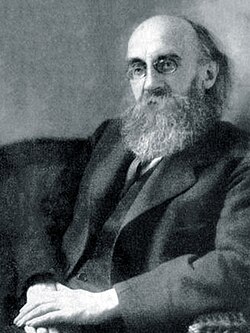
While Eisner advocated for a socialist republic, he distanced himself from the Russian Bolsheviks and promised to protect property rights. His government focused on immediate social gains rather than the nationalization of industry, successfully enacting an eight-hour workday and a Provisional State Constitution in January 1919.
However, the regime faced severe backlash. Conservative rural populations and right-wing critics viewed the intellectual, often Jewish, leadership as "alien" and utopian. Eisner's public admission of German guilt regarding the start of World War I further alienated the right wing. By the January 1919 elections, Eisner's USPD suffered a crushing defeat, receiving only 2.5% of the vote.
Assassination and the Hoffmann Government
Under pressure from the public and threats from the Thule Society, Eisner finally called the Landtag into session on February 21, 1919. Shortly thereafter, he was assassinated by a right-wing extremist.
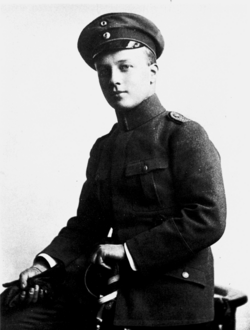
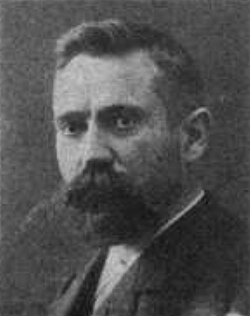
Following the assassination, Johannes Hoffmann, a moderate socialist and former schoolteacher, was elected Minister-President on March 17, 1919. Hoffmann led a minority cabinet attempting to stabilize the state through legitimate parliamentary representation.
The End of the People's State
The stability of the Hoffmann government was short-lived. On the night of April 6–7, 1919, inspired by communist revolutions in Hungary, anarchists and communists launched a coup. They declared the Bavarian Soviet Republic, with playwright Ernst Toller as the head of state.
The Hoffmann government was forced to flee to Bamberg in northern Bavaria, marking the official end of the People's State of Bavaria. The subsequent Soviet Republic was brutally suppressed in May 1919 by the German Army and paramilitary Freikorps units, resulting in over 600 deaths during a period known as the White Terror.
The Hoffmann government eventually returned to Munich, establishing the Free State of Bavaria as a member state of the Weimar Republic under the Bamberg Constitution on September 15, 1919.
Summary of Governance
| Feature | Eisner Administration | Hoffmann Administration |
|---|---|---|
| Period | Nov 1918 – Mar 1919 | Mar 1919 – Apr 1919 |
| Political Lean | Socialist (USPD) | Moderate Socialist (SPD) |
| Key Achievement | 8-hour workday; Women's suffrage | Attempted parliamentary legitimacy |
| Outcome | Ended by assassination | Ended by communist coup |
Frequently Asked Questions
What was the People's State of Bavaria?
It was a short-lived socialist republic that existed from November 1918 to April 1919, established during the German Revolution to replace the Kingdom of Bavaria.
Who was Kurt Eisner?
Kurt Eisner was the Minister-President of the People's State of Bavaria and a leader of the USPD. He is known for proclaiming the republic and ending the Wittelsbach monarchy.
Why did the People's State fail?
The state suffered from a lack of support in conservative rural areas, internal dissatisfaction within the cabinet, and extreme political polarization, which culminated in Eisner's assassination and a subsequent communist coup.
What happened after the People's State ended?
It was succeeded by the Bavarian Soviet Republic, which was violently suppressed by the German Army and Freikorps. Afterward, Bavaria became a member state of the Weimar Republic as the Free State of Bavaria.
What were the main social reforms of the era?
The government enacted the eight-hour workday and granted women the right to vote.