Free People's State of Württemberg
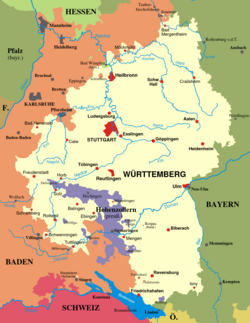
The Free People's State of Württemberg (German: Freier Volksstaat Württemberg) was a significant German state that existed between 1918 and 1945. Spanning the tumultuous interwar period, it transitioned from a constitutional monarchy to a parliamentary republic within the Weimar Republic, and finally into a controlled territory under the regime of Nazi Germany.
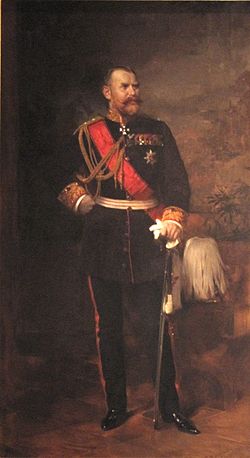
The state emerged from the collapse of the German Empire during the revolution of 1918–1919. This period of upheaval saw the fall of reigning monarchs across Germany, including King William II of Württemberg, paving the way for a new republican era centered in the capital city of Stuttgart.
Key Facts
- Established: November 9, 1918, following the German Revolution.
- Capital: Stuttgart.
- Population (1925): 2,580,235.
- Area (1925): 19,508 km².
- Political Evolution: Transitioned from a moderate-left republic to center-right, and eventually to Nazi control in 1933.
- End of Sovereignty: De facto abolition in 1933; de jure abolition in 1945.
The Fall of the Monarchy and the 1918 Revolution
Before the revolution, Württemberg was a constitutional monarchy. Its government featured a six-member Ministry of State and a two-chamber parliament. While the lower house was directly elected by men over 25 after 1906, the upper house remained the domain of nobility, church dignitaries, and royal appointees.
The shift toward a republic began on November 4, 1918, when the Spartacus League—a revolutionary socialist group—organized a massive demonstration in Stuttgart. Over 10,000 workers marched, demanding the abdication of both the German Emperor and King William II. This movement mirrored the wider German revolution sparked by mutinous sailors in Kiel, leading to the creation of workers' and soldiers' councils across the region.
The Constituent Assembly and Early Conflict
On January 12, 1919, elections were held for a constituent state assembly to draft a new constitution. The moderate parties of the Weimar Coalition—the SPD, the German Democratic Party (DDP), and the Centre Party—dominated the assembly, winning 121 of 150 seats. Notably, thirteen women, including Clara Zetkin and Mathilde Planck, were elected.
However, the transition was not without violence. In March 1919, the Communist Party of Germany (KPD) called for a general strike. The government responded by imposing a state of siege, using artillery to suppress the uprising in Stuttgart, which resulted in 16 deaths and 50 injuries.
Establishing the Republic
The new constitution, enacted on September 25, 1919, established a republican state governed by a one-chamber parliament known as the Landtag. Members were elected by all citizens aged 21 or older. The Landtag was responsible for electing the minister president, who headed the government.
Wilhelm Blos was sworn in as the first minister president on October 4, 1919, marking the official start of the republic's executive leadership.
Political Shifts in the Weimar Era
The political landscape shifted following the 1920 elections. Public anger over the Treaty of Versailles led to a decline in support for the moderate Weimar Coalition. The Catholic Centre Party became the largest party, and the conservative-nationalist Württemberg Farmers' and Winegrowers' Association grew in influence. Under the leadership of Johannes von Hieber, the government passed the Church Act of 1924, which legally separated the state from the Evangelical Church.
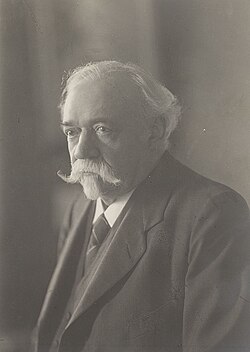
By the mid-1920s, leadership shifted toward the center-right. Wilhelm Bazille, minister president from 1924 to 1928, focused on preserving state independence and maintaining low unemployment rates, though he faced criticism from the left for his educational policies.
The Bolz Government and the Rise of Extremism
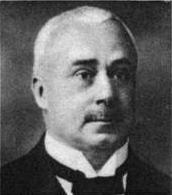
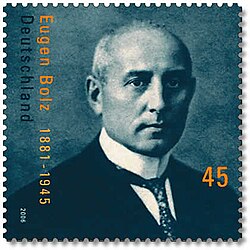
The later years of the republic saw a struggle between democratic forces and rising extremism. Eugen Bolz led a government that attempted to navigate these tensions, but the political environment became increasingly deadlocked as the Nazi Party (NSDAP) gained momentum.
The Nazi Takeover and Dictatorship
The sovereignty of Württemberg effectively ended when Adolf Hitler became Reich Chancellor on January 30, 1933. Following the Reichstag Fire Decree, the national government appointed a Reich commissioner to oversee the state, and opposition members were arrested.
On March 15, 1933, the Landtag elected Wilhelm Murr, the Nazi Gauleiter (regional leader), as minister president. Shortly after, the Law for the Coordination of the States created the office of Reichsstatthalter (Reich governor), a position Murr assumed. He became the supreme authority in the state, accountable only to Hitler.
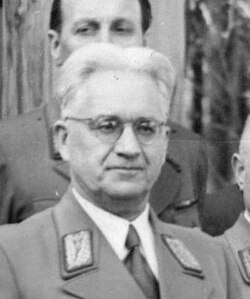
By June 1933, the Württemberg Constitution of 1919 was repealed, and legislative power was transferred to the state government. By 1934, all state parliaments were abolished, reducing the state ministry to a mid-level administrative authority of the Reich.
War and Destruction
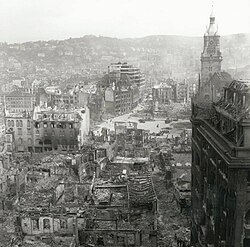
During World War II, Württemberg suffered devastating Allied bombing raids. Stuttgart experienced 53 air raids resulting in 4,562 deaths, while Heilbronn saw approximately 6,500 deaths. In 1945, ground battles involving American and French troops led to the near-total destruction of towns such as Waldenburg, Freudenstadt, and Crailsheim.
Post-War Transition
Following the defeat of Nazi Germany, Württemberg was divided between occupation zones. The northern region fell under American control, while the southern region was managed by the French. This division led to the creation of two new states: Württemberg-Baden and Württemberg-Hohenzollern, both of which became part of the Federal Republic of Germany in 1949.
| Category | Details |
|---|---|
| Period | 1918–1945 |
| Government Type | Parliamentary Republic (1918–1933); Nazi Dictatorship (1933–1945) |
| Key Leaders | Wilhelm Blos, Wilhelm Bazille, Eugen Bolz, Wilhelm Murr |
| Capital | Stuttgart |
| Successor States | Württemberg-Baden, Württemberg-Hohenzollern |
Frequently Asked Questions
How was the Free People's State of Württemberg formed?
It was formed during the German Revolution of 1918–1919, which led to the abdication of King William II and the transition from the Kingdom of Württemberg to a republic.
Who was the first minister president of the state?
Wilhelm Blos was sworn in as the first minister president on October 4, 1919.
What was the Landtag?
The Landtag was the one-chamber parliament of Württemberg, whose members were elected by all citizens aged 21 or older.
When did the Nazi Party take control of Württemberg?
The NSDAP took control in 1933, following Adolf Hitler's appointment as Reich Chancellor. Wilhelm Murr was elected minister president on March 15, 1933.
What happened to the state after World War II?
The state was split between the American and French occupation zones, resulting in the creation of Württemberg-Baden and Württemberg-Hohenzollern.