Endoderm: The Innermost Germ Layer and Its Role in Development
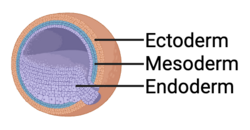
In the earliest stages of embryonic development, a complex process transforms a simple cluster of cells into a structured organism. Central to this transformation is the creation of three primary germ layers: the ectoderm (the outer layer), the mesoderm (the middle layer), and the endoderm. As the innermost layer, the endoderm serves as the foundational blueprint for many of the body's internal linings and vital organs.
The endoderm originates from the epiblast. During gastrulation—the phase where the embryo reorganizes into a multilayered structure—cells migrate inward along the archenteron (the primitive gut) to form the inner layer of the gastrula. Initially, these endodermal cells are flattened, but they eventually transition into a columnar shape to form the epithelial linings of various bodily systems.
Key Facts
- Position: The innermost of the three primary germ layers.
- Precursor: Derived from the epiblast.
- Primary Function: Forms the epithelial lining of the respiratory and gastrointestinal tracts.
- Developmental Trigger: Regulated by high concentrations of nodal signaling.
- Human Timeline: Differentiates into distinguishable organs after 5 weeks of embryonic development.
Formation of the Endoderm Layer
The development of the endoderm is driven by a specific biochemical process known as the nodal signaling pathway. In vertebrate species, the concentration of the nodal signaling gradient determines the fate of the cells. A high concentration of this signal triggers the development of the endoderm, while a lower concentration leads to the formation of the mesoderm.
While this process is primarily discussed in animal embryology, a corresponding structure exists in plant biology. In young shoots and roots, the endoderm refers to the innermost part of the cortex (bark), often consisting of a single cell layer that may lignify (become woody) as the plant ages.
Tissue Production and Organogenesis
The embryonic endoderm is responsible for creating the interior linings of two primary tubes: the digestive tube and the respiratory tube. Through a process called pattern formation, these initial cells specialize into the specific organs required for nutrient absorption and gas exchange.
Beyond the primary tubes, the endoderm contributes to several other critical systems. For instance, the liver and pancreas cells are believed to originate from a common precursor. Additionally, the endoderm forms the epithelial components of the thymus and the follicles of the thyroid gland.
| Category | System | Derived Tissues and Organs |
|---|---|---|
| General | Gastrointestinal tract | Alimentary canal (excluding parts of the mouth, pharynx, and terminal rectum), and lining cells of glands including the liver and pancreas. |
| General | Respiratory tract | Trachea, bronchi, and alveoli of the lungs. |
| General | Endocrine glands | Thyroid gland follicles and thymic epithelial cells. |
| Auditory system | Auditory system | Epithelium of the tympanic cavity and auditory tube. |
| Urinary system | Urinary system | Urinary bladder and portions of the urethra. |
Frequently Asked Questions
What is the difference between the endoderm, mesoderm, and ectoderm?
These are the three primary germ layers of an embryo. The ectoderm is the outermost layer, the mesoderm is the middle layer, and the endoderm is the innermost layer.
How does nodal signaling affect endoderm development?
Nodal signaling acts as a gradient; a high concentration of this signal induces cells to become endoderm, whereas a low concentration leads to mesoderm development.
Which organs are formed from the endoderm?
The endoderm forms the linings of the gastrointestinal and respiratory tracts, the liver, the pancreas, the thyroid gland, the thymus, the urinary bladder, and the auditory tube.
When does the endoderm start forming distinct organs in humans?
In human embryos, the endoderm can differentiate into distinguishable organs after 5 weeks of development.
Does the endoderm exist in plants?
Yes, in plant biology, the endoderm is the innermost layer of the cortex in young roots and shoots, which often becomes lignified as the plant matures.