Enceladus and the THEO Mission: Searching for Habitability in the Outer Solar System
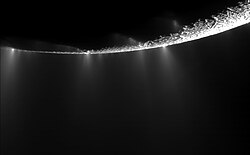
Deep in the outer reaches of our solar system, Saturn's moon Enceladus has emerged as one of the most promising candidates in the search for environments capable of supporting life. Unlike many other celestial bodies that require complex drilling to reach their interiors, Enceladus actively ejects its secrets into space via massive plumes of water vapor and ice emanating from its south polar region.
The proposed THEO mission aims to leverage these plumes to conduct a low-cost investigation into the moon's habitability. By sampling the material spewing from the surface, scientists hope to determine if the conditions beneath the ice are conducive to life as we know it.
The Science of the Plumes
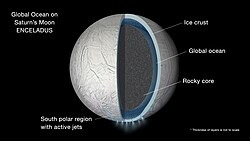
Data gathered by the previous Cassini mission revealed that these plumes are not random eruptions but are sourced from a liquid reservoir—a subsurface ocean—located beneath the moon's thick icy crust. These plumes contain a cocktail of salts, organic molecules, and derivatives resulting from water-rock interactions.
The presence of these materials suggests that the ocean is chemically active. Specifically, the evidence points toward hydrothermal alteration, a process where heated water interacts with rock, potentially creating the chemical energy necessary to sustain biological processes.
Objectives of the THEO Mission
The THEO mission is designed to advance our understanding of life and habitability through three primary scientific lenses:
- Environmental Limits: Investigating how life might persist under the conditions of a colder, fainter Sun.
- The Origin of Life: Analyzing the role of hydrothermal alteration in creating the conditions necessary for life to begin.
- Molecular Distribution: Mapping the distribution of precursor molecules across the Solar System that may have served as the building blocks for life.
Searching for Biosignatures
It is important to note that the THEO mission will not search for living organisms directly. Instead, it will look for biosignatures—chemical indicators that strongly suggest the presence of life. These include higher-than-expected abundances of specific molecules, particular ratios of organic compounds, or the presence of complex chains of amino acids.
Key Facts
- Target: The south polar region of Saturn's moon, Enceladus.
- Primary Source: A subsurface liquid ocean beneath an icy crust.
- Key Evidence: Plumes containing organics, salts, and water-rock interaction derivatives.
- Mission Goal: To assess habitability rather than detect life forms directly.
- Key Indicators: Amino acid chains and organic compound ratios.
| Feature | Details |
|---|---|
| Primary Target | Enceladus (South Pole) |
| Sampling Method | Water vapor and ice plumes |
| Key Chemical Targets | Organics, salts, amino acids |
| Scientific Focus | Habitability and biosignatures |
Frequently Asked Questions
What is the THEO mission?
THEO is a proposed low-cost mission designed to study the habitability of Enceladus by analyzing the plumes of water vapor and ice ejected from its south pole.
Will the THEO mission find aliens?
The mission is not designed to look for life forms directly. Instead, it searches for biosignatures, such as specific organic ratios or amino acid chains, which would indicate that the environment is habitable or has been inhabited.
Why is Enceladus a good target for this mission?
Enceladus is ideal because its subsurface ocean is accessible via plumes that spray material into space, removing the need to land or drill through kilometers of ice.
What did the Cassini mission discover about Enceladus?
Cassini provided evidence that the plumes contain salts and organic molecules, suggesting a liquid reservoir beneath the crust with active water-rock interactions.
What are biosignatures?
Biosignatures are substances, such as specific patterns of organic compounds or amino acid chains, that provide scientific evidence of past or present life.