Ocean Worlds Exploration: Searching for Life in the Outer Solar System
On Earth, liquid water is the fundamental requirement for life as we know it. This realization has shifted the gaze of scientists toward the outer reaches of our Solar System, where dark, alien oceans may hide beneath thick shells of ice. The central mystery is whether these remote environments are habitable for simple life forms and, if so, what unique biochemistry they might possess.
To address these questions, the Ocean Worlds Exploration Program has established a clear strategic mission: to identify ocean worlds, characterize their internal oceans, evaluate their habitability, search for signs of life, and ultimately understand any biological entities discovered.
Key Facts
- Primary Goal: To determine if life exists beyond Earth and how it may have evolved independently.
- High-Priority Targets: Europa and Enceladus are prioritized due to thinner ice shells and potential contact between oceans and rocky mantles.
- Scientific Collaboration: The strategy is developed by a multidisciplinary team of oceanographers, biologists, and astrobiologists.
- Planetary Protection: Strict measures are implemented to prevent Earth-based bacteria from contaminating extraterrestrial environments.
The Scientific Quest for Habitability
Exploring these moons offers more than just the chance to find alien life; it provides a mirror to our own origins. By studying these worlds, scientists hope to find pre-biotic chemistry—the chemical processes that precede the emergence of life—which could reveal how life first started on Earth.
Because any life found in the outer Solar System would likely have evolved along a path independent of Earth, such a discovery would fundamentally expand our understanding of the potential for life throughout the universe.
Primary Targets and Candidate Worlds
Several moons have been identified as ocean worlds with reasonable certainty. Among these, Europa and Enceladus stand out. Enceladus possesses an ice crust thinner than 10 km, while Europa's is approximately 40 km. Both are high-priority targets because their oceans may interact with the rocky mantle, providing the necessary energy and chemicals to support life.
Enceladus is particularly intriguing due to fractures at its south pole. These openings allow ice and gas to escape into space, where they were sampled by mass spectrometers on the Cassini Saturn orbiter, yielding promising results.
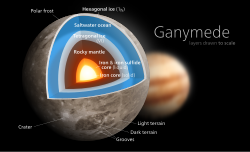
Other confirmed ocean worlds include Ganymede and Callisto, as well as Titan. Titan possesses the deepest ocean of the group, ranging from 50 to 100 km, though it lacks evidence of ice volcanism or active plumes.
Candidate Ocean Worlds
Beyond the primary targets, several other celestial bodies are considered candidate ocean worlds based on limited spacecraft observations. These include:
- Triton
- Pluto
- Ceres
- Miranda
- Ariel
- Dione
Comparison of Confirmed Ocean Worlds
| Moon | Ice Shell Thickness | Notable Features | Priority Level |
|---|---|---|---|
| Enceladus | < 10 km | South pole plumes; sampled by Cassini | High |
| Europa | ~ 40 km | Potential rocky mantle contact | High |
| Titan | Unknown | Deepest ocean (50-100 km) | Moderate |
| Ganymede | Unknown | Confirmed ocean world | Moderate |
| Callisto | Unknown | Confirmed ocean world | Moderate |
Frequently Asked Questions
Why are Europa and Enceladus the highest priority?
They are prioritized because their ice shells are thinner than those of other moons, and there is evidence that their oceans contact the rocky mantle, which could provide the energy and chemicals necessary for life.
What is pre-biotic chemistry?
Pre-biotic chemistry refers to the chemical reactions and processes that occur before the emergence of living organisms, providing clues to the origins of life.
How do scientists avoid contaminating other worlds?
The program implements planetary protection measures to ensure that resilient stowaway bacteria from Earth are not transported to habitable extraterrestrial environments via landers.
What makes Titan's ocean unique?
Titan's ocean is the deepest among the identified ocean worlds, reaching depths of 50 to 100 km, although it shows no evidence of active plumes or ice volcanism.
Which bodies are considered candidate ocean worlds?
Based on limited observations, Triton, Pluto, Ceres, Miranda, Ariel, and Dione are currently considered candidates.