Early Muslim Conquests: The Rapid Expansion of the First Islamic Empire
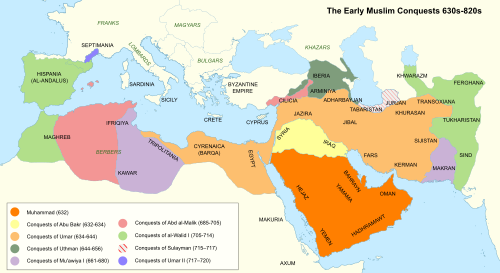
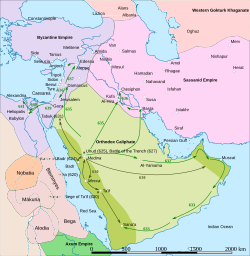
Between 622 and 750 CE, the world witnessed one of the most rapid and enduring territorial expansions in human history. Known as the early Muslim conquests (or al-Futūḥāt al-ʾIslāmiyya), this series of religious wars began with the prophet Muhammad and continued under the Rashidun and Umayyad caliphates. In just over a century, Islamic law and governance extended from the Indus Valley in the east to the Iberian Peninsula in the west.
Historians often compare the speed and scale of these conquests to those of Alexander the Great, though the Islamic expansion proved more lasting. At its peak, the caliphates controlled an estimated 13,000,000 square kilometres, uniting diverse and complex societies across West Asia, North Africa, Central Asia, and Mediterranean Europe.
Key Facts
- Timeline: 622–750 CE.
- Core Dynasties: The first Islamic state, the Rashidun Caliphate (632–661), and the Umayyad Caliphate (661–750).
- Major Adversaries: The Byzantine Empire and the Sasanian Empire.
- Maximum Extent: From the Pyrenees in the west to the Sind region of the Indian subcontinent in the east.
- Key Military Advantage: Armies were noted for being fast, agile, well-coordinated, and highly motivated.
The Foundations of Expansion
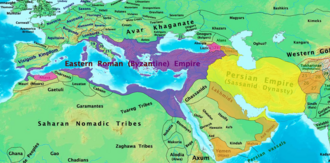
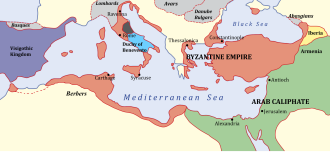
The conquests did not occur in a vacuum. Before the rise of Islam, the Near East was dominated by the long-standing rivalry between the Byzantine and Sasanian Empires. By the early 7th century, both empires were exhausted by constant warfare. Furthermore, the Arabian Peninsula had already seen periods of unification, such as under the South Arabian king Abraha, and Arab tribal confederations like the Banu Bakr had already begun challenging Sasanian control in southern Iraq.
The first Islamic state was established by Muhammad in Medina in 622 CE. Following his leadership, the succeeding caliphates leveraged the instability of their neighbors to push outward from the Arabian heartland.
Major Campaigns and Territorial Gains
The Conquest of Syria (634–641)
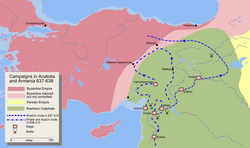
Syria was the first major province wrested from Byzantine control. Under the command of the brilliant general Khalid ibn al-Walid, Muslim forces secured a decisive victory at the Battle of Ajnadayn in 634. Following a series of engagements, including the Battle of the Mud, the Arabs achieved a crushing victory at the Battle of Yarmuk in 636. This defeat forced Emperor Heraclius to abandon Syria, leading to the fall of Damascus and eventually Jerusalem in 638.
The Conquest of Egypt and North Africa
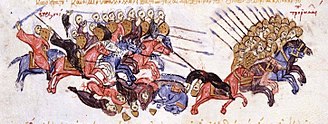
Between 639 and 642, Muslim armies expanded into Egypt. From there, they launched raids into Cyrenaica and the Maghreb. The establishment of Qayrawan in 670 provided a strategic forward base for further expansion. Despite resistance from Berber leaders like Kusayla and the prophetess Kahina, the Arabs captured Carthage in 698 and Tangiers by 708.
Persia and Central Asia
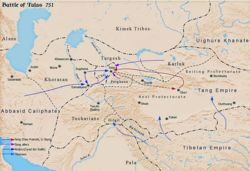
Simultaneously, the Muslim armies dismantled the Sasanian Empire in Mesopotamia and Persia. Under the Umayyad dynasty, this expansion continued into Central Asia. However, the advance was not unchecked; in 751, the Battle of Talas saw the Abbasid Caliphate clash with the Tang dynasty of China.
The Iberian Peninsula and Europe
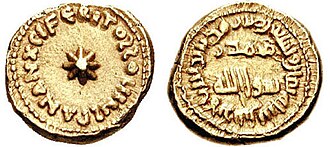
By 711, Muslim forces crossed into the Iberian Peninsula, defeating the Visigothic Kingdom. This expansion reached as far as the Pyrenees, though further incursions into the Frankish Kingdom were eventually halted.
Internal Conflict and the Umayyad Shift
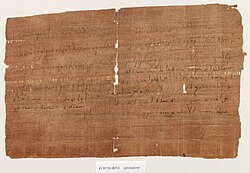
The expansion was briefly interrupted by the First Fitna, a civil war triggered by the revolt of Mu'awiya ibn Abi Sufyan against the caliph Ali. This conflict ended in 661 with the assassination of Ali and the founding of the Umayyad Caliphate. This period also marked the permanent sectarian split between Sunni and Shia Muslims.
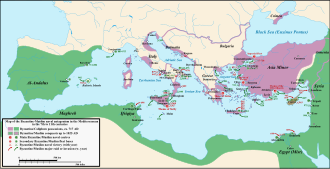
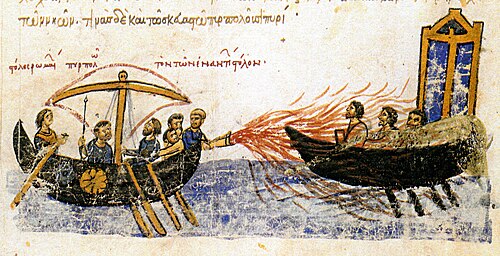
Mu'awiya moved the capital from Medina to Damascus, shifting the empire's political and cultural center. The Umayyads attempted to finish the Byzantine Empire by besieging Constantinople, but these efforts failed due to the city's formidable walls and the use of Greek fire—a combustible weapon that could burn on water.
Limits of Expansion and Failures
Despite their successes, the Muslim armies faced significant setbacks. The sieges of Constantinople in the late 7th and early 8th centuries were thwarted. In the east, while most of Afghanistan fell, the Kabul region resisted invasion for another three centuries. In North Africa, a major Berber revolt between 740 and 742 shook Umayyad rule, leading to the rise of independent local Berber dynasties.
Summary of Early Islamic Conquests
| Period/Dynasty | Primary Regions Conquered | Key Adversaries | Outcome |
|---|---|---|---|
| Muhammad (622–632) | Arabian Peninsula | Local Arabian Tribes | Unification of Arabia |
| Rashidun Caliphate (632–661) | Syria, Egypt, Persia | Byzantine & Sasanian Empires | Collapse of Sasanian Empire |
| Umayyad Caliphate (661–750) | Maghreb, Iberia, Central Asia | Visigoths, Tang Dynasty, Berbers | Maximum territorial extent |
Frequently Asked Questions
Why were the early Muslim armies so successful?
Their success is attributed to a combination of high motivation, agility, and coordination. Additionally, they capitalized on the exhaustion of the Byzantine and Sasanian Empires, which had been weakened by decades of mutual warfare.
What was the significance of the Battle of Yarmuk?
The Battle of Yarmuk (636) was a decisive victory for the Arab forces over the Byzantine Empire, effectively ending Byzantine rule in Syria and opening the door for further expansion into the Levant.
What was Greek fire and how did it affect the conquests?
Greek fire was a secret incendiary weapon used by the Byzantines. It was instrumental in defending Constantinople during several Arab sieges, as it could burn on water and destroy the Muslim naval fleets.
What was the First Fitna?
The First Fitna was a civil war within the early Muslim community following the death of the third caliph. It led to the end of the Rashidun Caliphate, the rise of the Umayyad dynasty, and the split between Sunni and Shia Islam.
How far did the conquests reach in the west and east?
In the west, the conquests reached the Iberian Peninsula (modern-day Spain and Portugal) up to the Pyrenees. In the east, they extended into the Indus Valley of the Indian subcontinent.