Dutch Language: History, Distribution, and Linguistic Structure
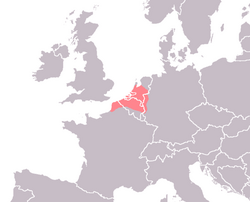
The Dutch language (Nederlands) is a West Germanic language spoken by approximately 25 million native speakers and 30 million total speakers worldwide. As a primary official language in the Netherlands, Belgium, and Suriname, it serves as a vital cultural and administrative bridge across Europe and the Americas.
Dutch belongs to the Indo-European family, specifically the West Germanic branch. It evolved from Low Franconian, a group of dialects that diverged from other Germanic tongues in the early Middle Ages. Today, it is regulated by the Nederlandse Taalunie (Dutch Language Union), ensuring standardization across the different regions where it is spoken.
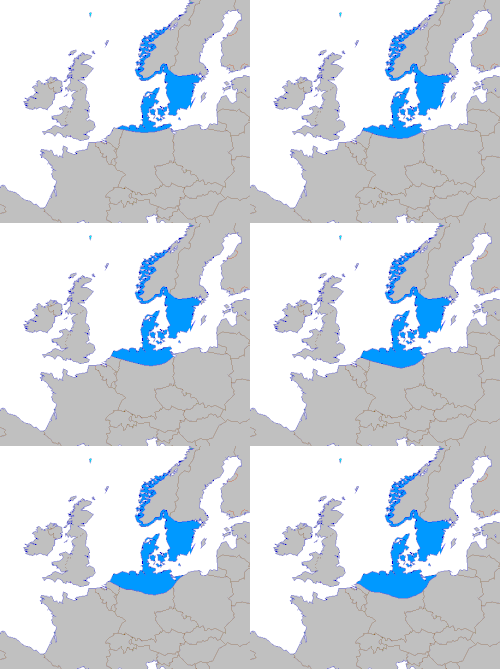
Key Facts
- Native Speakers: Approximately 25 million (2021).
- Official Status: Official in the Netherlands, Belgium, Suriname, and several Caribbean territories (Aruba, Bonaire, Curaçao, Sint Eustatius, Sint Maarten, and Saba).
- Language Family: Indo-European > Germanic > West Germanic > Low Franconian.
- Major Daughter Language: Afrikaans, spoken predominantly in South Africa.
- Writing System: Latin alphabet, including specialized Braille systems (six-dot and eight-dot).
Historical Evolution
The development of Dutch is categorized into four primary stages, reflecting the political and social shifts of Northern Europe.
Frankish (3rd–5th Centuries)
The roots of Dutch lie in the Frankish dialects spoken by the Germanic tribes during the early migration period.
Old Dutch (5th–12th Centuries)
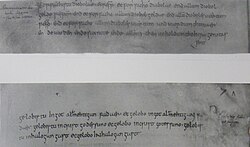
During this era, the language began to distinguish itself from other West Germanic dialects. Early records, such as the Utrecht baptismal vow, provide insight into this formative period.
Middle Dutch (12th–15th Centuries)
Middle Dutch saw a rise in literary production and the standardization of regional dialects as trade and urban centers grew.
Modern Dutch (15th Century–Present)
Modern Dutch emerged with the rise of the Dutch Republic. A landmark in this period was the Statenvertaling (1637), a faithful translation of the Bible that significantly influenced the standardized form of the language.
![Title page of the Statenvertaling (1637) reads: Biblia ... Uyt de Oorspronckelijcke talen in onse Neder-landtsche tale getrouwelijck over-geset. (English: From the Original languages into our Dutch language faithfully translated.)[46]](/images/52/a3/52a3903eb0939f5557cda098d4acc0fddb367a32b7bc5887b82956f78cedd475.jpg)
Geographic Distribution and Dialects
While centered in the Low Countries, Dutch has a global footprint due to colonial history and migration.
European Core
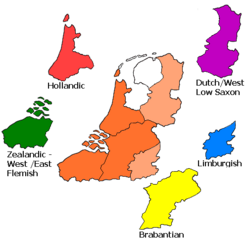
The vast majority of speakers are located in the Netherlands (70.8%) and Belgium (27.1%). In Belgium, the language is often referred to as Flemish. Various dialect groups exist, including Central, Flemish, Stadsfries, and West Frisian Dutch.
Global Reach
Dutch is an official language in Suriname and the Dutch Caribbean. While Indonesia did not adopt Dutch as an official language after independence, the Indonesian language remains heavily influenced by Dutch vocabulary.
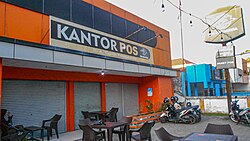
![In the Dutch East Indies (present day Indonesia and Malacca, Malaysia), Dutch was used by only a limited educated elite.[76]](/images/09/5c/095c7a16b4694ebf8fcce5cff825b44fae50cbe6129c3b886fc0de9ad62a59d0.png)
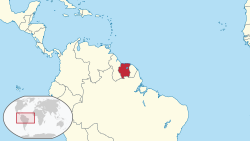
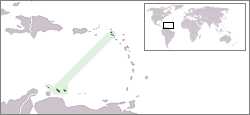
Africa and the Congo
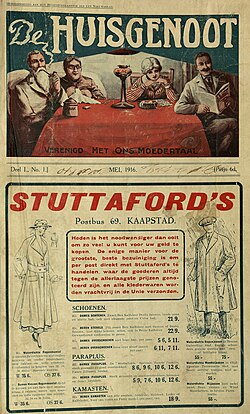
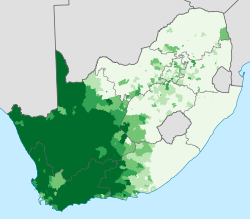
In Africa, Dutch influenced the development of Afrikaans in South Africa. Historically, Dutch was also used in the Belgian Congo.
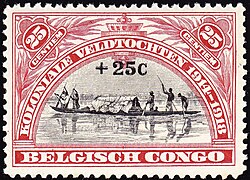
Linguistic Characteristics
Dutch is known for its unique phonology and a flexible but structured grammar.
Phonology and Writing
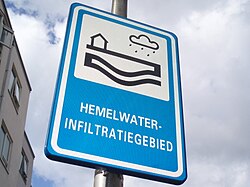
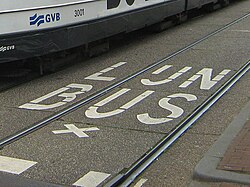
The language utilizes a variety of vowels and diphthongs. A notable feature of the writing system is the use of the digraph ⟨ij⟩, which is often treated as a single letter in various contexts.
Grammar and Syntax
Dutch verbs are divided into weak and strong classes. Weak verbs typically form their past tense with -de or -te, while strong verbs undergo vowel changes. The language also employs diminutives (such as -je, -pje, or -tje) to denote smallness or affection.
In terms of word order, Dutch follows a standard subject-verb-object pattern in main clauses, but shifts the verb to the end in subordinate clauses.
Summary of Speaker Distribution
| Country/Region | Approximate Speakers | Data Year |
|---|---|---|
| Netherlands | 17,000,000 | 2020 |
| Belgium | 6,500,000 | 2020 |
| Suriname | 400,000 | 2020 |
| Curaçao | 12,000 | 2011 |
| Aruba | 6,000 | 2010 |
| Caribbean Netherlands | 3,000 | 2018 |
| Sint Maarten | 1,500 | 2011 |
Frequently Asked Questions
What is the difference between Dutch and Flemish?
Flemish is essentially the variety of Dutch spoken in Northern Belgium (Flanders). While there are differences in pronunciation and some vocabulary, they share the same standardized written form.
How is Afrikaans related to Dutch?
Afrikaans is a daughter language of Dutch. It evolved in South Africa from 17th-century Dutch settlers, simplifying much of the grammar while retaining a core Dutch vocabulary.
What is the role of the Nederlandse Taalunie?
The Nederlandse Taalunie (Dutch Language Union) is the official regulatory body that manages the standardization of the Dutch language across the Netherlands, Belgium, and Suriname.
Is Dutch spoken in Indonesia?
Dutch is not an official language in Indonesia and was previously used only by a limited educated elite. However, the Indonesian language contains many loanwords from Dutch.
What are Dutch diminutives?
Diminutives are suffixes added to nouns to indicate that something is small or to express endearment. Common suffixes include -je (e.g., neefje), -pje (e.g., boompje), and -tje (e.g., baby'tje).