1974 FIFA World Cup: West Germany's Triumph and Tournament History
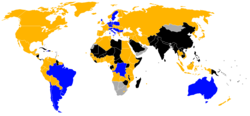
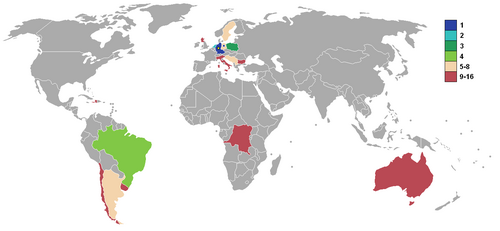
The 1974 FIFA World Cup stands as a landmark event in football history, hosted by West Germany from June 13 to July 7. This tournament was not only a showcase of athletic prowess but also a moment of significant geopolitical representation, featuring 16 teams from five different confederations competing across nine host cities.
The event was characterized by the rise of new contenders and the dominance of established powers, culminating in a final that saw the host nation secure their second world title in a hard-fought battle against the Netherlands.
Key Facts
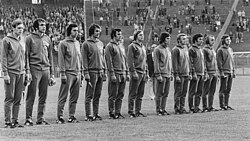
- Champions: West Germany (2nd title)
- Runners-up: Netherlands
- Third Place: Poland
- Fourth Place: Brazil
- Top Scorer: Grzegorz Lato (7 goals)
- Total Attendance: 1,865,753 spectators
- Total Goals: 97 goals scored across 38 matches
Tournament Format and Qualification
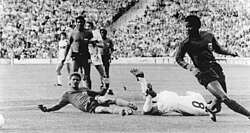
The 1974 tournament utilized a unique structure consisting of two distinct group stages followed by a knockout phase for the top positions. The qualification process introduced several historic firsts, expanding the global reach of the sport.
Historic First-Time Qualifiers
Several nations made their debut on the world stage during this edition:
- East Germany: Made their sole appearance as a separate senior team.
- Australia: The first team from Oceania to qualify.
- Haiti: The first Caribbean team to qualify since Cuba in 1938.
The Official Match Balls
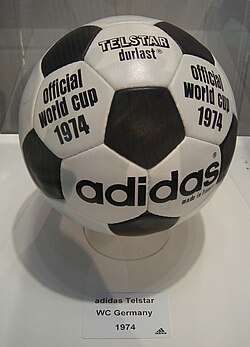
The tournament featured two official match footballs produced by Adidas: the iconic black-and-white Adidas Telstar durlast and the all-white Adidas Chile durlast.
The Road to the Final
The competition began with a first group stage where teams were divided into four groups. The top two teams from each group advanced to the second group stage, which was split into two groups of four. The winners of these second-round groups proceeded directly to the final, while the runners-up played for third place.
First Group Stage Highlights
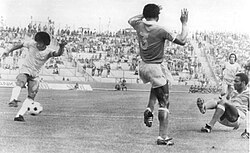
In Group 1, East Germany surprisingly topped the table, even defeating the hosts, West Germany. Group 2 saw Yugoslavia dominate, including a massive 9-0 victory over Zaire. Group 3 was led by the Netherlands, while Poland dominated Group 4, defeating Italy and Argentina to advance.
Second Group Stage and Final Standings
The second round intensified the competition. The Netherlands swept Group A with a perfect record, while West Germany dominated Group B. This set the stage for a clash between the hosts and the Dutch in the final.
The Final and Third-Place Match
The match for third place saw Poland defeat Brazil 1-0, with Grzegorz Lato scoring the decisive goal to secure the bronze position.
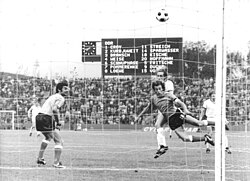
The final, held on July 7, was a tense encounter. While the Netherlands took an early lead with a penalty by Neeskens in the 2nd minute, West Germany fought back. Two goals—a penalty by Breitner and a strike by Müller—secured a 2-1 victory for West Germany, crowning them world champions on home soil.
Tournament Summary
The following table provides a comprehensive overview of the 1974 FIFA World Cup statistics and outcomes.
| Category | Detail |
|---|---|
| Host Country | West Germany |
| Dates | 13 June – 7 July 1974 |
| Number of Teams | 16 |
| Total Matches | 38 |
| Average Goals per Match | 2.55 |
| Average Attendance | 49,099 |
| Best Young Player | Władysław Żmuda |
| Fair Play Award | West Germany |
Frequently Asked Questions
Who was the top scorer of the 1974 World Cup?
The top scorer was Grzegorz Lato of Poland, who scored a total of 7 goals during the tournament.
Which teams made their World Cup debut in 1974?
East Germany, Australia, and Haiti all qualified for the FIFA World Cup for the first time in 1974.
How many goals were scored in total during the tournament?
A total of 97 goals were scored across the 38 matches played, averaging 2.55 goals per game.
Which cities hosted the matches?
Matches were held in 9 host cities, including Munich, West Berlin, Stuttgart, Gelsenkirchen, Düsseldorf, Frankfurt, Hamburg, Hanover, and Dortmund.
What was the final score of the championship match?
West Germany defeated the Netherlands 2-1 to win the title.