Diocese of Rottenburg-Stuttgart
The Diocese of Rottenburg-Stuttgart is a significant ecclesiastical territory of the Latin Church within the Catholic Church in Germany. Located in the state of Baden-Württemberg, it serves as a suffragan—a subordinate diocese—within the ecclesiastical province of the metropolitan Archdiocese of Freiburg. The diocese's boundaries align with the territory of the former Kingdom of Württemberg, blending deep historical roots with a modern administrative structure.
Key Facts
- Established: August 16, 1821
- Cathedral: St. Martin's Cathedral, Rottenburg
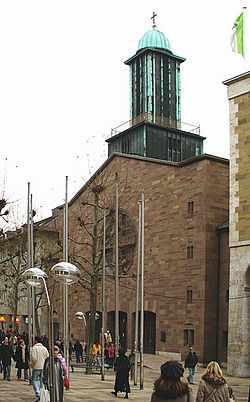
- Co-Cathedral: St. Eberhard Co-Cathedral, Stuttgart
- Patron Saint: Martin of Tours
- Total Area: 19,514 km²
- Catholic Population: Approximately 1.92 million (as of 2010)
- Current Bishop: Klaus Krämer (appointed October 2, 2024)
Historical Evolution
The origins of the diocese date back to 1803, when Prince Primate Karl Theodor von Dalberg appointed a Vicar General for the "New" State of Württemberg. This role was filled by Franz Karl Joseph Fürst von Hohenlohe-Waldenburg-Schillingsfürst, an auxiliary bishop who consecrated the current Co-Cathedral in Stuttgart. While the first seat of the vicariate was located at Ellwangen Abbey, it transitioned to Rottenburg in 1817.
The formal establishment of the Diocese of Rottenburg occurred on August 16, 1821, via the papal bull De salute animarum. This new entity was created from territory previously belonging to the suppressed Diocese of Konstanz. The diocesan structure was finalized on May 20, 1828, with the enthronement of its first bishop, Johann Baptist von Keller.
To better reflect its administrative and population centers, the diocese was renamed the Diocese of Rottenburg-Stuttgart on January 18, 1978.
Major Churches and Landmarks
The diocese is anchored by two primary seats: the episcopal see at St. Martin's Cathedral in Rottenburg and the St. Eberhard Co-Cathedral in Stuttgart.
Beyond these seats, the diocese oversees three minor basilicas, which are churches granted special privileges by the Pope:
- Basilika St. Vitus in Ellwangen (the former Cathedral of Ellwangen Abbey).
- Basilika St. Martin at the Benedictine Wiblingen Abbey in Ulm.
- Basilika St. Martin von Tours und St. Oswald in Weingarten, Württemberg.
Additionally, the diocese is associated with the former Cistercian monastery Kloster Maulbronn in Maulbronn, a World Heritage Site that served as a Catholic institution before becoming a Lutheran seminary and school.
Governance and Leadership
The diocese is currently led by Bishop Klaus Krämer. He is supported by several auxiliary bishops—bishops assigned to assist the diocesan bishop—including Thomas Maria Renz, Gerhard Schneider, and Matthäus Karrer. The administrative operations are managed by Vicar General Clemens Stroppel.
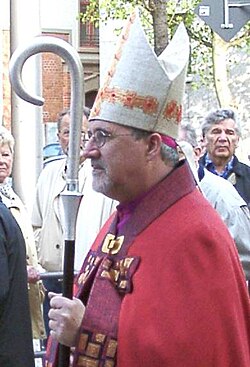
The lineage of episcopal ordinaries includes notable figures such as Cardinal Walter Kasper, who served as bishop from 1989 to 1999 before taking on prominent roles within the Vatican, including the President of the Pontifical Council for Promoting Christian Unity.
Statistics and Administrative Structure
The diocese covers a vast area of 19,514 km². According to 2014 data, the diocese pastorally served 1,872,849 Catholics, representing 37% of the total population of 5,068,000. The religious infrastructure is extensive, consisting of 1,096 parishes and 40 missions.
The clergy and religious staff include 1,016 priests (comprising 829 diocesan and 187 religious priests), 283 deacons, and 3,368 lay religious members (3,140 sisters and 228 brothers), supported by 26 seminarians.
| Category | Detail |
|---|---|
| Ecclesiastical Province | Freiburg |
| Rite | Roman Rite (Latin Church) |
| Number of Deaneries | 45 |
| Total Parishes (2014) | 1,096 |
| Total Area | 19,514 km² |
Administratively, the diocese is divided into 45 deaneries, ranging from major urban centers like Stuttgart-Mitte and Ulm to smaller regions such as Zwiefalten and Aalen.
Frequently Asked Questions
When was the Diocese of Rottenburg-Stuttgart established?
The diocese was established on August 16, 1821, through the papal bull De salute animarum, though its formation was completed in 1828 with the enthronement of its first bishop.
What is the difference between the Cathedral and the Co-Cathedral?
St. Martin's Cathedral in Rottenburg serves as the primary episcopal see (the official seat of the bishop), while St. Eberhard in Stuttgart serves as the Co-Cathedral.
Which metropolitan archdiocese does this diocese belong to?
The Diocese of Rottenburg-Stuttgart is a suffragan of the Archdiocese of Freiburg.
Who is the current Bishop of Rottenburg-Stuttgart?
The current bishop is Klaus Krämer, who assumed the role on October 2, 2024.
What are the minor basilicas located within the diocese?
The three minor basilicas are Basilika St. Vitus in Ellwangen, Basilika St. Martin in Ulm, and Basilika St. Martin von Tours und St. Oswald in Weingarten.