Archdiocese of Freiburg im Breisgau
The Archdiocese of Freiburg im Breisgau (Latin: Archidioecesis Friburgensis) is a prominent Latin Church diocese of the Catholic Church located in Baden-Württemberg, Germany. Covering the former states of Baden and Hohenzollern, this archdiocese serves as a spiritual and administrative center for the region. Its seat is the historic Freiburg Minster, and it operates under the Roman Rite of the Latin Church.
As the metropolitan see of the Upper-Rhine ecclesiastical province, the Archdiocese of Freiburg holds a leadership role over the suffragan dioceses of Mainz and Rottenburg-Stuttgart. This structure ensures coordinated pastoral care across large portions of Baden-Württemberg and Hesse, as well as small areas of Rhineland-Palatinate.
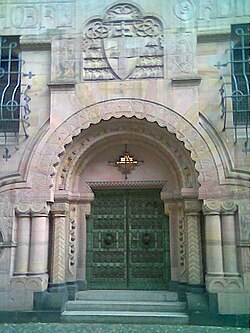
Key Facts
- Established: August 16, 1821.
- Cathedral: Freiburg Minster.
- Current Metropolitan Archbishop: Stephan Burger.
- Total Population: 4,791,293 (as of 2019).
- Catholic Population: 1,855,485 (approximately 38.7%).
- Total Area: 16,229 km².
- Patron Saints: Virgin Mary, St. Conrad of Constance, and St. Gebhard of Constance.
History and Evolution
The Archdiocese and its accompanying ecclesiastical province were established in 1821, following the 1801 Concordat and the 1815 Congress of Vienna. The archdiocese was formed from the Diocese of Constance, incorporating portions of the dioceses of Mainz, Straßburg, Worms, and Würzburg. Bernhard Boll served as the first bishop starting in 1827, followed by notable successors such as Conrad Gröber and Hermann Schäufele.
In recent years, the archdiocese has adopted a unique approach to organizational change. Rather than pursuing church closures or the consolidation of parishes, it utilizes a concept known as unions of pastoral guidance. Furthermore, on November 1, 2005, Archbishop Dr. Robert Zollitsch introduced the first "Pastoral Guidelines" in the history of the archdiocese, titled "Shaping the awakening."
Diocesan Organization
To manage its vast territory, the Archdiocese is divided into seven distinct regions, which are further subdivided into numerous deaneries. The northernmost point of the archdiocese's jurisdiction is the parish of St. Laurentius in Freudenberg.
| Region | Key Deaneries |
|---|---|
| Odenwald / Tauber | Tauberbischofsheim, Lauda, Buchen, Mosbach |
| Rhine / Neckar | Weinheim, Mannheim, Heidelberg, Wiesloch, Kraichgau |
| Middle Oberrhein / Pforzheim | Karlsruhe, Pforzheim, Baden-Baden, Bruchsal, Ettlingen |
| Ortenau | Offenburg, Acher-Renchtal, Lahr, Kinzigtal |
| Breisgau / Schwarzwald / Baar | Freiburg, Villingen, Donaueschingen, Waldkirch |
| Hochrhein | Wiesental, Waldshut, Säckingen, Wutachtal |
| Lake Constance / Hohenzollern | Konstanz, Sigmaringen, Zollern, Linzgau |
Educational and Formative Institutions
Academic Schools
The archdiocese manages an extensive network of educational institutions through its scholarly foundation. This includes 17 comprehensive secondary schools (Gymnasien), six secondary schools (Realschulen), one primary school, one vocational college, two boarding schools, and a technical school specializing in elderly care.
Priestly Formation
The Collegium Borromaeum (CB) serves as the priestly seminary in Freiburg. Here, candidates for the priesthood reside while pursuing theological studies at the Albert-Ludwigs University of Freiburg. The CB is located near the Freiburg Minster and the archbishop's ordinariate. Additionally, pastoral training is conducted at a dedicated seminary in St. Peter.
Frequently Asked Questions
Who is the current leader of the Archdiocese of Freiburg?
The current Metropolitan Archbishop is Stephan Burger, who was elected by the Chapter on May 30, 2014, and ordained as bishop on June 29, 2014.
What is the "union of pastoral guidance"?
It is a conceptual approach used by the Archdiocese of Freiburg to manage its parishes as an alternative to traditional church closures or parish consolidations.
Which other dioceses fall under the Upper-Rhine ecclesiastical province?
The Archdiocese of Freiburg serves as the metropolitan see for the suffragan dioceses of Mainz and Rottenburg-Stuttgart.
Where do candidates for the priesthood study in Freiburg?
Candidates live at the Collegium Borromaeum (CB) while attending theological studies at the Albert-Ludwigs University of Freiburg.
When was the Archdiocese of Freiburg established?
The archdiocese was established on August 16, 1821, following the 1801 Concordat and the 1815 Congress of Vienna.