Die Schaubühne and Weltbühne: The Evolution of a Critical German Journal
The story of Die Schaubühne is one of resilience and transformation. What began as a niche theater magazine born from a professional scandal evolved into the Weltbühne, one of the most influential and defiant political journals of the Weimar Republic. Through its transition from art criticism to political activism, the publication mirrored the turbulent shifts of German society from the late Empire to the rise of National Socialism.
The Origins of Die Schaubühne
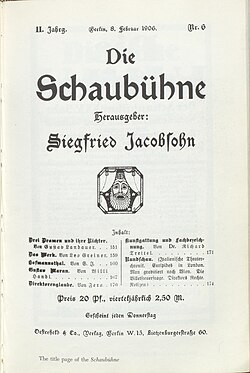
The journal was founded by Siegfried Jacobsohn, a 23-year-old theater critic for Welt am Montag. In November 1904, Jacobsohn was dismissed from his post following allegations of plagiarism involving critic Alfred Gold. After a period of travel across Europe, Jacobsohn returned to Berlin to launch his own venture, Die Schaubühne, in 1905.
Initially, the publication focused exclusively on theater. Jacobsohn believed that drama was the most vivid expression of a nation's character and the spirit of its time. He aligned the magazine with the ideals of classicism and enlightenment, drawing inspiration from Friedrich Schiller's view of the theater as a "moral institution." During this era, the arts provided a safer haven for intellectual debate than the heavily repressed spheres of politics and journalism under Emperor Wilhelm II.
Early Contributors and Artistic Stances
The early years saw contributions from notable critics like Julius Bab, Willi Handl, and Alfred Polgar, later joined by writers such as Lion Feuchtwanger and Robert Walser. In 1908, the magazine expanded by merging with Feuchtwanger's publication, Der Spiegel.
Jacobsohn positioned himself as the antithesis to the influential "culture pope" Alfred Kerr. While he rejected naturalism, he highly praised the work of director Max Reinhardt, though he eventually grew critical of Reinhardt's shift toward mass theater in large circus arenas and the construction of the Großes Schauspielhaus.
The Pivot to Politics (1913–1918)
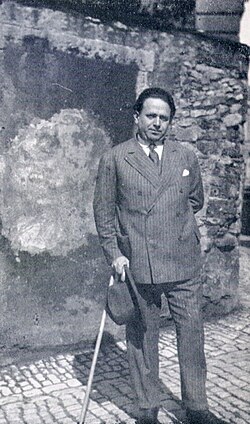
The trajectory of the magazine changed significantly in January 1913 with the arrival of 23-year-old law student Kurt Tucholsky. Tucholsky quickly became Jacobsohn's most vital associate. To avoid overwhelming the publication with his presence, Tucholsky wrote under three pseudonyms: Ignaz Wrobel, Theobald Tiger, and Peter Panter.
Under Tucholsky's influence, the journal expanded its scope to include politics and economics. A pivotal moment occurred in September 1913 when Martin Friedlaender (writing as 'Vindex') reported on American tobacco monopolies, signaling Jacobsohn's intent to move beyond the theater.
Navigating World War I
During the First World War, the journal faced immense pressure. While Jacobsohn initially published patriotic editorials, journalist Robert Breuer (writing as 'Cunctator') began publishing critiques of the German government. A December 1915 article titled "The Crisis of Capitalism" led to a government ban on the magazine. To survive, Jacobsohn agreed to pre-censorship—the practice of submitting content for government approval before publication.
By 1915, following the death of his youngest brother, Jacobsohn became a passionate pacifist. However, the magazine's survival was precarious; it continued to print war bond advertisements, a move that later drew criticism from peers like Karl Kraus for being politically inconsistent.
The Weltbühne: Revolution and Republic
On April 4, 1918, the publication was officially renamed Weltbühne (World Stage), reflecting its new identity as a journal of politics, art, and economics. Following the German Revolution of 1918–1919, the magazine avoided party affiliation but became a fierce critic of the new Republic's failure to purge monarchist officials from the judiciary and administration.
Tucholsky famously defended the magazine's critical stance in his text "We the Negatives," arguing that one could not simply say "yes" to a society obsessed with collectivity over the individual.
Fighting Militarism and the Black Reichswehr
The Weltbühne adopted a strictly anti-militarist and pacifist line, advocating for the fulfillment of the Treaty of Versailles. In 1925, Jacobsohn took a significant personal risk by publishing manuscripts from Carl Mertens regarding the Feme murders—extrajudicial killings carried out within the Black Reichswehr (the clandestine paramilitary wing of the army).
The Era of Carl von Ossietzky and the Fight Against Nazism
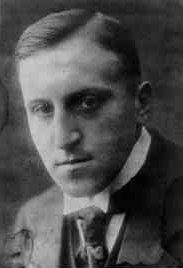
The death of Siegfried Jacobsohn in December 1926 left the journal's future uncertain. While Tucholsky briefly stepped in, Carl von Ossietzky took over as editor in May 1927 and became the official publisher in October. Under Ossietzky, the journal reached its peak circulation of 15,000 copies and gained international recognition.
The Weltbühne became the primary antagonist of the Ministry of the Reichswehr. This conflict culminated in the Weltbühne trial, where Ossietzky and Walter Kreiser were sentenced to 18 months in prison for espionage.
The Final Stand
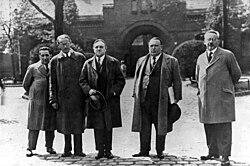
As the Third Reich approached, the journal focused entirely on opposing the Nazi ascent. During Ossietzky's imprisonment, Hellmut von Gerlach and Walther Karsch managed the publication. Karsch served as the "sitting editor," taking legal liability to protect the other writers.
Following the Nazi seizure of power on January 30, 1933, and the Reichstag fire in February, Ossietzky and his staff were arrested. The final issue of the Weltbühne was published on March 7, 1933, ending with the defiant words: "For the spirit shall prevail."
Key Facts
- Founder: Siegfried Jacobsohn, who started the journal after being fired for plagiarism.
- Name Change: Transitioned from Die Schaubühne (theater focus) to Weltbühne (politics, art, and economics) in 1918.
- Key Figures: Kurt Tucholsky (writer/editor) and Carl von Ossietzky (publisher/editor).
- Peak Circulation: Approximately 15,000 copies in the early 1930s.
- Major Conflict: The Weltbühne trial, resulting in prison sentences for espionage.
- End Date: March 7, 1933, following the Nazi seizure of power.
| Period | Name | Primary Focus | Key Leadership |
|---|---|---|---|
| 1905–1913 | Die Schaubühne | Theater and Art Criticism | Siegfried Jacobsohn |
| 1913–1918 | Die Schaubühne | Transition to Politics/Economics | Jacobsohn & Tucholsky |
| 1918–1926 | Weltbühne | Pacifism and Republican Critique | Siegfried Jacobsohn |
| 1927–1933 | Weltbühne | Anti-militarism and Anti-Nazism | Carl von Ossietzky |
Frequently Asked Questions
Why did Die Schaubühne change its name to Weltbühne?
The name change occurred on April 4, 1918, to reflect the journal's evolution from a purely theatrical publication into a broader "journal of politics, art, and economics."
Who were the three pseudonyms used by Kurt Tucholsky?
Tucholsky used the names Ignaz Wrobel, Theobald Tiger, and Peter Panter to prevent the magazine from appearing too dominated by his own voice.
What was the "Weltbühne trial"?
It was a legal conflict with the Ministry of the Reichswehr stemming from the journal's anti-militarism reporting, which resulted in Carl von Ossietzky and Walter Kreiser being imprisoned for 18 months on charges of espionage.
What role did Walther Karsch play in the journal's final years?
Karsch acted as the "sitting editor," meaning he assumed sole legal liability for the publication's content to protect the other editors from lawsuits and prosecution.
How did the journal end?
After the Nazi seizure of power and the arrest of staff following the Reichstag fire, the final issue was published on March 7, 1933.