Dermis: Structure, Layers, and Functions of the Skin's Core
The dermis, also known as the corium, is the critical middle layer of the skin. Positioned between the outer epidermis and the deeper subcutaneous tissues, it forms the bulk of the cutis (the combined epidermis and dermis). Primarily composed of dense irregular connective tissue, the dermis acts as a vital cushion, protecting the body from mechanical stress and strain.
This complex layer is not merely a structural support; it is a hub of biological activity. It houses essential nerves, blood vessels, and glands that maintain the health and functionality of the entire integumentary system.
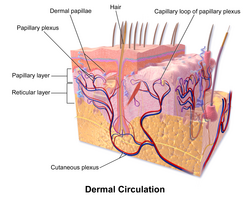
Key Facts
- Composition: Made of dense irregular connective tissue consisting of collagen, elastic fibers, and an extrafibrillar matrix.
- Two Primary Layers: Divided into the superficial papillary region and the deeper, thicker reticular dermis.
- Vital Components: Contains hair follicles, sweat glands, sebaceous (oil) glands, apocrine glands, and lymphatic vessels.
- Sensory Role: Houses mechanoreceptors for touch and thermoreceptors for heat.
- Support System: Blood vessels in the dermis provide nourishment and waste removal for both the dermis and the epidermis.
The Cellular and Molecular Architecture
The dermis is built from three primary cell types: fibroblasts, macrophages, and mast cells. These cells work within a complex matrix to maintain skin integrity.
The structural strength and flexibility of the skin are derived from three main matrix components:
- Collagen: Protein fibers that provide structural strength.
- Elastin: Fibers that allow the skin to stretch and snap back (elasticity).
- Extrafibrillar Matrix: A gel-like extracellular substance composed of glycoproteins, proteoglycans, and glycosaminoglycans, most notably hyaluronan.
The Papillary Dermis
The papillary dermis is the uppermost layer, consisting of loose areolar connective tissue. It is characterized by its intertwining relationship with the rete ridges of the epidermis.
Dermal Papillae
The layer is named for its fingerlike projections called dermal papillae. These extensions increase the surface area between the dermis and epidermis, which serves two critical purposes: it strengthens the junction to prevent the layers from separating and enhances the exchange of oxygen, nutrients, and waste products.
In the hands and feet, these papillae create friction ridge skin (also called thick, volar, or hairless skin). These ridges, colloquially known as fingerprints, are developed before birth through a combination of genetics and environmental timing. They remain largely unchanged throughout life, making them essential for personal identification and improving grip through increased friction.
The Reticular Dermis
Located beneath the papillary layer, the reticular dermis is significantly thicker and composed of dense irregular connective tissue. This region is the primary reservoir for dermal elastic fibers.
The reticular dermis is a dense weave of collagenous, elastic, and reticular fibers, providing the skin with its characteristic extensibility and strength. This layer houses the roots of hair, nails, blood vessels, and various glands. Notably, the orientation of collagen fibers here creates Langer's lines (lines of tension), which are clinically significant for surgeons when planning incisions to optimize wound healing.
Summary of Dermal Layers
| Feature | Papillary Dermis | Reticular Dermis |
|---|---|---|
| Position | Superficial (Upper) | Deep (Lower) |
| Tissue Type | Loose areolar connective tissue | Dense irregular connective tissue |
| Primary Components | Fine collagen, Meissner's corpuscles | Dense collagen and elastic fibers |
| Key Structures | Dermal papillae | Hair roots, glands, blood vessels |
| Main Function | Nutrient exchange and epidermal support | Strength, elasticity, and structural housing |
Frequently Asked Questions
What is the difference between the dermis and the epidermis?
The epidermis is the outermost layer of the skin, while the dermis is the deeper, thicker layer of connective tissue that provides structural support, nourishment, and sensory capabilities to the epidermis.
What are dermal papillae and why are they important?
Dermal papillae are nipple-like extensions of the dermis that project into the epidermis. They increase the surface area for nutrient exchange and prevent the two skin layers from separating.
How do fingerprints form?
Fingerprints are created by the dermal papillae in the friction ridge skin of the hands and feet. Their patterns are determined by a mix of genetics and events occurring before birth.
What are Langer's lines?
Langer's lines are lines of tension created by the specific orientation of collagen fibers within the reticular dermis. They are used in surgery to guide incisions for better healing.
What provides the skin with its elasticity?
Elasticity is primarily provided by elastin fibers located within the dermis, particularly in the thicker reticular layer.