Tendon Structure, Composition, and Biomechanics
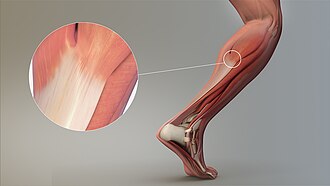
Tendons are specialized connective tissues that serve as the critical link between muscles and bones. By transmitting the force generated by muscle contractions to the skeleton, they enable a vast array of movements, from the delicate precision of a finger twitch to the explosive power of a jump. In the human body, there are approximately 4,000 tendons, each tailored to meet the specific mechanical demands of its location.
Key Facts
- Composition: Primarily made of collagen, with Type I collagen making up the majority of the dry mass.
- Quantity: There are roughly 4,000 tendons in the human body.
- Mechanical Nature: Tendons are viscoelastic, meaning they exhibit both elastic and viscous properties.
- Specialization: They are categorized into energy-storing tendons (more elastic) and positional tendons (stiffer).
- Unique Property: Some tendons exhibit a negative Poisson's ratio (auxetic behavior) when stretched within their normal range of motion.
Chemical Composition and Structure
The physical properties of a tendon are derived from its complex chemical makeup. The dry mass of a normal tendon—which accounts for 30% to 45% of its total mass—is composed of the following materials:
Collagen Content (60–85% of dry mass)
- Collagen I: 60–80%
- Collagen III: 0–10%
- Collagen IV: 2%
- Other: Small amounts of collagens V, VI, and others.
Non-Collagenous Extracellular Matrix (15–40% of dry mass)
The extracellular matrix (the network of macromolecules that provide structural and biochemical support to surrounding cells) includes:
- Cartilage oligomeric matrix protein: 3%
- Elastin: 1–2%
- Proteoglycans: 1–5%
- Inorganic components: 0.2% (including calcium, manganese, and copper).
Ultrastructure and Synthesis
The architecture of a tendon is hierarchical, moving from microscopic molecules to macroscopic fibers. The process begins when tropocollagen molecules (approximately 300 nm long and 1–2 nm wide) are secreted by cells and cleaved by procollagen N- and C- proteases. These molecules spontaneously assemble into insoluble fibrils with diameters ranging from 50 to 500 nm.
These fibrils further organize into fascicles—bundles roughly 10 mm in length and 50–300 μm in diameter. Finally, these fascicles group together to form the complete tendon fiber, which typically reaches a diameter of 100–500 μm.
Biomechanics and Mechanics
Tendons are viscoelastic structures, meaning their response to stress depends on the rate and duration of the load. Their mechanical behavior is often described via a stress-strain curve.
Initially, tendons enter a "toe region" characterized by low stiffness. During this phase, the crimp structure of the collagen straightens and fibers align. Interestingly, research using MRI and cadaveric testing has shown that healthy tendons are highly anisotropic and can exhibit a negative Poisson's ratio (auxetic behavior) in certain planes when stretched up to 2% of their length.
Once past the toe region, the tendon becomes significantly stiffer, following a linear stress-strain curve until failure. The specific properties vary by function:
- Energy-Storing Tendons: These are less stiff and more elastic, allowing them to store energy efficiently. They typically fail at 12–15% strain with stress between 100–150 MPa.
- Positional Tendons: These are stiffer and more viscoelastic to provide precise movement control. They may fail at lower strains (6–8%) but possess higher moduli (700–1000 MPa).
Major Tendons of the Human Body
While thousands of tendons exist, they can be grouped by the body regions they support and their primary functions.
| Tendon Name | Body Part | Primary Function |
|---|---|---|
| Achilles tendon | Hips and legs | Moves foot up/down or side to side |
| Biceps tendons | Shoulders and arms | Bends elbow or rotates forearm |
| Quadriceps tendons | Hips and legs | Bends or straightens the knee |
| Rotator cuff (e.g., Supraspinatus) | Shoulders and arms | Shoulder stability and movement |
| Masseter tendons | Head, neck, and torso | Operates the jaw |
| Rectus abdominis tendons | Head, neck, and torso | Maintains posture; bends/straightens trunk |
Frequently Asked Questions
What is the primary component of a tendon?
The primary component is collagen, specifically Type I collagen, which makes up 60–80% of the tendon's dry mass.
What does it mean for a tendon to be viscoelastic?
Viscoelasticity means the tendon exhibits both viscous (like a fluid) and elastic (like a spring) characteristics, allowing it to deform under stress and return to its original shape, though the rate of loading affects this response.
How do energy-storing tendons differ from positional tendons?
Energy-storing tendons are more elastic and less stiff, enabling them to store and release energy. Positional tendons are stiffer and more viscoelastic, which allows for finer, more controlled movements.
What is a negative Poisson's ratio in tendons?
A negative Poisson's ratio, or auxetic behavior, occurs when a material becomes thicker perpendicular to the direction of the pull when stretched, rather than thinning out as most materials do.
How many tendons are in the human body?
There are approximately 4,000 tendons throughout the human body.