Extracellular Matrix: The Biological Scaffold of Life
The extracellular matrix (ECM) is a complex network of macromolecules that provides structural and biochemical support to surrounding cells. Far from being a passive filler, the ECM is a dynamic environment that influences cell behavior, development, and tissue homeostasis. While most commonly discussed in the context of animals, ECM-like structures exist in plants—including cellulose in cell walls—and in microorganisms, which create multicellular biofilms composed of extracellular polymeric substances.
In humans and other animals, the ECM is categorized primarily into the basement membrane and the interstitial matrix, serving as the essential interface between epithelium, endothelium, and connective tissues.
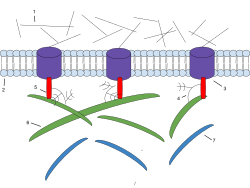
Key Facts
- Collagen is the most abundant protein in both the ECM and the entire human body.
- The ECM regulates critical cellular processes including proliferation, migration, and differentiation.
- Integrins act as the primary bridge, anchoring cells to the ECM.
- Medical applications use ECM derived from porcine (pig) tissues to repair human organs and wounds.
- Matrix-bound nanovesicles (MBVs) within the ECM carry lipids, DNA, and miRNAs to modify cell activation.
Structural Components of the ECM
The ECM is composed of a diverse array of proteins and polysaccharides that work together to determine the physical properties of a tissue.
Proteoglycans and Polysaccharides
Proteoglycans are proteins with attached glycosaminoglycan chains. Key examples include:
- Heparan sulfate: Attached to proteins like perlecan, agrin, and collagen XVIII, particularly within basement membranes.
- Hyaluronic acid: A non-proteoglycan polysaccharide that regulates cell behavior during inflammation, embryonic development, healing, and tumor growth by interacting with the CD44 receptor.
- Other sulfates: Chondroitin sulfate and keratan sulfate contribute to the matrix's structural integrity.
The Role of Collagen and Elastin
Collagen is the primary structural protein of the ECM, accounting for 90% of the protein content in bone matrix. It is secreted as procollagen and cleaved by proteases to assemble into its final form. Collagen is categorized into several families:
- Fibrillar: Types I, II, III, V, XI
- Facit: Types IX, XII, XIV
- Short chain: Types VIII, X
- Basement membrane: Type IV
- Other: Types VI, VII, XIII
Genetic defects in collagen-encoding genes can lead to severe disorders, including Ehlers Danlos Syndrome, osteogenesis imperfecta, and epidermolysis bullosa. Alongside collagen, elastin provides the necessary flexibility and recoil for various tissues.
Cell Adhesion Proteins
Proteins such as fibronectin and laminin facilitate the attachment of cells to the matrix, ensuring that tissues remain cohesive and cells receive the necessary environmental cues.
Physiology and Cellular Interaction
The ECM does not just hold cells in place; it actively communicates with them. This interaction occurs through several mechanisms:
Cell Adhesion Mechanisms
Cells bind to the ECM via two primary structures:
- Focal adhesions: Connect the ECM to the cell's actin filaments.
- Hemidesmosomes: Connect the ECM to intermediate filaments, such as keratin.
These connections are regulated by integrins, cell-surface proteins that bind to ECM components like fibronectin and laminin, or to integrins on neighboring cells.
Influence on Cell Behavior
The physical properties of the ECM, such as stiffness and elasticity, can trigger durotaxis (cell migration guided by substrate rigidity). The matrix can influence gene expression and direct stem cell differentiation, effectively telling a cell what type of tissue it should become based on the mechanical feedback it receives.
Development and Maintenance
Different cell types are responsible for synthesizing and maintaining the ECM depending on the tissue:
- Fibroblasts: The most common cells in connective tissue; they secrete the ground substance and structural framework.
- Chondrocytes: Produce the specialized matrix found in cartilage.
- Osteoblasts: Responsible for the formation of the bone matrix.
Clinical Significance and Biomaterials
The ability to harvest and process ECM has led to significant breakthroughs in regenerative medicine. ECM Biomaterials are derived from human or animal tissues to retain the matrix's natural properties.
| Source Material | Medical Application | Outcome/Function |
|---|---|---|
| Pig Bladder | Gastric Ulcers | Closes holes in the stomach lining |
| Pig Small Intestine Submucosa | ASD, PFO, and Inguinal Hernia | 95% replaced by normal soft tissue after one year |
| Purified ECM Proteins | Cell Culture / Lab Research | Maintains stem cells or induces differentiation in vitro |
| ECM Bioscaffolds | Wound Healing (e.g., Veterans) | Tissue regeneration for damaged extremities |
Frequently Asked Questions
What is the most abundant protein in the human body?
Collagen is the most abundant protein in both the extracellular matrix and the human body overall, providing essential structural support to cells and making up 90% of the bone matrix protein content.
How do cells attach to the extracellular matrix?
Cells attach using cell-surface adhesion molecules called integrins. These proteins link the ECM to the cell's internal cytoskeleton via focal adhesions (connecting to actin filaments) or hemidesmosomes (connecting to intermediate filaments like keratin).
What are matrix-bound nanovesicles (MBVs)?
MBVs are functional components of ECM bioscaffolds that resemble exosomes. They carry cargo including proteins, lipids, DNA fragments, and miRNAs, which can alter cell cycle, proliferation, migration, and the activation state of macrophages.
Can the ECM be used to regrow human tissue?
Yes. ECM derived from animal sources, such as pig bladders or small intestines, is used in medical patches and scaffolds. In many cases, the body gradually replaces the donor collagen with its own normal soft tissue over time.
What happens when there are genetic defects in collagen?
Genetic defects in the genes that encode collagen can lead to connective tissue disorders such as Ehlers Danlos Syndrome, osteogenesis imperfecta, and epidermolysis bullosa.