Dachau Concentration Camp: A Legacy of Terror and Liberation
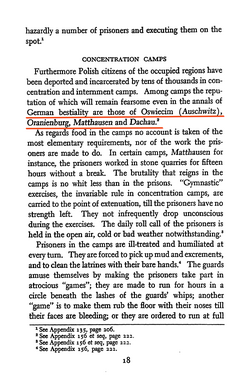
Established in March 1933 in Upper Bavaria, Southern Germany, Dachau served as the first Nazi concentration camp. Originally designed as a political prison to silence opponents of the regime, it evolved into a prototype for the entire system of camps operated by the Schutzstaffel (SS). Over its twelve-year operation, it became a site of systemic brutality, forced labor, and mass murder.
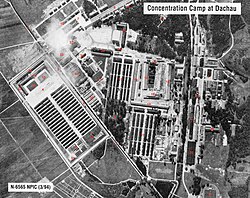
Key Facts
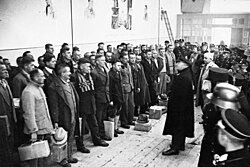
- Operational Period: March 1933 – April 1945.
- Estimated Inmates: Over 188,000 people.
- Confirmed Deaths: 41,500 (per official memorial records).
- Primary Operators: The SS (Schutzstaffel).
- Liberating Force: The United States Army.
- Targeted Groups: Political prisoners, Jews, Poles, Romani, homosexuals, Jehovah's Witnesses, and Catholic priests.
The Architecture of Oppression
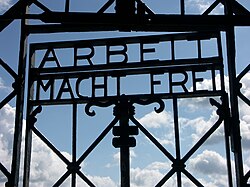
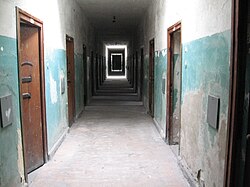
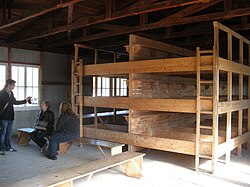
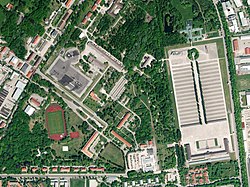
Dachau was organized to strip prisoners of their humanity. The entrance to the camp was marked by the Jourhaus building, featuring the infamous slogan Arbeit macht frei ("Work Sets You Free"). Inside, prisoners were housed in overcrowded barracks and subjected to rigorous roll-calls and forced labor.
The camp's infrastructure included a bunker for prisoners and crematoria to dispose of the dead. While a gas chamber was constructed, records indicate it remained unused.
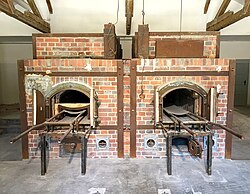
![The unused gas chamber[6] in 2011](/images/a5/b3/a5b302ba4078838d3438a923a606db6722c25b1aea4e69e33569bc6f5147d60f.jpg)
Demographics and Persecution
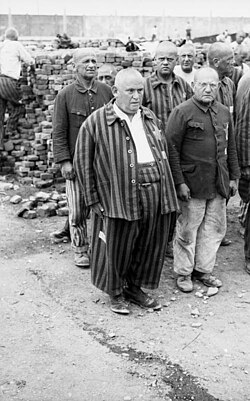
While initially targeting political dissidents, the camp's population expanded to include a wide array of victims. Poles constituted the largest ethnic group during the war, followed by Russians, French, Yugoslavs, Jews, and Czechs. A significant number of Catholic priests were also imprisoned, many of whom were subjected to horrific medical experiments.
Atrocities and War Crimes
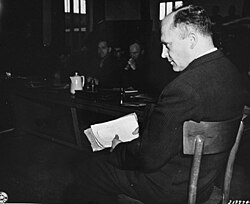
The SS utilized Dachau for more than just incarceration. The camp became a center for medical experimentation, where doctors like Dr. Sigmund Rascher and Dr. Claus Schilling conducted lethal tests. One such experiment involved exposing hundreds of priests to malaria.
The Hebertshausen Shooting Range
Beyond the main camp walls, the SS operated a shooting range at Hebertshausen. Between 1941 and 1943, over 4,000 Soviet prisoners of war were murdered here in direct violation of the Geneva Convention. The SS referred to these executions using the cynical euphemism Sonderbehandlung ("special treatment").
The Final Days and Liberation
![Former prisoners of KZ Dachau reenact the operation of the crematorium by pushing a corpse toward one of the ovens.[37]](/images/bd/69/bd69ff0a0508ace4d0f7a6f426047b0a7ed8681a3d7faec868a155c8508388c9.jpg)
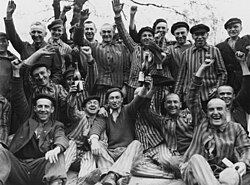
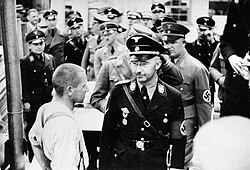
By April 1945, the camp was in chaos. Heinrich Himmler had ordered the evacuation of camps, directing northern prisoners toward the coasts to be drowned and southern prisoners toward the Alps. On April 28, 1945, a brief armed revolt by prisoners and a renegade civilian militia (Volkssturm) was brutally suppressed by the SS.
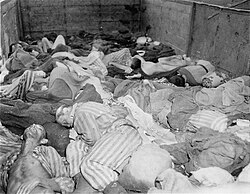
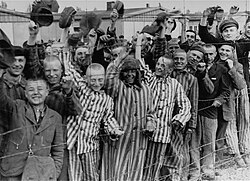
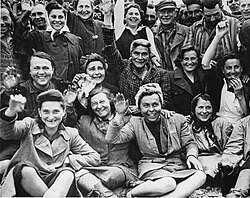
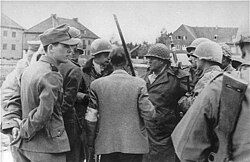
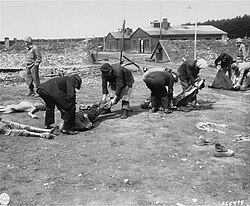
The U.S. Army liberated the main camp on April 29, 1945. Upon entry, soldiers discovered the "death train," filled with corpses, and thousands of survivors weakened by starvation and disease.
The Aftermath of Liberation
Liberation did not immediately end the suffering. A massive epidemic of typhus—a louse-borne disease—ravaged the camp. By May 3, 2,000 cases had been identified, and thousands more died in the following months. U.S. medical units, including the 116th and 127th Evacuation Hospitals, worked tirelessly to treat the survivors.
The liberation was also marked by violence. An Inspector General report found that at least 21 SS guards were killed after their surrender was accepted, while another 25 to 50 were killed by liberated prisoners in acts of reprisal.
![Photograph allegedly showing an unauthorized execution of SS troops in a coal yard in the area of the Dachau concentration camp during its liberation—part of the Dachau liberation reprisals. 29 April 1945 (U.S. Army photograph)[c]](/images/7c/fa/7cfad9554dfb21f4e99e6e5cab991bc150d0db1d7061b2c15772fbe6ac1b3ed5.jpg)
Summary of Camp Administration
| Category | Details |
|---|---|
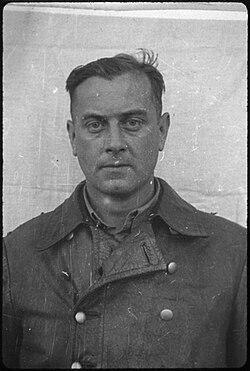
| Commandants | Included Theodor Eicke, Hans Loritz, and Martin Weiß |
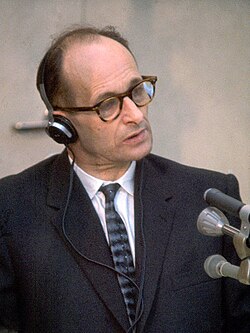
| Notable Staff | Adolf Eichmann, Rudolf Höss |
| Liberating Units | U.S. 4th, 12th Armored, 42nd, 45th, and 101st Airborne Divisions (among others) |
| Satellite Camps | Included Kaufering IV, Erpting, and Schwabing |
Memorialization
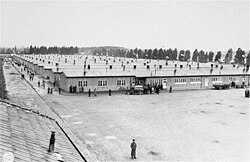
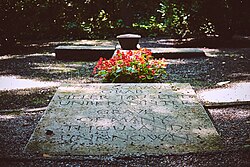
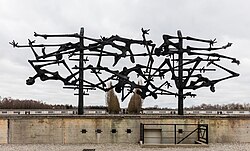
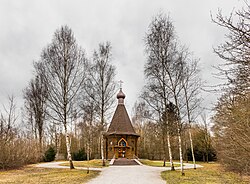
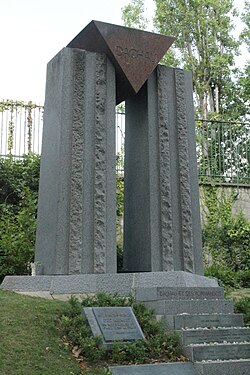
Today, the site serves as a memorial to the victims. It includes reconstructed barracks, an Orthodox chapel, and sculptures by Nandor Glid to ensure the atrocities are never forgotten.
Frequently Asked Questions
Who liberated the Dachau concentration camp?
The camp was liberated by the United States Army on April 29, 1945. Multiple units were involved, including the 42nd, 45th, and 101st Airborne Divisions, as well as the 12th Armored Division.
What was the purpose of the Hebertshausen shooting range?
The shooting range was used by the SS to execute Soviet prisoners of war. Over 4,000 Soviet POWs were murdered there between 1941 and 1943 under the guise of "special treatment."
Did the gas chambers at Dachau operate?
While a gas chamber was constructed at the site, historical records and memorial data indicate that it remained unused.
What happened to the prisoners after liberation?
Many survivors continued to die due to extreme starvation and a typhus epidemic. U.S. Army medical teams established evacuation hospitals to treat the thousands of infected and ill prisoners.
Which ethnic groups were most represented in the camp?
Poles constituted the largest ethnic group in the camp during the war, followed by Russians, French, Yugoslavs, Jews, and Czechs.