COVID-19 Pandemic in Austria: Timeline and Response
The arrival of COVID-19 in Austria marked the beginning of a complex public health crisis that reshaped daily life, governance, and social interaction. From the first confirmed cases in early 2020 to the eventual lifting of restrictions in 2022, the Austrian government implemented a series of stringent measures to curb the spread of SARS-CoV-2 (the virus causing COVID-19) and protect the healthcare system from collapse.
Key Facts
- First Cases: Confirmed on February 25, 2020, involving two individuals from Italy.
- Ischgl Hotspot: The Tyrolean ski resort became a major early epicenter of infection.
- Lockdowns: Austria experienced multiple "hard lockdowns," including a unique mandate for unvaccinated citizens in late 2021.
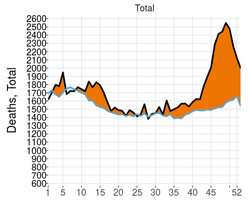
- Mortality: 2020 saw a total of 90,517 deaths, an 8.6% increase over 2019.
- Vaccination: By early March 2021, over 742,000 doses had been administered.
- Digital Shift: The pandemic accelerated Austria's adoption of digital technologies, leading European digital transformation.
2020: The Emergence and Initial Waves
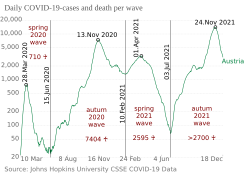
The pandemic began in Austria in late February 2020. The first two cases were confirmed on February 25, involving a 24-year-old man and woman from Lombardy, Italy. Shortly after, a 72-year-old man in Vienna and a family with two children—all with links to Italy—tested positive. By March 13, confirmed cases had risen to 422.
A significant early challenge emerged in the Tyrolean town of Ischgl. Identified as a major hotspot by Germany and Nordic countries, the town was placed under quarantine on March 13. Later investigations revealed that the closure of facilities was delayed and the evacuation of tourists was poorly managed.
Initial Restrictions and First Lockdown
In mid-March, the government took aggressive action. Universities closed by March 16, and large events were cancelled. A ban on public gatherings of more than five people was implemented, and restaurants were ordered to close. From March 16 to April 20, a nationwide lockdown restricted movement to essential activities, such as professional work, purchasing groceries or medication, and assisting others.

To further mitigate risk, the government introduced mandatory face masks in stores on April 6 and on public transportation on April 14. To prevent the overloading of clinics, the public was directed to call the Healthcare number 1450 rather than visiting doctors in person.
Subsequent Waves in 2020
As the year progressed, Austria faced subsequent surges. A second hard lockdown took effect from November 17 to December 6 to relieve pressure on hospitals. This was followed by a third hard lockdown from December 26, 2020, to January 24, 2021, with brief relaxations for Christmas shopping and family gatherings.
2021: Vaccination and Social Unrest
By February 8, 2021, strict lockdowns were lifted, though heavy protective measures remained. This included the mandatory use of FFP2 masks (high-filtration respirators) and requirements for negative COVID tests for services like hairdressing.
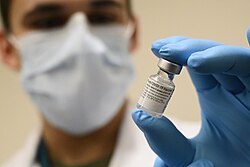
Vaccination efforts ramped up quickly. By March 5, 2021, approximately 742,374 doses had been used, with 5.7% of the population receiving a first dose and 2.7% being fully vaccinated. In March, Vorarlberg served as a "model region," reopening gastronomic and cultural sectors under strict conditions due to low infection rates.
The Fourth Wave and Vaccine Mandates
The latter half of 2021 saw a resurgence of the virus. On November 15, a temporary lockdown was imposed specifically for unvaccinated citizens aged 12 and over. This escalated on November 22 to a full national lockdown for all citizens for 20 days. Most controversially, the government announced a legal requirement for citizens to get vaccinated starting February 1, 2022.
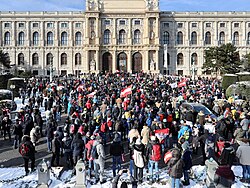
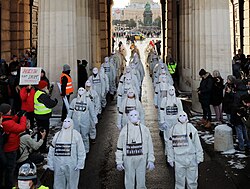
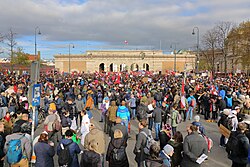
These measures sparked significant public backlash. Large-scale protests occurred in Vienna, including a major demonstration on November 20 with an official count of 40,000 participants.
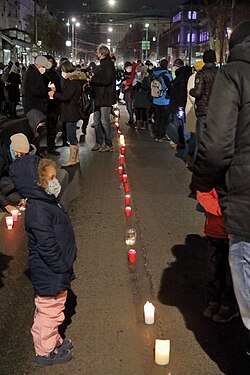
Amidst the turmoil, the nation also paused to remember those lost. On December 19, 2021, a "Sea of Lights" memorial event was held in Vienna to honor COVID-19 victims.
2022: The Path to Normalization
The transition out of the pandemic era began in early 2022. On February 16, Chancellor Karl Nehammer announced that the majority of remaining COVID-19 restrictions would be lifted by March 5, 2022, signaling a return to relative normalcy.
Pandemic Summary Table
| Period | Key Event/Measure | Primary Goal/Outcome |
|---|---|---|
| Feb-Mar 2020 | First cases & Ischgl outbreak | Initial detection and containment |
| Mar-Apr 2020 | First Nationwide Lockdown | Reducing initial transmission peak |
| Nov-Dec 2020 | Second & Third Lockdowns | Relieving hospital pressure |
| Feb-Mar 2021 | Vaccination Rollout | Building population immunity |
| Nov 2021 | Unvaccinated Lockdown & Mandate | Combating the fourth wave |
| Mar 2022 | Lifting of Restrictions | Return to normal societal function |
Frequently Asked Questions
When were the first COVID-19 cases confirmed in Austria?
The first two cases were confirmed on February 25, 2020, involving a man and a woman from Lombardy, Italy, who were treated in Innsbruck, Tyrol.
What was the significance of Ischgl during the pandemic?
Ischgl became a major coronavirus hotspot in early 2020. A later investigation concluded that the closure of facilities was delayed and the departure of tourists was not managed in an orderly fashion.
How did the 2020 mortality rate compare to previous years?
According to Statistics Austria, 90,517 people died in 2020, which represented an 8.6% increase compared to 2019. Excess mortality was most prominent during the first wave (March/April) and the second wave (after October).
What unique measure did Austria take in November 2021?
Austria implemented a national lockdown specifically for unvaccinated citizens aged 12 and over on November 15, followed by a full national lockdown for all citizens on November 22 and the announcement of a vaccine mandate.
When did most COVID-19 restrictions end in Austria?
Chancellor Karl Nehammer announced that most remaining restrictions would be lifted by March 5, 2022.