COVID-19 Pandemic: Global Impact, Pathogen Evolution, and Public Health Response
The COVID-19 pandemic, caused by the severe acute respiratory syndrome coronavirus 2 (SARS-CoV-2), represents one of the most significant global health crises in modern history. Emerging in late 2019, the virus rapidly spread across borders, challenging healthcare systems and altering the socioeconomic fabric of nearly every nation on Earth.
The index case was identified in Wuhan, China, on December 1, 2019. While the virus is believed to have originated in bats (indirectly), its ability to transmit efficiently between humans led to a worldwide outbreak that prompted the World Health Organization (WHO) to declare a global health emergency.
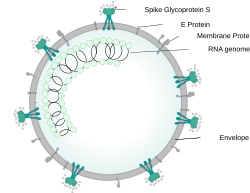
Key Facts

- Pathogen: SARS-CoV-2 virus.
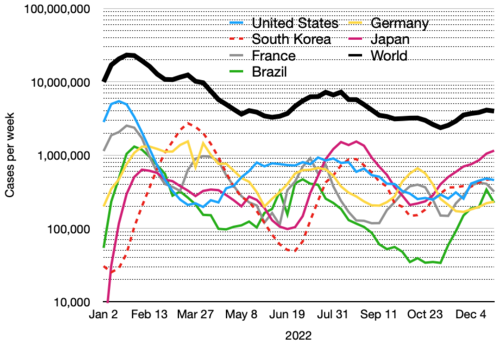
- Confirmed Cases: Approximately 779 million reported globally.
- Reported Deaths: Over 7.1 million, with estimates suggesting actual deaths between 18.5 and 35.2 million.
- Fatality Rate: Approximately 1.02% as of March 10, 2023.
- Primary Origin: Wuhan, China.
- Emergency Status: The WHO declared the end of the global health emergency on May 5, 2023.
The Pathogen and Its Evolution
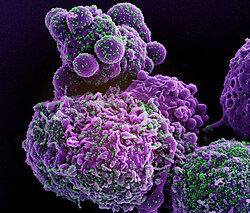
SARS-CoV-2 is a highly contagious virus that primarily attacks the respiratory system. Over time, the virus mutated, leading to the emergence of several Variants of Concern (VoC). These variants often exhibited increased transmissibility or the ability to evade previous immunity.
Major Variants of Concern
The evolution of the virus was tracked through various lineages, with the most prominent including:
- Alpha: First detected in the United Kingdom.
- Beta: First detected in South Africa.
- Gamma: First detected in Brazil.
- Delta: First detected in India.
- Omicron: First detected in Botswana.
Epidemiology and Health Impact
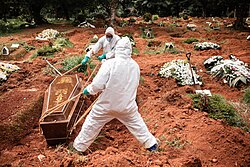
The impact of COVID-19 varied drastically based on age and underlying health conditions. The Infection Fatality Ratio (IFR)—the proportion of infected people who die—showed a steep increase as age progressed.
| Age Group | Infection Fatality Ratio (IFR) |
|---|---|
| 0–34 | 0.004% |
| 35–44 | 0.068% |
| 45–54 | 0.23% |
| 55–64 | 0.75% |
| 65–74 | 2.5% |
| 75–84 | 8.5% |
| 85+ | 28.3% |
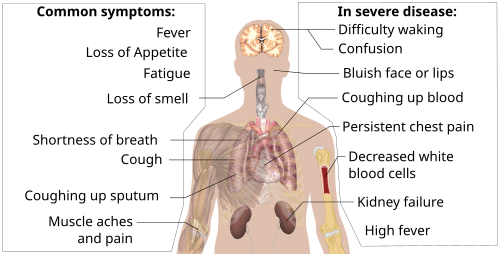
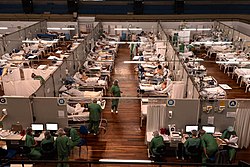
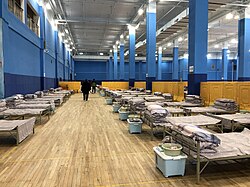
Common symptoms ranged from mild respiratory issues to critical pneumonia requiring invasive ventilation. In many regions, the surge of patients overwhelmed intensive care units, leading to the use of improvised medical equipment.

Public Health Strategies and Prevention

Governments and health organizations employed two primary strategies to manage the spread: containment (attempting to stop the virus entirely) and mitigation (slowing the spread to prevent healthcare collapse, often referred to as "flattening the curve").
Non-Pharmaceutical Interventions
Before vaccines were available, the world relied on non-pharmaceutical interventions to reduce transmission:
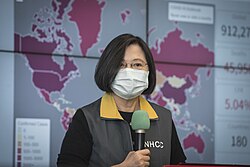
- Masking: The CDC and WHO advised the use of masks to reduce the spread of droplets.
- Social Distancing: Limiting close contact and implementing lockdowns.
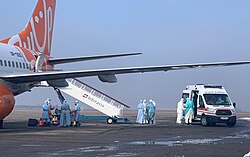
- Travel Restrictions: Closing borders and repatriating citizens to prevent importation of cases.
- Hygiene: Increased disinfection of public spaces and handwashing.

Medical Interventions
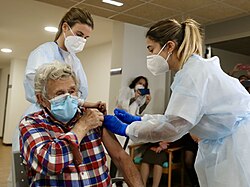
The development of vaccines was a turning point in the pandemic. Mass vaccination campaigns targeted high-risk populations, such as the elderly, to reduce severe illness and death. Additionally, diagnostic tools like the Polymerase Chain Reaction (PCR) test became the gold standard for identifying active infections.


Global Socioeconomic Impact
![Global excess and reported COVID-19 deaths and deaths per 100,000, according to the WHO study[67]](/images/5e/ef/5eef427534c2caad57e98c4e9656f603a9035dd002563515307ce047fa4a1467.png)
The pandemic extended far beyond health, triggering a global economic crisis. Supply chain disruptions led to widespread shortages of essential goods, and panic buying became common in many countries.
Economic and Social Disruptions
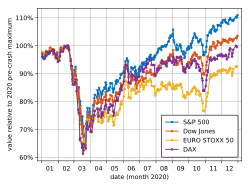
- Market Volatility: The 2020 stock market crash and fluctuations in oil prices reflected global instability.
- Industry Decline: The cruising and travel industries saw declines not seen in thirty years.
- Education: Schools shifted to remote learning, impacting students' mental health and educational continuity.
- Environment: Temporary lockdowns led to a stark drop in nitrogen dioxide (NO2) pollution in cities like Wuhan.
![Images from the NASA Earth Observatory show a stark drop in pollution in Wuhan, when comparing NO2 levels in early 2019 (top) and early 2020 (bottom).[586]](/images/b2/9e/b29e1a10ab0a3dff26940912177761e4745a6157d01eb25ab77abc50e50cdea1.png)
Frequently Asked Questions
![Goals of mitigation include delaying and reducing peak burden on healthcare (flattening the curve) and lessening overall cases and health impact.[163][164] Moreover, progressively greater increases in healthcare capacity (raising the line) such as by increasing bed count, personnel, and equipment, help to meet increased demand.[165]](/images/08/cf/08cfb4473d407848b44de67e901120f9a19617bb2c756d352f8c88c92f83c13d.gif)



![Disinfection of Tehran Metro trains to prevent COVID-19 transmission. Similar measures have also been taken in other countries.[295]](/images/8a/90/8a900657408f6b72a6c4e766cc441d1b084029b88cbd4228af52639c0404a8e0.jpg)


![Viewed in context, the price of oil has been affected internationally at the times of the COVID-19 pandemic, the 2022- Russo-Ukrainian war and the 2026 Iran war.[457]](/images/3a/fa/3afa2bbc255d3918476c7bec4569cb4be60e7945a86d3a6739c78e2093d22b3d.webp)
![Industries such as cruising experienced a significant decline—down to levels not seen in thirty years.[458]](/images/c7/bc/c7bc57ab12417137df380aa5e30fc5ef0fbad4acf096077d8f94f786fd256f96.webp)


![Anti-lockdown protesters rallied at the Ohio Statehouse 20 April 2020.[525]](/images/b0/2c/b02cdb03d3b8af2fc0c58825b188cf959d1c1d513a6ea24f27b962f4b2533d15.jpg)

![A socially distanced homeless encampment in San Francisco, California, in May 2020[597]](/images/28/bb/28bb5b4c37b1850336d35cb49703acb868019379eb5abaca97fb0f79eb00682e.jpg)


What is the difference between IFR and CFR?
The Infection Fatality Ratio (IFR) measures the proportion of all infected individuals who die, including those who were asymptomatic or never tested. The Case Fatality Ratio (CFR) measures the proportion of confirmed cases who die.
When did the WHO declare the end of the global health emergency?
The World Health Organization officially declared that COVID-19 was no longer a global health emergency on May 5, 2023.
Which age group was most vulnerable to the virus?
Individuals aged 85 and older were the most vulnerable, with an estimated Infection Fatality Ratio (IFR) of 28.3%.
What were the primary goals of mitigation strategies?
The goals of mitigation were to delay and reduce the peak burden on healthcare systems (flattening the curve) and to lessen the overall number of cases and health impacts.
How did the virus evolve during the pandemic?
The virus mutated into several Variants of Concern, such as Alpha, Beta, Gamma, Delta, and Omicron, which often changed how easily the virus spread or how it responded to vaccines.