The COVID-19 Pandemic in China: A Comprehensive Overview
The COVID-19 pandemic, caused by the SARS-CoV-2 pathogen, represents one of the most significant public health challenges in modern history. The outbreak first emerged in Wuhan, Hubei province, with retrospective analyses suggesting the earliest symptoms may have appeared as early as mid-November 2019, though the first officially confirmed case was recorded on 1 December 2019.
Since its inception, the pandemic in China has been characterized by evolving government strategies, ranging from strict containment measures to significant shifts in public health policy. This article explores the trajectory of the virus, the scale of the impact, and the data surrounding infections, vaccinations, and mortality rates.
Key Facts
- First Outbreak: Wuhan, Hubei province (late 2019).
- Pathogen: SARS-CoV-2.
- Confirmed Cases: Approximately 99.38 million.
- Estimated Infections: A 2023 study suggests suspected cases may reach ~97% of China's population.
- Vaccination Scale: Over 3.5 billion doses have been administered.
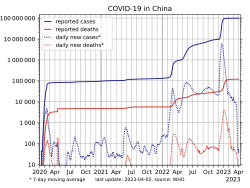
- Official Death Toll: 122,398 (with scientific estimates ranging from 1.87 million to 2.6 million).
The Evolution of the Pandemic in Mainland China
Early Containment and Zero-COVID Policies
In the initial stages of the outbreak, China implemented rigorous containment measures to limit the spread of the virus. These efforts were designed to suppress transmission through localized lockdowns and strict movement controls. While these measures were effective in the early years, the pandemic saw periodic fluctuations in infection rates.
By April 2022, the landscape began to shift. On 3 April 2022, China reported 13,146 new cases in a single 24-hour period, marking the highest daily total since the height of the initial 2020 outbreak.
The 2022–2023 Surge
Following a period of strict adherence to containment protocols, China experienced a massive surge in infections during the late 2022 and early 2023 period. This surge was characterized by a rapid increase in daily cases that significantly exceeded previous national tallies. During this time, reports emerged of high infection rates in provinces such as Zhejiang, where daily cases were expected to double rapidly.
Regional Data and Special Administrative Regions
Hong Kong and Macau
The Special Administrative Regions (SARs) of Hong Kong and Macau faced unique challenges. Hong Kong utilized various strategies to manage waves of infection, including limiting social gatherings and implementing partial lockdowns in hotspots. However, the arrival of the Omicron variant in early 2022 placed significant strain on the region's healthcare systems.
Taiwan
As of 23 April 2022, Taiwan reported a total of 51,298 confirmed cases and 856 deaths out of 14,214,319 tests conducted. Taiwan's response was noted for its use of data and centralized command structures to manage the spread of the virus.
Statistical Summary of COVID-19 Impact
| Category | Reported Figure / Estimate |
|---|---|
| Confirmed Cases | 99,380,000 |
| Suspected Cases (2023 Estimate) | ~1,369,800,000 |
| Official Deaths | 122,398 |
| Estimated Deaths (2023–2025 Studies) | 1,870,000 – 2,600,000 |
| Total Doses Administered | 3,516,880,600 |
| Fully Vaccinated Population | 1,284,479,600 |
Vaccination Efforts
China launched an extensive vaccination campaign, beginning with emergency use authorizations in July 2020. The scale of the rollout is reflected in the administration of over 3.5 billion doses. As of the latest data, more than 1.28 billion individuals have been fully vaccinated, contributing to a massive public health effort to mitigate the severity of the disease.
Frequently Asked Questions
When did the first COVID-19 case occur in China?
While the first officially confirmed case was recorded in December 2019, retrospective analyses suggest the first patient may have experienced symptoms as early as 17 November 2019 in Hubei province.
What is the difference between official and estimated death tolls?
The official death count recorded by authorities is 122,398. However, various scientific studies conducted between 2023 and 2025 provide higher estimates, ranging from 1.87 million to 2.6 million deaths.
How many people have been vaccinated in China?
A total of 1,318,026,800 people have received at least one dose, with 1,284,479,600 individuals being fully vaccinated. In total, over 3.5 billion doses have been administered.
What caused the surge in cases in late 2022?
The surge was characterized by a rapid increase in infections across the country, with many cities reporting daily case numbers that surpassed previous national records, leading to significant pressure on local healthcare infrastructure.
How did Taiwan manage the pandemic?
Taiwan utilized big data, transparency, and a central command structure to manage the virus. By April 2022, they had conducted over 14 million tests to monitor and control the spread.