COVID-19 Vaccines: Technologies, Effectiveness, and Global Impact
The development of vaccines against SARS-CoV-2, the virus responsible for COVID-19, represents one of the most rapid scientific mobilizations in history. By leveraging both established methods and cutting-edge biotechnology, researchers created a diverse array of tools to reduce the global burden of the pandemic, focusing on preventing severe illness and death.
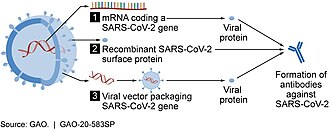
These vaccines work by training the immune system to recognize and fight the virus, primarily by targeting the spike protein—the structure the virus uses to enter human cells.
Key Facts
- Global Impact: Estimates suggest COVID-19 vaccines saved approximately 20 million lives worldwide in the first year of availability.
- Diverse Platforms: Major vaccine types include mRNA, viral vector, inactivated virus, and protein subunit vaccines.
- Primary Goal: While efficacy against transmission varies, vaccines have shown substantial success in reducing death rates and severe illness.
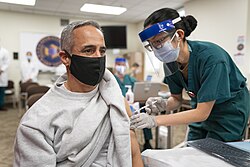
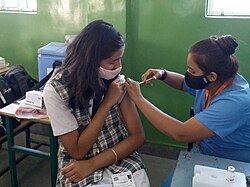
- Administration: Most vaccines are delivered via intramuscular injection, though intranasal sprays have been explored.
- Safety Monitoring: Global systems like VAERS (US), the Yellow Card Scheme (UK), and VigiBase (WHO) track adverse events.
Vaccine Technologies and Platforms

Scientists employed several different platforms to prompt an immune response. Each method differs in how it introduces the viral antigen to the body.
mRNA Vaccines
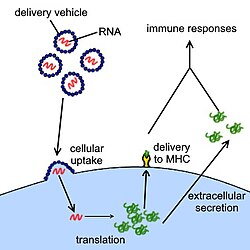
Messenger RNA (mRNA) vaccines use a synthetic piece of genetic material that instructs cells to produce a harmless version of the SARS-CoV-2 spike protein. Once the protein is created, the immune system recognizes it as foreign and develops antibodies.
Viral Vector Vaccines
These vaccines use a modified, non-replicating virus (often an adenovirus) as a delivery vehicle to carry genetic instructions into the cell, which then produces the spike protein to trigger an immune response.
Inactivated Virus Vaccines
This traditional approach uses a version of the SARS-CoV-2 virus that has been killed (inactivated). Because the virus is dead, it cannot cause disease, but the immune system can still recognize its structure.
Subunit Vaccines
Subunit vaccines contain only specific pieces of the virus—such as the spike protein or the receptor-binding domain (RBD)—rather than the whole virus. These are often combined with an adjuvant, a substance that enhances the body's immune response.
![Vaccine platforms that are being employed for SARS-CoV-2. Whole-virus vaccines include both attenuated and inactivated forms of the virus. Protein and peptide subunit vaccines are usually combined with an adjuvant to enhance immunogenicity. The main emphasis in SARS-CoV-2 vaccine development has been on using the whole spike protein in its trimeric form, or its components, such as the RBD region. Multiple non-replicating viral vector vaccines have been developed, particularly focused on adenovirus, while there has been less emphasis on the replicating viral vector constructs.[36]](/images/8e/54/8e54b8faf60e56d6c84ff533707704de90c5e6a9eaeeeadb4020564eb8f2729f.jpg)
![Vial of Novavax vaccine from clinical trials at Thackray Museum of Medicine[90]](/images/b6/cd/b6cdbe740713f99828b31aaba00ed0df8fc1ef696fb79f3b03be4916d2e0a57b.jpg)
Development and Implementation
The development path for COVID-19 vaccines involved rigorous evaluation of toxicity, safety, and efficacy. Researchers focused on optimizing dose regimens, stability for storage, and manufacturing processes capable of producing billions of doses.
To accelerate access during the crisis, many regulators granted Emergency Use Authorization (EUA), allowing vaccines to be deployed before formal full licensing was completed.

Delivery and Distribution
While intramuscular injection is the standard, research into intranasal delivery was pursued to potentially provide better mucosal immunity. Distribution efforts varied globally, with some nations implementing mass vaccination centers and drive-through clinics.


Effectiveness and Public Health Outcomes
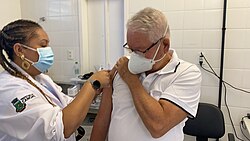
The primary success of the vaccination campaign has been the dramatic reduction in mortality. Data indicates that death rates for unvaccinated individuals substantially exceeded those of vaccinated individuals, with bivalent boosters further lowering the risk of death.
![Death rates from COVID-19 for unvaccinated Americans substantially exceeded those who were vaccinated, with bivalent boosters further reducing the death rate.[205]](/images/2d/56/2d568c088f05ae65fe26286b63d92863cbd6fed23fd99cc3146b07c74f9330fd.webp)
![Researchers have estimated that COVID-19 vaccines saved around 20 million lives globally in the first year of vaccine availability.[206]](/images/88/22/88226e919c146e1c9a0c2df676092e2a7424ab7d36f3f574695a1fd46c8a98f1.png)
Challenges to Efficacy
- Immune Evasion: New variants of the virus have evolved to partially evade the immunity provided by original vaccines.
- Duration of Immunity: Protection against infection tends to wane over time, leading to the recommendation of booster shots.
- Long COVID: Evidence suggests that vaccination can reduce the risk of developing long COVID.
Safety and Public Response
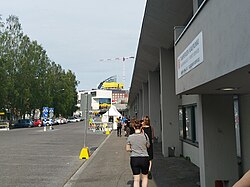
Vaccine safety is monitored through large-scale reporting systems. While most side effects are mild, rare serious adverse events have been documented and tracked by health organizations globally.
Public acceptance has been influenced by various factors, including political affiliation and vaccine skepticism. In the United States, a partisan gap emerged, with a higher percentage of Republicans remaining unvaccinated compared to Democrats as of March 2024.
![After the December 2020 introduction of COVID vaccines, a partisan gap in death rates developed, indicating the effects of vaccine skepticism.[379] As of March 2024, more than 30 percent of Republicans had not received a Covid vaccine, compared with less than 10 percent of Democrats.[379]](/images/5d/5a/5d5a5105af5576b4c026c862717225e7cdaf20098e45293bf6c3a8b8a4e8d956.webp)
Global Access and Equity
Despite the availability of technology, access remained unequal. Many developing nations faced challenges in acquiring doses, leading to disparities in vaccination rates between high-income and low-income countries.
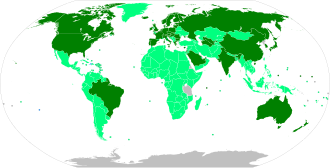
Summary of Vaccine Types
| Vaccine Type | Mechanism | Key Characteristic |
|---|---|---|
| mRNA | Genetic instructions for spike protein | Rapid development and adaptability |
| Viral Vector | Modified virus delivers genetic code | Strong T-cell response |
| Inactivated | Killed whole virus | Traditional, well-understood tech |
| Subunit | Purified viral proteins | Often requires an adjuvant |
Frequently Asked Questions
Do COVID-19 vaccines prevent all infections?
While vaccines are highly effective at preventing severe illness and death, their ability to prevent all infections and transmissions has varied, particularly as new variants have emerged that can evade some immune responses.
What is a bivalent booster?
A bivalent booster is a vaccine designed to target both the original strain of SARS-CoV-2 and newer variants, providing broader protection as the virus evolves.
How are vaccine side effects tracked?
Side effects are monitored through official government and international systems, such as the Vaccine Adverse Events Reporting System (VAERS) in the US and the Yellow Card Scheme in the UK.
Can vaccines reduce the risk of long COVID?
Yes, research indicates that vaccination can reduce the likelihood of developing long COVID symptoms following an infection.
Why were some vaccines approved under Emergency Use Authorization (EUA)?
EUAs were granted to allow the rapid deployment of vaccines during the public health emergency, provided that the known and potential benefits outweighed the known and potential risks.