COVID-19 Pandemic in Argentina
The arrival of SARS-CoV-2, the pathogen responsible for COVID-19, marked a period of unprecedented challenge for Argentina. From the first confirmed case in early 2020 to the rollout of massive vaccination campaigns, the country navigated a complex path of strict lockdowns, healthcare expansions, and economic volatility.
The pandemic's trajectory in Argentina was characterized by a series of waves that necessitated shifting government strategies, moving from a total nationwide shutdown to geographically segmented restrictions as the virus evolved and vaccines became available.
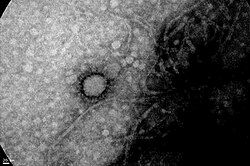
Key Facts
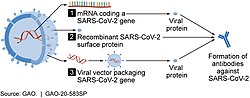
- First Case: Confirmed on March 3, 2020.
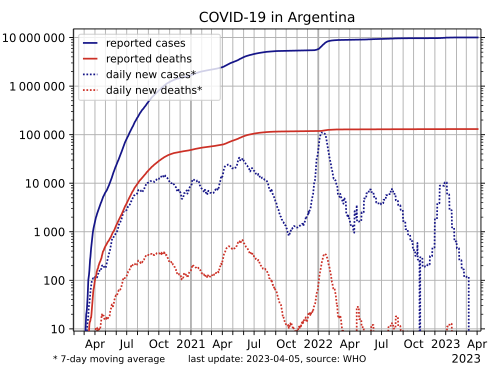
- Total Confirmed Cases: 10,119,594.
- Total Deaths: 130,850.
- Fatality Rate: 1.3%.
- Vaccination Reach: Over 41.5 million people vaccinated, with 116.9 million doses administered.
- Primary Vaccine: Sputnik V was a central part of the inoculation effort.
Timeline of the Outbreak
Initial Arrival (February – March 2020)
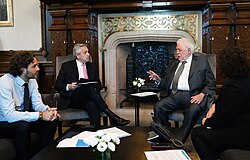
The pandemic began in Argentina on March 3, 2020, with an index case in Buenos Aires involving a traveler who had visited Italy. By March 7, the country recorded its first death—a 64-year-old man who had been in France. As cases rose, the government quickly implemented mandatory quarantines for travelers from high-risk countries.
The First Lockdown (April – July 2020)
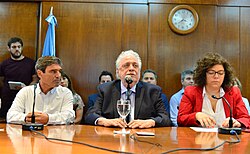
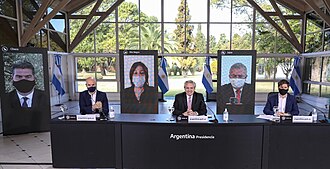
In response to the spreading virus, President Alberto Fernández announced a mandatory lockdown. This "preventive and mandatory social isolation" was one of the strictest in the world, restricting residents to their homes except for essential purchases of food and medicine. To manage the crisis, the government created a dedicated department to handle both pandemic health measures and economic stability.
![The announcement of the lockdown by President Alberto Fernández was generally well received, although there were concerns with its economic impact.[167]](/images/0d/22/0d2249a326e0b3d4070a0310e68220251418e2373a3aef5c61f865ff50536e94.jpg)
Fluctuation and Waves (August 2020 – January 2022)
Throughout late 2020 and 2021, Argentina experienced multiple waves of infection. The government shifted toward geographical segmentation, applying different levels of restriction based on the infection rates of specific regions. This period saw the gradual reopening of activities, followed by tightening measures during peaks, such as the strict nine-day lockdown in May 2021.
Government and Medical Response
Healthcare Infrastructure and Testing
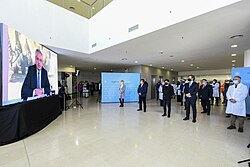
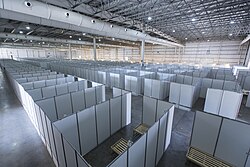
To prevent the collapse of the health system, the government inaugurated emergency hospitals, including facilities in La Matanza and a field hospital in Tecnópolis. The medical response included the Detectar plan, a contact tracing initiative designed to identify and isolate patients quickly.
Vaccination Campaign
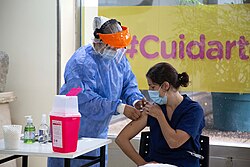
Argentina's vaccination strategy involved multiple candidates. Notably, President Alberto Fernández became the first Latin American president to be inoculated using the Sputnik V vaccine. While the government stated that vaccination would not be mandatory, the campaign focused heavily on health workers and high-risk groups.
![Alberto Fernandez became the first Latin American president to be inoculated, via the Sputnik V vaccine.[90]](/images/67/a1/67a1edd2b82b057ade622ebcbb710ab27ac7f09118fe9c9975a1f12ca6112f76.jpg)
Societal and Economic Impact
Economy and Education
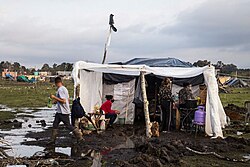
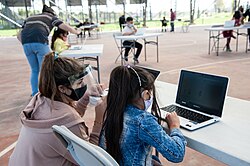
The economic toll was severe, with the IMF predicting a 9.9% slump in 2020 and unemployment reaching a 16-year high of 13.1%. Education was similarly disrupted; schools in Buenos Aires and other provinces remained closed for long periods, eventually returning to in-person classes in October 2020 with strict protocols.
Public Life and Human Rights
The lockdown had varied effects on society. While some reports indicated a decrease in urban crime, other concerns emerged regarding human rights. NGOs reported deaths perpetrated by state forces during the quarantine, and there was a 35% increase in requests for help regarding gender-based violence.
Media and Sports
The pandemic reached the entertainment sector, with several television personalities and football players testing positive. Professional football training only resumed in August 2020 under strict health protocols.
![Andy Kusnetzoff, host of PH: Podemos Hablar (Telefe) tested positive for the virus in August 2020.[354]](/images/50/95/5095687be6bd4ae154e4120a7b271a27aa2b0cd5d7c529fac29797d4fcb5225e.jpg)
Pandemic Summary Statistics

| Metric | Value |
|---|---|
| Confirmed Cases | 10,119,594 |
| Recovered Patients | 9,914,485 |
| Total Deaths | 130,850 |
| Case Fatality Rate | 1.3% |
| Total Doses Administered | 116,978,520 |
| Fully Vaccinated Persons | 34,900,612 |
Frequently Asked Questions
When was the first case of COVID-19 detected in Argentina?
The first case was confirmed on March 3, 2020, involving a man who had traveled to Italy.
What was the "Detectar" plan?
Detectar was a government contact tracing plan implemented to find and isolate patients with COVID-19 to slow the spread of the virus.
Which vaccine did President Alberto Fernández receive?
President Alberto Fernández was the first Latin American president to be inoculated, receiving the Sputnik V vaccine.
How did the lockdown affect the Argentine economy?
The lockdown contributed to a significant economic downturn, with a predicted 9.9% slump in 2020 and unemployment rising to 13.1%.
Were vaccines mandatory in Argentina?
No, the government announced that the coronavirus vaccine would not be mandatory for the population.