Country Rock: The Fusion of Twang and Electric Energy
Country rock is a dynamic music genre that blends the raw energy of rock and roll with the storytelling and instrumentation of country music. Emerging in the mid-1960s and reaching its commercial zenith in the 1970s, the genre was forged by rock musicians incorporating country flavors and country artists experimenting with rock sensibilities. This sonic marriage is most characteristically defined by the use of the pedal steel guitar—a slide guitar played with a foot pedal to change the pitch—which provides the signature "twang" associated with the style.
Key Facts
- Origins: Developed primarily in Los Angeles during the mid-1960s and early 1970s.
- Defining Instrument: The pedal steel guitar is the most characteristic addition to the rock ensemble.
- Pioneering Album: The Byrds' Sweetheart of the Rodeo (1968) is widely considered one of the most influential recordings.
- Key Figure: Gram Parsons is often credited with creating "Cosmic American Music," a blend of country, rock, blues, and folk.
- Legacy: Paved the way for Southern rock, heartland rock, and the alternative country movement.
Defining the Genre
While cross-pollination between rock and country has always existed, the specific term "country rock" gained traction in 1968. Critic Richard Goldstein first used the phrase in The Village Voice to describe a movement of artists moving toward country-friendly material. Goldstein noted that the essence of the genre lay in combining the "twang and tenacity" of country music with the rhythmic drive that makes listeners want to move, a hallmark of rock.
According to music historian John Einarson, there was no strict formula for the genre; musicians simply played country with a rock and roll attitude or added a country feel to folk and bluegrass.
The Origins and Early Pioneers
The genre grew largely in Los Angeles, fueled by the migration of Southern Americans to California and the advancement of commercial recording studio techniques. Early indicators of this shift appeared in the mid-60s, with The Beatles recording country-influenced tracks like "I've Just Seen A Face" and "Act Naturally." Other early examples include the Rolling Stones' "High and Dry" and Buffalo Springfield's "Kind Woman."
Ricky Nelson was an early pioneer, fronting the Stone Canyon Band and releasing Bright Lights & Country Music in 1966. Simultaneously, Bob Dylan spearheaded a "back-to-basics" roots revival. His time in Nashville recording Blonde on Blonde, John Wesley Harding, and Nashville Skyline helped establish the country folk subgenre.
The movement gained significant momentum when Gram Parsons joined The Byrds in 1968. Parsons sought to create "Cosmic American Music," blending various American roots styles. His work with the International Submarine Band on Safe at Home is viewed by some as the first true country-rock album, while his contribution to The Byrds' Sweetheart of the Rodeo remains a cornerstone of the genre.
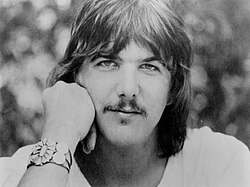
Following his time with The Byrds, Parsons co-founded the Flying Burrito Brothers with Chris Hillman. Their albums The Gilded Palace of Sin and Burrito Deluxe helped define the parameters and respectability of country rock before Parsons transitioned to a solo career.
Expansion and Commercial Peak
By the late 1960s, the California music scene fully embraced the style. Bands like Poco, New Riders of the Purple Sage, and the Nitty Gritty Dirt Band adopted the sound. Even established acts like The Everly Brothers (with their Roots album) and Neil Young integrated these elements into their work.
The 1970s marked the genre's commercial peak. Linda Ronstadt, often called the "queen of country-rock," brought a pop-oriented approach to the sound, while Emmylou Harris became a star on country radio.

The Eagles emerged as one of the most successful acts of the era, with early members drawing from the Flying Burrito Brothers and Poco. While albums like Desperado and Hotel California achieved massive success, the band's core country influence was primarily driven by Bernie Leadon; the group shifted toward hard rock after his departure in 1975.
Other notable successes included Pure Prairie League, whose album Bustin' Out is highly acclaimed, and the Ozark Mountain Daredevils. By 1979, the Charlie Daniels Band successfully crossed over into pop charts with the bluegrass-influenced hit "The Devil Went Down to Georgia."
Legacy and Modern Evolutions
Country rock's influence extends far beyond its primary stars, impacting the Grateful Dead, Creedence Clearwater Revival, and the Rolling Stones. It was a critical precursor to Southern rock—which added a distinct southern lilt to blues rock—and the later alternative country movement.
The genre has persisted through various forms. In Japan, it influenced the kayokyoku genre through artists like Takuro Yoshida. In the U.S., it remains a cult force in Texas with artists like Joe Ely and Jimmie Dale Gilmore. Modern collaborations, such as Robert Plant and Alison Krauss's Raising Sand (2007), continue to explore these roots.
The Rise of Country Metal
In the 21st century, the fusion evolved into country metal, blending country elements with heavy metal. Kid Rock described himself as a "country-metal-rap hillbilly," and the 2006 collaboration Rebel Meets Rebel by David Allan Coe and members of Pantera showcased a groundbreaking mix of fiddle and heavy riffs. This trend continues with artists like Jason Aldean, Hardy, and the Brazilian band Matanza (whose style is termed "countrycore").
Most recently, the 2020s have seen a revival termed "ronky tonk," featuring crossover artists like Zach Bryan and Jelly Roll, who blend country and rock with occasional hip hop influences.
| Era | Key Characteristics | Notable Artists |
|---|---|---|
| Mid-1960s | Roots revival, early experimentation | Bob Dylan, The Beatles, Ricky Nelson |
| Late 1960s | Formalization of genre, pedal steel focus | The Byrds, Gram Parsons, Flying Burrito Brothers |
| 1970s | Commercial peak, pop-crossover | The Eagles, Linda Ronstadt, Emmylou Harris |
| 2000s-Present | Fusion with metal and hip hop | Kid Rock, Jelly Roll, Hardy |
Frequently Asked Questions
What is the most defining instrument of country rock?
The pedal steel guitar is the most characteristic instrument, providing the distinct sliding "twang" that blends country music's sound with rock instrumentation.
Who is considered the father of country rock?
Gram Parsons is widely regarded as a pivotal figure, having developed "Cosmic American Music" through his work with the International Submarine Band, The Byrds, and the Flying Burrito Brothers.
How does country rock differ from Southern rock?
While country rock is a fusion of rock and country, Southern rock is largely derived from blues rock but incorporates a distinct southern lilt and country influences.
What is "ronky tonk"?
"Ronky tonk" is a term used by the music press in the 2020s to describe a revival of country music blended with rock features, seen in artists like Zach Bryan and Bailey Zimmerman.
What is country metal?
Country metal is a fusion genre that combines the elements of country music with the intensity of heavy metal, often incorporating instruments like the fiddle alongside distorted guitars.