Southern Rock: The History and Evolution of a Regional Sound
Southern rock is a distinct subgenre of rock music and a key pillar of Americana. Emerging from the Southern United States, it represents a powerful fusion of rock and roll, country, and blues. Characterized by its heavy reliance on electric guitars and soulful vocals, the genre captures the cultural spirit of the American South, blending rural traditions with the energy of modern rock.
Key Facts
- Origins: Developed in the Southern US during the 1960s and early 1970s.
- Core Influences: A blend of blues, country, and early rock and roll.
- Defining Artists: The Allman Brothers Band, Lynyrd Skynyrd, and the Marshall Tucker Band.
- Key Characteristics: Emphasis on electric guitars, improvisation, and long musical jams.
- Evolution: Led to the creation of fusion genres like Southern metal.
The Foundations: 1950s and 1960s
The roots of Southern rock are deeply embedded in the early days of rock and roll. Many of the 1950s pioneers—including Elvis Presley, Little Richard, Bo Diddley, Jerry Lee Lewis, Buddy Holly, and Fats Domino—hailed from the Deep South. However, by the mid-1960s, the musical center of gravity shifted toward urban hubs like London, New York, and San Francisco due to the British Invasion and the rise of psychedelic rock.
Despite this shift, regional artists continued to experiment. In 1963, Lonnie Mack began blending black and white roots music in his hit "Memphis," a style music historian Dick Shurman describes as a prototype for Southern rock. Other influential figures in the region during the late 1960s included Dale Hawkins, The Box Tops, and the Sir Douglas Quintet.
A pivotal moment occurred at FAME Studios in Muscle Shoals, Alabama. Rick Hall, the studio's owner, hired guitarist Duane Allman to play on Wilson Pickett's 1968 album Hey Jude. Allman's exceptional playing caught the attention of global stars like Eric Clapton, establishing Allman as a premier session musician and a catalyst for the genre's growth.
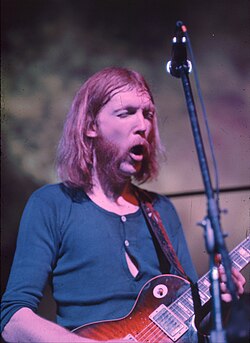
The Vision of Charlie Daniels
In 1970, Charlie Daniels released his self-titled debut album, which bridged the gap between "hillbilly spirit" and rock and roll. Daniels later formed the Charlie Daniels Band, fusing jazz, blues, country, and rock with a heavy emphasis on improvisation. While he later shifted toward country-rock with hits like "The Devil Went Down to Georgia," his early work helped erase the dividing lines between these genres.
The Golden Era: 1970s Peak Popularity
The early 1970s saw the rise of the Allman Brothers Band, who incorporated jazz-influenced jams and folk elements into their sound. Though Duane Allman passed away in a 1971 motorcycle accident, the band's legacy persisted. Gregg Allman famously argued that since all rock and roll originated in the South, the term "Southern rock" was essentially redundant.
Other major acts defined the era, including the Marshall Tucker Band, known for hits like "Can't You See" and "Fire on the Mountain," and Lynyrd Skynyrd. Based in Jacksonville, Florida, Lynyrd Skynyrd became icons with anthems such as "Free Bird" and "Sweet Home Alabama." The band's trajectory was tragically altered in 1977 when a plane crash claimed the lives of lead singer Ronnie Van Zant and two other members.
| Artist/Band | Key Contributions/Hits | Stylistic Influence |
|---|---|---|
| The Allman Brothers Band | Jazz-influenced jams, Duane Allman's guitar | Blues, Jazz, Folk |
| Lynyrd Skynyrd | "Free Bird", "Sweet Home Alabama" | British Hard Rock, Southern Soul |
| Charlie Daniels Band | "The Devil Went Down to Georgia" | Country, Jazz, Rock fusion |
| Marshall Tucker Band | "Can't You See", "Fire on the Mountain" | Blues, Country, Jazz |
Evolution and Modern Influence: 1980s to Present
The 1980s brought challenges as the rise of MTV, synth-pop, and new wave pushed many Southern rock acts into regional venues. Some bands, such as 38 Special, transitioned into arena rock. However, the spirit of the genre lived on through artists like Tom Petty, Steve Earle, and the Georgia Satellites.
The 1990s saw a resurgence. The Allman Brothers Band reunited, and the "jam band" scene revived interest in improvised music. Simultaneously, The Black Crowes achieved mainstream success with multi-platinum albums like Shake Your Money Maker and The Southern Harmony and Musical Companion.
Today, the tradition continues through acts like Tedeschi Trucks Band, Gov't Mule, Blackberry Smoke, and Whiskey Myers. The genre's enduring appeal was highlighted in 2005 when American Idol runner-up Bo Bice performed Southern rock classics, bringing the sound to a modern pop audience.
The Rise of Southern Metal
In the 1990s, a fusion genre known as Southern metal emerged. This style combines the grit of Southern rock with the aggression of heavy metal. Notable bands in this scene include Corrosion of Conformity, Black Label Society, Texas Hippie Coalition, and Maylene and the Sons of Disaster.
Frequently Asked Questions
What are the primary musical influences of Southern rock?
Southern rock is primarily a fusion of rock and roll, country, and blues, often incorporating elements of jazz and folk to create its signature sound.
Who are the most influential bands in the genre?
The Allman Brothers Band and Lynyrd Skynyrd are widely considered the most influential, alongside the Marshall Tucker Band and the Charlie Daniels Band.
When was the term "Southern rock" coined?
It is speculated that the term was coined in 1972 by Mo Slotin in a review of an Allman Brothers Band concert for the Atlanta newspaper The Great Speckled Bird.
What is Southern metal?
Southern metal is a fusion genre that appeared in the 1990s, blending the stylistic elements of Southern rock with heavy metal music.
Is Southern rock still popular today?
While it primarily receives airplay on classic rock and oldies stations, legacy acts still draw large crowds, and new bands continue to evolve the art form.