Blues Rock: The Fusion of Electric Blues and Rock and Roll
Blues rock is a dynamic fusion genre that blends the raw emotion and structural foundations of the blues with the power and energy of rock music. Emerging in the early 1960s across the United States and the United Kingdom, this style relies heavily on blues chords, scales, and instrumental improvisation. It is primarily characterized as an electric ensemble-style music, utilizing a high-volume sound that transformed the landscape of modern music.
From its inception, blues rock has served as a bridge between traditional American roots music and the heavier sounds of the late 20th century. By amplifying the grit of the blues and increasing the tempo, it paved the way for several derivative forms, including hard rock, Southern rock, and the early foundations of heavy metal.
Key Facts
- Origins: Developed in the early 1960s in the US and UK.
- Core Instrumentation: Electric guitar, electric bass guitar, drums, and occasionally keyboards and harmonica.
- Musical Foundation: Based on blues structures like the twelve-bar and sixteen-bar blues, often using the I-IV-V chord progression.
- Defining Traits: Heavy use of distortion, power chords, and extended electric guitar solos.
- Influence: Directly inspired the birth of hard rock, acid rock, and heavy metal.
The Evolution of the Sound
The Early 1960s: Reimagining the Blues
Blues rock began when musicians in the UK and US started performing American blues songs with a more aggressive edge. These artists typically took electric Chicago blues—exemplified by legends like Muddy Waters, Willie Dixon, and Jimmy Reed—and played them at faster tempos. In the United Kingdom, the style gained pop-chart popularity through groups such as the Rolling Stones, the Animals, and the Yardbirds. Meanwhile, in the US, early exponents included Canned Heat, Lonnie Mack, and the Paul Butterfield Blues Band.
Some of these early bands integrated long, complex improvisations similar to those found in jazz records. By the late 1960s and early 1970s, the genre shifted toward a harder sound. In the US, this trend was led by ZZ Top, Johnny Winter, and the early Allman Brothers Band, while the UK saw the rise of Led Zeppelin, Foghat, Ten Years After, and Chicken Shack.
Musical Characteristics and Technicality
Unlike traditional Chicago-style blues, blues rock often features a heavier, riff-oriented feel and extended "boogie jams" centered on electric guitar solos. While it retains the basic structures of the blues, such as the twelve-bar format, it frequently replaces the traditional blues triplet rhythm with a straight eighth-note rock rhythm. A prime example is Cream's "Crossroads," which adapted Robert Johnson's work into a driving, metric rock beat.
The genre also adopted specific techniques from 1950s electric blues guitarists—such as Joe Hill Louis and Pat Hare—including distortion, power chords, and string-bending solos. These elements, combined with a rough, declamatory vocal style, created the dense texture that defines the genre.
Chronological Development
The 1960s and 1970s Golden Era
The 1960s saw the emergence of pivotal figures who redefined the electric guitar. Lonnie Mack introduced fast-picking techniques from country and bluegrass into the blues in 1963. The Paul Butterfield Blues Band further influenced young white rock players with their debut album and later explored jazz and Indian raga influences on East West, providing a blueprint for acid rock.
In the UK, John Mayall's Blues Breakers with Eric Clapton became a cornerstone of the movement. Clapton later formed Cream, blending blues, rock, and jazz improvisation. Other innovators included Peter Green of Fleetwood Mac and Jimi Hendrix, whose power trios—the Jimi Hendrix Experience and Band of Gypsys—had a lasting impact on guitarists worldwide.
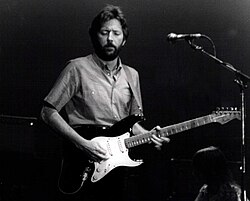
As the 1970s progressed, the genre split into different directions. American bands like Aerosmith added a hard rock edge, and Southern rock emerged through acts like Lynyrd Skynyrd and the Allman Brothers Band. In the UK, the scene shifted more heavily toward the innovation of heavy metal, led by figures like Jimmy Page of Led Zeppelin.
From the 1980s to the Modern Era
The 1980s saw a return to more traditional blues influences, with artists like Stevie Ray Vaughan, Robert Cray, and The Fabulous Thunderbirds leading the way. The 1990s continued this trend with popular concert draws such as Gary Moore and Jeff Healey. The genre also expanded to include powerful female voices, including Bonnie Raitt, Susan Tedeschi, and Beth Hart.
In recent years, the genre has evolved into alternative and modern forms. Gary Clark Jr. is noted for fusing blues, rock, and soul with sleek modern production. Additionally, the genre continues to find global success, as seen with the Hungarian band Bulls of Prey, and through dedicated labels like Joe Bonamassa's Keeping the Blues Alive Records.
Blues Rock Summary
| Feature | Details |
|---|---|
| Primary Instruments | Electric guitar, bass, drums, keyboards, harmonica |
| Key Structures | 12-bar and 16-bar blues; I-IV-V progression |
| Rhythmic Shift | From blues triplets to straight eighth-note rock rhythms |
| Derivative Genres | Hard rock, Heavy metal, Southern rock, Acid rock |
| Pivotal Artists | Eric Clapton, Jimi Hendrix, Led Zeppelin, Stevie Ray Vaughan |
Frequently Asked Questions
What is the main difference between blues and blues rock?
While both share the same chord progressions and scales, blues rock typically features faster tempos, louder amplification, a heavier riff-oriented sound, and a straight rock rhythm instead of the triplets common in traditional blues.
Which instruments are most common in a blues rock ensemble?
The core ensemble usually consists of an electric guitar, electric bass guitar, and drums. Keyboards and harmonica are frequently added to enrich the sound.
How did blues rock influence heavy metal?
Blues rock introduced the use of heavy distortion, power chords, and aggressive guitar riffs. Artists like Jimmy Page and Jeff Beck pushed these elements further, evolving the sound into the heavier textures that defined early heavy metal.
Who were the key figures in the British blues rock scene?
Key figures include John Mayall, Eric Clapton, Peter Green, and the members of the Rolling Stones, the Yardbirds, and the Animals, who helped bring the style into the pop charts.
What are some examples of Southern rock bands?
Prominent examples of Southern rock, a derivative of blues rock, include the Allman Brothers Band, ZZ Top, and Lynyrd Skynyrd.