Constitution of the German Confederation 1871
The transition of Germany from a collection of separate states into a unified empire was not a single event, but a series of legal shifts. At the heart of this transition was the Constitution of the German Confederation (Verfassung des Deutschen Bundes), also known as the November Constitution (Novemberverfassung). Enacted on January 1, 1871, this document served as a critical legal bridge between the North German Confederation and the eventual establishment of the German Empire.
While it may seem like a minor footnote in history, this constitution represented the formal integration of South German states into a unified federal structure, setting the stage for the political landscape of Germany until 1918.
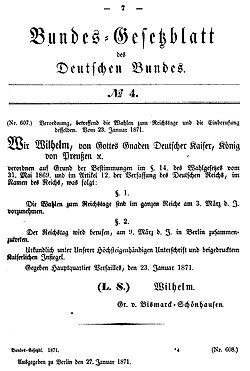
Key Facts
- Effective Date: January 1, 1871.
- Origin: A modified version of the Constitution of the North German Confederation.
- Primary Purpose: To incorporate South German states (specifically Baden and Hesse-Darmstadt) into the federal state.
- Short Duration: It was replaced on April 16, 1871, by the Constitution of the German Empire.
- Lasting Impact: Article 80 ensured that many North German laws remained in force across the South.
The Evolution of German Constitutional Texts
To understand the 1871 Constitution, one must distinguish it from three other similar legal texts. Although the underlying political system remained consistent across these documents, the specific agreements regarding the accession of South German states varied.
1. Constitution of the North German Confederation (1867)
Established on April 16, 1867, and effective from July 1, 1867, this was the foundational document for the northern states before the full unification of Germany.
2. The November Treaty Text
This version of the Constitution of the German Confederation was specifically attached to the treaties between the North German Confederation and the states of Baden and Hesse-Darmstadt.
3. Constitution of the German Confederation (January 1, 1871)
Published in the Bundesgesetzblatt des Norddeutschen Bundes (North German Federal Law Gazette) on December 31, 1870, this text officially renamed the federal state the German Empire (Deutsches Reich) and came into effect the following day.
4. Constitution of the German Empire (April 16, 1871)
Effective May 4, 1871, this is the most famous version, often referred to as the Bismarcksche Reichsverfassung (BRV or RV). It governed the empire until its collapse in 1918.
The Transition to a Unified Empire
The Constitution of January 1, 1871, did not create a brand new state from scratch; rather, it expanded the existing North German Confederation. The process involved renaming the state and updating the titles of its organs. However, the integration was complex. Adjustments had to be made to the Federal Council (the upper house of parliament) to account for the new delegates from the South.
This period of legal adjustment was so convoluted that the renowned constitutional historian Ernst Rudolf Huber described the January 1 constitution as a "Monstrum." Despite its messy execution, it facilitated the first inclusive elections to the Reichstag (the national parliament) on March 3, 1871, which for the first time included representatives from Bavaria and Württemberg.
One of the most significant legacies of this short-lived constitution was Article 80. This specific clause was not repeated in the April 16 constitution, but it performed the vital task of extending North German laws to the South German states, ensuring legal continuity across the new empire.
Summary of Constitutional Transitions
| Constitution Name | Effective Date | Key Characteristic |
|---|---|---|
| North German Confederation | July 1, 1867 | Foundation for northern states. |
| German Confederation (Nov. Const.) | January 1, 1871 | Incorporated South German states; renamed state to "German Empire." |
| German Empire (Bismarckian) | May 4, 1871 | Definitive constitution until 1918. |
Frequently Asked Questions
How does the 1871 Constitution differ from the 1815 German Confederation?
They are entirely different legal entities. The 1815 laws concerned the loose German Confederation created after the Napoleonic Wars, whereas the 1871 Constitution was a step toward the centralized German Empire.
Why did Ernst Rudolf Huber call the January 1871 constitution a "Monstrum"?
Huber used this term because the transition was executed in a messy, fragmented way, blending various treaties and modified versions of the North German Constitution to accommodate the South German states.
Which South German states were involved in the January 1871 transition?
The constitution incorporated agreements with Baden and Hesse-Darmstadt. While Bavaria and Württemberg joined the Reichstag elections in March, the initial January text focused on the specific agreements with Baden and Hesse-Darmstadt.
What was the significance of Article 80?
Article 80 was crucial because it allowed laws previously established in the North German Confederation to become legally binding in the South German states, streamlining the legal unification of the empire.
When were the first inclusive Reichstag elections held?
The elections took place on March 3, 1871, and were the first to include representatives from all German states, including Bavaria and Württemberg.