Commonwealth of NationsBritish EmpireCommonwealth SecretariatCommonwealth realmsCommonwealth republics

Commonwealth of Nations: History, Structure, and Global Impact

Commonwealth of Nations The Commonwealth of Nations is a voluntary association of 56 independent and equal sovereign states. While most members share a historical connection to the Britis...

Commonwealth of Nations

The Commonwealth of Nations is a voluntary association of 56 independent and equal sovereign states. While most members share a historical connection to the British Empire, the organization has evolved into a diverse global network that promotes democracy, human rights, and economic cooperation across multiple continents.

Spanning a total area of approximately 29,958,050 square kilometers and representing a population of over 2.4 billion people, the Commonwealth serves as a unique forum for international dialogue and collaboration.
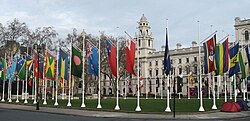
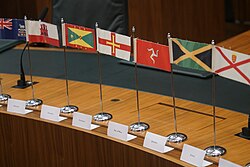
Flags of the Commonwealth countries in Parliament Square, London on Commonwealth Day

Key Facts

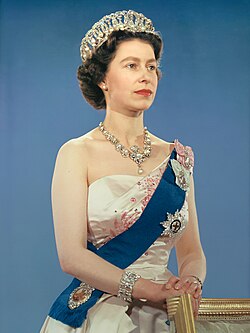
Queen Elizabeth II, the longest-serving Head of the Commonwealth, was in office for 70 years.
  • Membership: 56 member states.
  • Head: King Charles III.
  • Headquarters: Marlborough House, London, United Kingdom.
  • Working Language: English.
  • Core Values: Commitment to democracy and human rights as outlined in the Commonwealth Charter.
  • Principal Institution: The Commonwealth Secretariat.

Evolution from Empire to Commonwealth
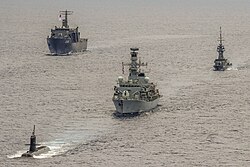
Warships during a Five Power Defence Arrangements joint exercise

Conceptual Origins and Formalization

The transition from the British Empire to a voluntary association was a gradual process of legal and political shifts. Key milestones include the Balfour Declaration of 1926 and the Statute of Westminster in 1931, which granted greater autonomy to dominions. The London Declaration of 1949 further formalized the association, allowing republics to remain members.
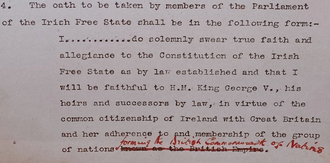
Draft of the 1921 Anglo-Irish Treaty, with "British Empire" crossed out and "British Commonwealth of Nations" added by hand

The Impact of World War II and Decolonization

The Second World War acted as a catalyst for unity and subsequent change. Member nations collaborated closely in military efforts, which fostered a sense of shared identity and purpose.
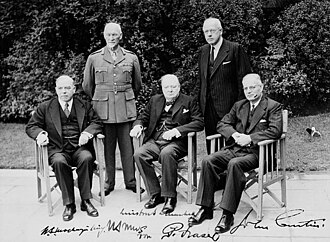
The prime ministers of the five members at the 1944 Commonwealth Prime Ministers' Conference: (L-R) Mackenzie King (Canada), Jan Smuts (South Africa), Winston Churchill (United Kingdom), Peter Fraser (New Zealand) and John Curtin (Australia)

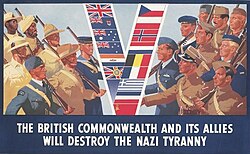
A poster from the Second World War, depicting soldiers from Britain, Canada, Australia, New Zealand, the Colony of Southern Rhodesia, South Africa and the British Raj

Following the war, a wave of decolonization led many territories to achieve self-governance. The Commonwealth adapted by welcoming these new independent nations, shifting its focus from imperial control to a partnership of equals.

Organizational Structure and Governance
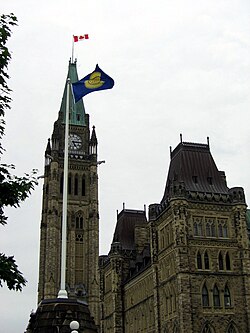
The Commonwealth flag flying at the Parliament of Canada in Ottawa

Leadership and Administration

The Head of the Commonwealth is a symbolic role currently held by King Charles III. The administrative work is carried out by the Commonwealth Secretariat, headquartered at Marlborough House in London, which supports the member governments.
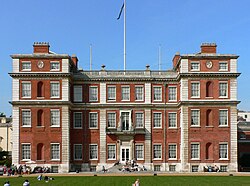
Marlborough House, London, the headquarters of the Commonwealth Secretariat, the Commonwealth's principal intergovernmental institution

The Commonwealth Heads of Government Meeting (CHOGM) serves as the primary decision-making forum where leaders gather to discuss global issues and set the organization's agenda.
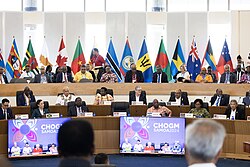
The 2024 Commonwealth Heads of Government Meeting in Samoa

Political Status and Legal Frameworks

Member states are categorized by their political relationship with the monarchy. Commonwealth realms recognize the British monarch as their head of state, while republics and members with their own independent monarchies maintain their own heads of state.
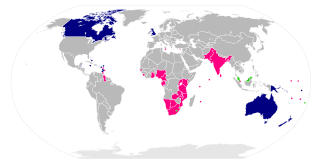
The members of the Commonwealth shaded according to their political status. Commonwealth realms are shown in blue, while republics are shaded pink, and members with their own monarchies are displayed in green.

Many members utilize the Westminster system—a parliamentary system of government modeled after the United Kingdom. Additionally, the Judicial Committee of the Privy Council remains the highest court of appeal for several member nations.
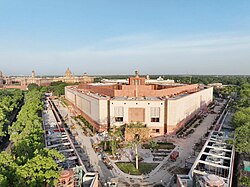
Parliament House, New Delhi, India. The Commonwealth Charter states the Commonwealth's commitment to democracy, and many Commonwealth countries use the Westminster system.

The Judicial Committee of the Privy Council is the highest court of appeal for several Commonwealth nations.

Membership and Global Engagement
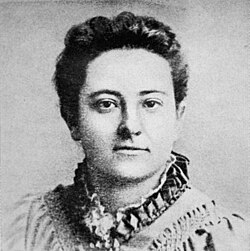
South African writer Olive Schreiner

Criteria and Dynamics

While membership is generally based on a link to the former British Empire, the criteria have expanded. For example, Rwanda joined the Commonwealth despite never having been a British colony.
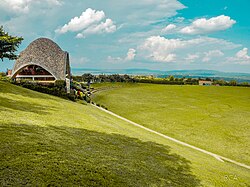
Rwanda Cricket Stadium, Kigali, Rwanda. Commonwealth membership has been credited with popularising the game in the country, which was never in the British Empire.

Membership is voluntary, and states may be suspended or withdraw. South Africa left in 1961 due to its apartheid policies but was readmitted in 1994 after non-racial elections. Zimbabwe was suspended during Robert Mugabe's presidency and subsequently withdrew, later applying to rejoin.
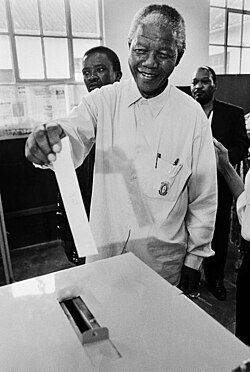
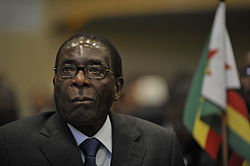
Having left the Commonwealth in 1961 over its apartheid policies, South Africa was readmitted in 1994 following non-racial elections.

Zimbabwe was suspended from the Commonwealth during Robert Mugabe's presidency, subsequently withdrawing. It applied to rejoin after his removal from power.

Economic and Social Cooperation

The Commonwealth facilitates trade and professional exchange. Member states maintain High Commissions instead of embassies when dealing with one another.
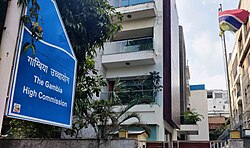
The high commission of The Gambia in New Delhi

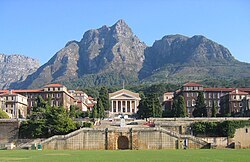
Beyond politics, the association promotes culture, education, and sport. The Commonwealth Games are the third-largest multi-sport event globally, and the Association of Commonwealth Universities fosters academic collaboration.
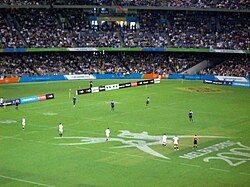
The Commonwealth Games are the third-largest multi-sport event in the world, bringing together globally popular sports and peculiarly "Commonwealth" sports, such as rugby sevens, shown here at the 2006 Games in Melbourne.

The University of Cape Town, a member of the Association of Commonwealth Universities

Commemoration and Culture

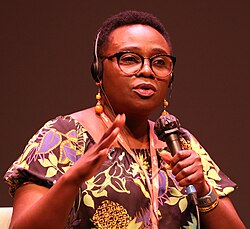
The Commonwealth War Graves Commission maintains thousands of cemeteries worldwide to honor 1.7 million war dead. In literature, the Commonwealth Short Story Prize highlights diverse voices from across the member states.
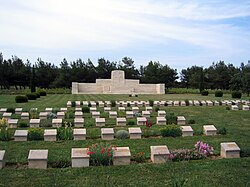
The Commonwealth War Graves Commission commemorates 1.7 million Commonwealth war dead and maintains 2,500 war cemeteries around the world, including this one in Gallipoli.

Ugandan-British novelist Jennifer Nansubuga Makumbi won the Commonwealth Short Story Prize in 2014.

Commonwealth Overview

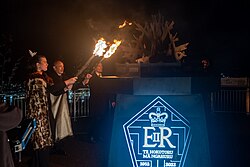
Lighting of a jubilee beacon for Queen Elizabeth II's Platinum Jubilee in 2022 in Wellington, New Zealand
Attribute Detail
Number of Member States 56
Total Population (2016 est.) 2,418,964,000
Total Land Area 29,958,050 km²
Headquarters Marlborough House, London
Working Language English

Frequently Asked Questions

Who is the current Head of the Commonwealth?

The current Head of the Commonwealth is King Charles III.

Do all Commonwealth members have the British monarch as their head of state?

No. Only Commonwealth realms recognize the British monarch as their head of state. Many other members are republics or have their own independent monarchies.

Can a country join the Commonwealth if it was never part of the British Empire?

Yes. While most members have historical ties to the British Empire, the organization has expanded its criteria, as seen with the membership of Rwanda.

What is the purpose of the Commonwealth Secretariat?

The Commonwealth Secretariat is the principal intergovernmental institution of the organization, providing administrative support and implementing the goals agreed upon by member states.

What are the Commonwealth Games?

The Commonwealth Games are a major multi-sport event involving athletes from the member states, ranking as the third-largest such event in the world.

References

  1. Each headstone contains the national emblem or regimental badge, rank, name, unit, date of death and age of each casualty inscribed above an appropriate religious symbol and a more personal dedication chosen by relatives.[210]
  2. "Commonwealth Charter". 6 June 2013. Archived from the original on 6 March 2019. Retrieved 5 March 2019. Recalling that the Commonwealth is a voluntary association of independent and equal sovereign states, each responsible for its own policies, consulting and co-operating in the common interests of our peoples and in the promotion of international understanding and world peace, and influencing international society to the benefit of all through the pursuit of common principles and values
  3. "About Us". Commonwealth Secretariat. Archived from the original on 10 September 2022. Retrieved 25 March 2024.
  4. "Annex B – Territories Forming Part of the Commonwealth" (PDF). Her Majesty's Civil Service. September 2011. Archived from the original (PDF) on 6 December 2011. Retrieved 19 November 2013.
  5. Srinivasan, Krishnan (2008). The rise, decline, and future of the British Commonwealth (Paperback ed.). Basingstoke: Palgrave Macmillan. ISBN 978-0-230-20367-9.