Powering the ISS: A Guide to NASA's Commercial Resupply Services
Since the early days of space exploration, delivering essential supplies to orbiting laboratories has been a monumental challenge. To streamline this process, NASA transitioned from building its own transport vehicles to partnering with private industry through the Commercial Resupply Services (CRS) program. This initiative has transformed how we sustain life and conduct science aboard the International Space Station (ISS).
By leveraging commercial innovation, NASA has established a reliable pipeline of cargo, ranging from scientific experiments and food to critical hardware and unpressurized equipment. This article explores the evolution of the CRS program, the spacecraft that power it, and the companies leading the charge into the next decade of orbital logistics.
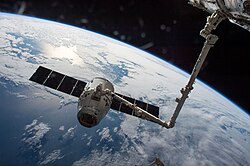
The Evolution of Commercial Resupply
The foundation for modern commercial spaceflight was laid decades ago through the Commercial Space Launch Act of 1984 and the Launch Services Purchase Act of 1990. These legislative steps paved the way for the Commercial Orbital Transportation Services (COTS) program, which utilized Space Act Agreements—collaborative partnerships between NASA and private companies—to develop the vehicles we see today.
Phase 1: Establishing the Pipeline (CRS-1)
The first phase of CRS contracts was signed in 2008. NASA awarded $1.6 billion to SpaceX for twelve Dragon 1 missions and $1.9 billion to Orbital Sciences for eight Cygnus flights. Following successful demonstrations, the first operational missions launched in 2012 (SpaceX) and 2014 (Orbital). Due to the program's success, NASA extended these contracts to include more flights for both providers.
Phase 2: Expanding Capabilities (CRS-2)
In 2016, NASA moved into the second phase of the program, known as CRS-2. To increase cargo capacity and ensure redundancy—a safety measure where having multiple providers prevents a single failure from halting all operations—NASA selected three companies: Orbital ATK (now Northrop Grumman), SpaceX, and Sierra Nevada Corporation. These contracts, which can reach a maximum potential value of $14 billion, are scheduled to extend through 2030.
Key Spacecraft and Providers
Different spacecraft serve different roles in the resupply ecosystem. Some are designed to return cargo to Earth, while others are dedicated to delivering supplies and then disposing of themselves in the atmosphere.
SpaceX: The Dragon Series
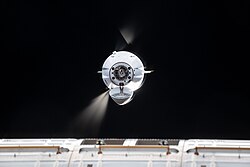
SpaceX utilizes the Dragon spacecraft, a highly versatile vehicle. The original Dragon 1 was used during the first phase, while the newer Dragon 2 is a cornerstone of the CRS-2 era. SpaceX missions are notable for their ability to return pressurized cargo back to Earth.
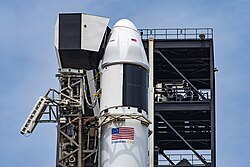
Northrop Grumman: The Cygnus Series
Originally developed by Orbital Sciences (later Orbital ATK, and now Northrop Grumman), the Cygnus spacecraft is a dedicated cargo vehicle. Cygnus has evolved through different configurations, including the Enhanced Cygnus, which offers increased capacity. Unlike Dragon, Cygnus is typically used to deliver supplies and then deorbit to burn up in the atmosphere.
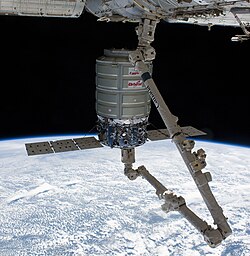
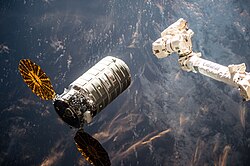
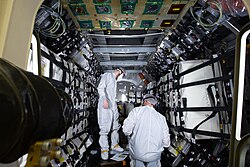
Sierra Nevada Corporation: Dream Chaser
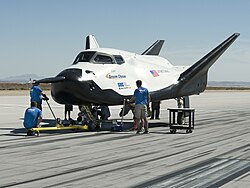
The Dream Chaser represents the next generation of commercial transport. Currently in development, this spaceplane is expected to begin its cargo missions in late 2026, offering a unique approach to orbital logistics.
Technical Logistics: How Cargo Moves
Transporting goods to microgravity requires strict standardization. Most internal cargo is moved using the Cargo Transfer Bag Equivalent (CTBE). This is a standardized unit of measurement used to price and manage stowage space on the ISS.
- CTBE Dimensions: 48 cm × 41 cm × 23 cm (19 in × 16.25 in × 9 in).
- Mass Limit: Each bag is limited to 27 kg (60 lb).
The program must meet rigorous annual requirements to keep the ISS operational, including the delivery of thousands of kilograms of both pressurized and unpressurized cargo, as well as the management of "powered lockers"—specialized containers that provide continuous power, cooling, and communication for scientific experiments.
Summary of Program Overview
| Feature | Details |
|---|---|
| Program Owner | NASA (United States) |
| Established | 2008 |
| Status | Active |
| Primary Providers | SpaceX, Northrop Grumman, Sierra Nevada Corporation |
| Key Spacecraft | Dragon 2, Cygnus, Dream Chaser |
Key Facts
- The CRS program was established in 2008 to transition space resupply to the commercial sector.
- Redundancy is a core strategy, with NASA using multiple providers to prevent mission delays.
- SpaceX's Dragon is capable of returning cargo to Earth, whereas Cygnus is primarily for delivery and disposal.
- Cargo is standardized using Cargo Transfer Bag Equivalents (CTBE) for efficient stowage.
- The CRS-2 contract phase is currently extended to provide services through 2030.
Frequently Asked Questions
What is the difference between pressurized and unpressurized cargo?
Pressurized cargo is kept inside the spacecraft's cabin, allowing it to be handled in the same environment as the astronauts. Unpressurized cargo is carried outside the main cabin, often requiring specialized mounting and continuous power for cooling and communication.
Why does NASA use more than one company for resupply?
NASA selects multiple companies to ensure redundancy. If one company experiences a launch failure, a vehicle delay, or a technical issue, the other providers can continue to deliver essential supplies, ensuring the ISS remains operational.
How is cargo measured for the International Space Station?
Cargo is measured using the Cargo Transfer Bag Equivalent (CTBE). This standardized unit helps NASA and commercial users manage the limited stowage space available on the station and provides a consistent way to price and charge for space usage.
What happened to the Cygnus program after Orbital Sciences?
Orbital Sciences merged to become Orbital ATK, which was subsequently acquired by Northrop Grumman. Northrop Grumman continues to operate the Cygnus resupply missions.
When will the Dream Chaser begin its missions?
The Sierra Nevada Corporation's Dream Chaser is planned to begin its demonstration and cargo missions in late 2026.