Commander-in-Chief: The Role of Supreme Military Authority
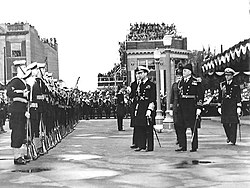
A commander-in-chief, also known as a supreme commander or supreme commander-in-chief, is the individual who exercises ultimate command and control over a nation's armed forces or a specific military branch. In technical terms, this role represents the military competencies vested in a country's executive leadership, typically held by a head of state, head of government, or another designated government official.
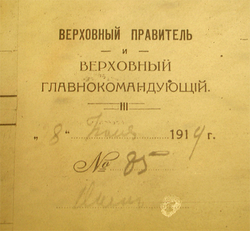
The terminology for this position varies globally. English-speaking nations generally use "Commander-in-Chief," while French-speaking countries prefer "Chief of Armies" (chef des armées). Much of continental Europe utilizes the term "Supreme Commander," and post-Soviet states often use "Supreme Commander-in-Chief" (Russian: Верховный главнокомандующий). In some jurisdictions, such as Ukraine, a distinction is made between the supreme commander-in-chief (the president) and the commander-in-chief (the professional military head).
Beyond military leadership, the supreme commander-in-chief often possesses extraordinary powers over civilian institutions and persons within the state's territory and the theater of military operations during wartime.
Key Facts
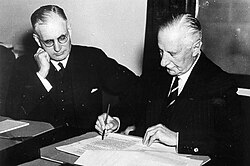
- Executive Control: The role is typically held by the head of state or government to ensure civilian control of the military.
- Global Variation: Titles range from "Supreme Commander" in Europe to "Chief of Armies" in Francophone nations.
- Extraordinary Powers: The position often grants expanded authority over civilian populations during active conflicts.
- Constitutional Basis: Most modern commander-in-chief roles are defined by national constitutions or specific legislative acts.
Heads of State as Commanders-in-Chief
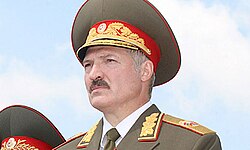
In many nations, the head of state automatically assumes the role of commander-in-chief. This ensures that the highest political authority directs national defense strategy.
The Americas
In Argentina, the Constitution explicitly designates the president as the Commander-in-Chief of all armed forces. The president has the authority to appoint senior officers, organize the military according to national needs, and declare war or order reprisals with the approval of the National Congress.
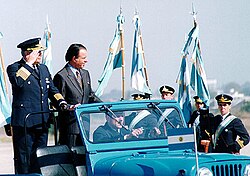
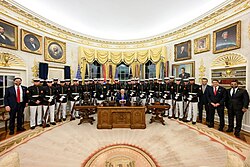
Other nations in the Americas where the head of state holds this authority include Brazil, Canada, the Dominican Republic, Guyana, Mexico, Suriname, and the United States. In the U.S., this authority extends to state levels; for example, the California Military and Veterans Code outlines similar command structures.
Europe and Eurasia
European models vary between republics and monarchies. In the Czech Republic, the president is the commander-in-chief and appoints generals, though these decisions require the countersignature of the prime minister to be valid. Political responsibility remains with the Government, and Parliament must consent to deploying forces abroad.
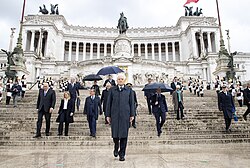
In Spain, the 1978 Constitution authorizes the King to exercise supreme command of the Armed Forces, while the Government manages the actual administration and defense of the state.
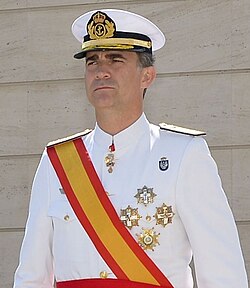
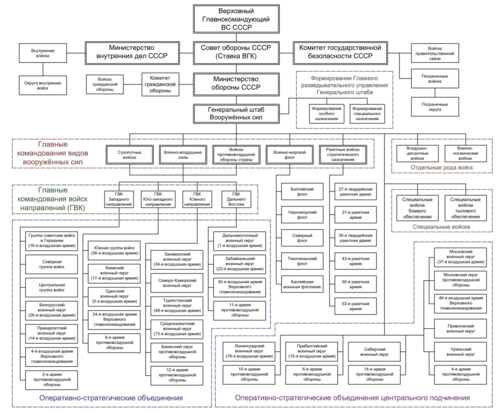
Russia's modern structure was formalized in 1992 under Boris Yeltsin, establishing the President of the Russian Federation as the Supreme Commander-in-Chief. This status was later confirmed by the 1993 Constitution.
![The ceremony of passing the Cheget (i.e. the nuclear briefcase) from Dmitry Medvedev's military aide to Vladimir Putin's military aide during the 2012 presidential inauguration.[58]](/images/4b/ec/4bec1f81df16cbb86cffbf7135d782da45a43bcf6cb43d1df1bb12f59bb37d0a.jpg)
Asia and Africa
In India, the president serves as the supreme commander. Originally, each service had its own commander-in-chief until 1955, when they were redesignated as chiefs of staff. As of 2020, all three service chiefs report to a newly formed Chief of Defence Staff.
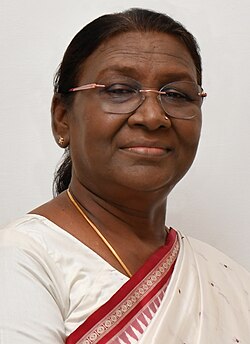
Iran's structure shifted after the 1979 revolution. While the president was initially the commander-in-chief, the role was transferred to the Supreme Leader of Iran following the impeachment of Abolhassan Bani Sadr in 1981.
In Pakistan, the president serves as the commander-in-chief. The professional heads of the army, navy, and air force are titled "Chief of Staff," appointed by the president upon the recommendation of the prime minister.
Alternative Command Structures
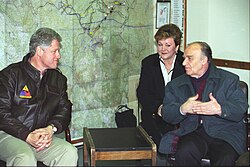
Not all nations vest supreme command in a single head of state. Some utilize councils or temporary appointments.
Council-Based and Parliamentary Systems
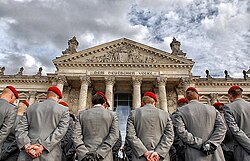
Germany emphasizes a military structure compatible with its parliamentary system to avoid the militarism of its past. In the former East Germany (GDR), supreme command was held by the National Defense Council, chaired by the General Secretary of the Socialist Unity Party.
Temporary and Emergency Appointments
Switzerland employs a unique system during declared wars or national emergencies. The United Federal Assembly elects a General as commander-in-chief. While this General has significant autonomy, they remain subordinate to the Federal Council, which retains the power to demobilize the forces.
Evolution of the Role
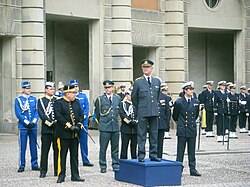
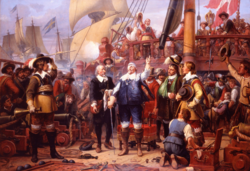
Some nations have moved away from the monarchical command model. In Sweden, the monarch was historically the commander-in-chief, often leading troops personally in battle. However, under the 1974 Instrument of Government, the Swedish monarch no longer holds this title, though they still receive head-of-state honors.
Summary of Command Authority
| Region/Country | Primary Authority | Key Characteristic |
|---|---|---|
| United States / Argentina | President | Direct constitutional authority |
| Spain / UK | Monarch | Supreme command often symbolic or shared with government |
| Russia / Belarus | President | Titled as Supreme Commander-in-Chief |
| Iran | Supreme Leader | Shifted from President to Supreme Leader in 1981 |
| Switzerland | Elected General | Appointed specifically for wartime/emergencies |
Frequently Asked Questions
What is the difference between a Commander-in-Chief and a Chief of Staff?
The Commander-in-Chief is typically a civilian political leader (like a President) who holds ultimate legal authority over the military. A Chief of Staff is a professional military officer who manages the day-to-day operations and provides expert advice to the Commander-in-Chief.
Can a Commander-in-Chief be a professional soldier?
While the role is usually civilian, some countries allow professional soldiers to hold the title. For example, in Switzerland, a General is elected as commander-in-chief during national emergencies.
Does the Commander-in-Chief have total power over the military?
No. In most democratic systems, there are checks and balances. For instance, in the Czech Republic, the president's military decisions require a prime minister's countersignature, and in Argentina, declaring war requires Congressional approval.
Why do some countries use the term "Supreme Commander" instead?
This is largely a matter of linguistic and regional tradition. Continental European countries frequently use "Supreme Commander," while the term "Supreme Commander-in-Chief" is common in post-Soviet states.
What happens to military command when a head of state resigns?
Command authority typically transfers to the successor. A notable example occurred in 1991 when the President of the Soviet Union issued a decree resigning his powers as Supreme Commander-in-Chief upon leaving office.