Colonization of the Americas: European Expansion and Its Global Impact
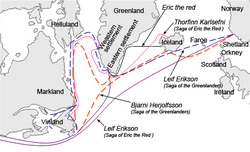
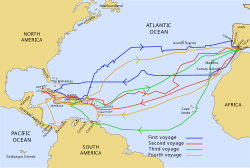
The Age of Discovery marked a transformative era between the late 15th and early 19th centuries, characterized by large-scale European colonization of the Americas. While the Norse had established settlements in Greenland and Newfoundland around 1000 AD, it was the subsequent wave of exploration following Christopher Columbus's voyages that fundamentally reshaped the global landscape.
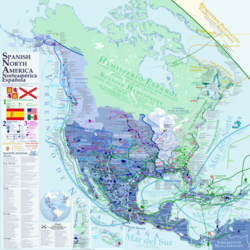
Driven by a desire for natural resources and human capital, empires from Spain, Portugal, Great Britain, France, Russia, the Netherlands, Denmark, and Sweden claimed vast territories. This expansion led to the establishment of settler colonial states but came at a devastating cost: the displacement, enslavement, and genocide of Indigenous peoples.
The Catalysts of Exploration
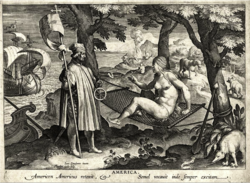
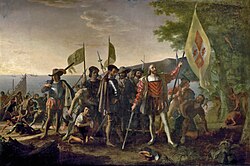
In the early 15th century, Western Europe was recovering from the population loss of the Black Death and preoccupied with internal conflicts. However, the Ottoman Empire's control over traditional trade routes to Asia forced European monarchs to seek alternative maritime paths. This geopolitical pressure led to the voyages of Christopher Columbus, whose accidental arrival in the New World opened the floodgates for European competition.
To prevent conflict between the two primary maritime powers of the era, Spain and Portugal signed the Treaty of Tordesillas in 1494. This agreement effectively divided the non-Christian world in two: Portugal was granted dominion over the eastern half, while Spain claimed the western half. Consequently, Spain claimed most of the Americas, though Portugal secured the eastern tip of South America, where they established Brazil in the early 1500s.
Major European Colonial Powers
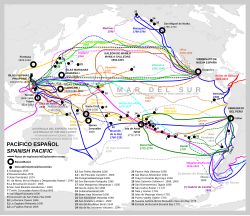
Spain and Portugal
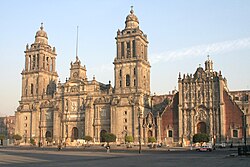
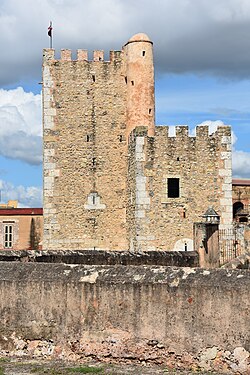
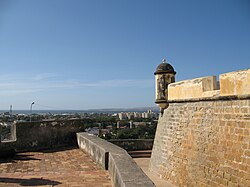
Spain established a massive presence across the Americas, from the Caribbean to South America. The city of Santo Domingo, founded by Columbus in 1496, stands as the oldest continuously inhabited European settlement in the Americas. Portugal focused its efforts on Brazil, creating a lasting territorial footprint in South America.
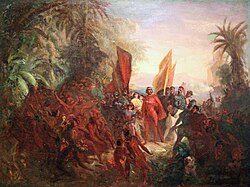
France
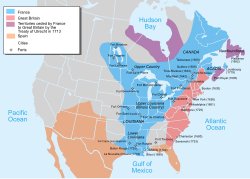
The first French colonial empire was a global powerhouse, peaking in 1710 at over 10 million square kilometers. It was the second-largest colonial empire in the world, trailing only Spain, with significant holdings in present-day Canada and the Mississippi River valley.
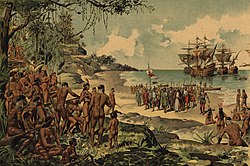
Great Britain
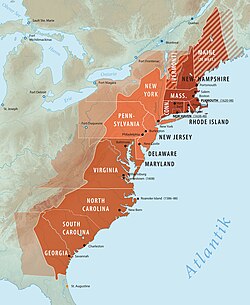
British colonization began nearly a century after the Spanish. Using the Spanish model of extracting wealth from conquered populations, the British first attempted settlements in Roanoke and Newfoundland. Their first permanent success came in 1607 with Jamestown, Virginia, funded by joint-stock companies like the Virginia Company.
Other European Powers
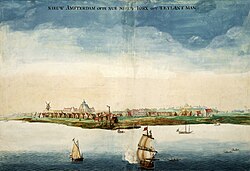
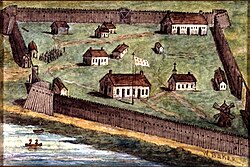
The Netherlands, Russia, Denmark, and Sweden also carved out territories. The Dutch established New Netherland (including New Amsterdam on Manhattan), while Russia expanded into Alaska (Russian America) and California. Sweden and Denmark maintained smaller, often short-lived, colonial interests in the Caribbean and North America.
The Human Cost: Disease and Genocide
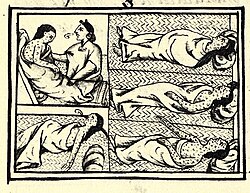
The arrival of Europeans triggered a catastrophic demographic collapse among Indigenous populations. It is estimated that the native population plummeted by 80% between 1492 and 1650—dropping from approximately 50 million to 8 million people. This was driven largely by Old World diseases, such as smallpox, to which Indigenous peoples had no natural immunity.
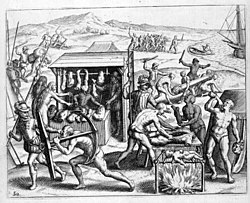
Beyond disease, scholars identify several genocidal methods used to subjugate native populations, including:
- Genocidal massacres and biological warfare using pathogens.
- Forced relocation into crowded, unhygienic settlements.
- Deliberate starvation caused by the destruction of native food resources and land occupation.
- Forced labor and the removal of traditional medicines.
Slavery and Social Stratification
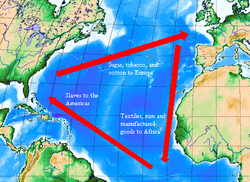
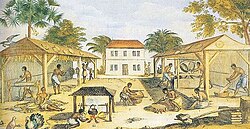
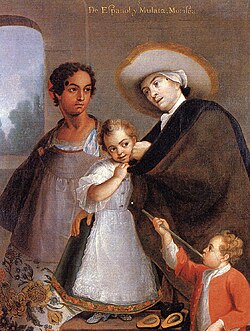
As colonial economies grew, particularly in tobacco and silver mining, European powers turned to forced labor. The Triangular Trade linked Europe, Africa, and the Americas, transporting enslaved Africans to work on plantations in the New World. This system created rigid racial and social hierarchies, often depicted in "Castas" paintings that categorized individuals based on their ancestral mix of Spanish, Indigenous, and African heritage.
Summary of Colonial Presence
| Power | Key Territories | Notable Settlements/Regions |
|---|---|---|
| Spain | Mexico, Central & South America, Florida | Viceroyalty of New Spain, Peru, Santo Domingo |
| Portugal | Eastern South America | Brazil |
| Great Britain | North America, Caribbean | Thirteen Colonies, Rupert's Land, British West Indies |
| France | Canada, Louisiana, Caribbean | New France, Saint-Domingue, French Guiana |
| Netherlands | North America, South America | New Netherland, Suriname, Dutch Brazil |
| Russia | Northwest North America | Russian America (Alaska), Fort Ross |
Key Facts
![The Kahal Zur Israel Synagogue in Mauritsstad (Recife) is the oldest synagogue in the Americas. An estimated number of 700 Jews lived in Dutch Brazil, about 4.7% of the total population.[48]](/images/9e/ba/9ebaa4fe5a808ce24bb68b28c72679669a3d6e8ecfb2155cf62684abe4c0ade0.jpg)
- Demographic Collapse: Indigenous populations decreased by roughly 80% to 90% due to disease, war, and slavery.
- Oldest Settlement: Santo Domingo (founded 1496) is the oldest continuously inhabited European settlement in the Americas.
- Treaty of Tordesillas: A 1494 agreement that split the New World between Spain and Portugal.
- French Empire: At its peak in 1710, it was the second-largest colonial empire globally.
- Economic Drivers: Colonization was fueled by the search for Asian trade routes and the extraction of resources like silver (e.g., Potosí).

Frequently Asked Questions
![American Discovery Viewed by Native Americans, a 1922 painting by Thomas Hart Benton, now housed in the Peabody Essex Museum in Salem, Massachusetts, United States[62]](/images/62/b0/62b0949c0964a34ce90f92f63c8c0e6e58bb454bd15df34f835b8215a994a62e.jpg)

Who were the first Europeans to reach the Americas?
The Norse were the first, settling in Greenland and establishing a short-term settlement near the northern tip of Newfoundland around 1000 AD.
Why did the Indigenous population decline so rapidly?
The primary cause was the introduction of Old World diseases, particularly smallpox, which devastated populations lacking immunity. This was exacerbated by forced labor, displacement, and deliberate violence.
What was the purpose of the Treaty of Tordesillas?
The treaty was designed to resolve territorial disputes between Spain and Portugal by dividing the world's non-Christian lands along a meridian, granting the east to Portugal and the west to Spain.
How did the British approach colonization differently than the Spanish?
The British arrived nearly a century later and used the Spanish experience as a model. They relied heavily on joint-stock companies to finance their ventures, such as the Virginia Company that founded Jamestown.
What was the Triangular Trade?
The Triangular Trade was a multilateral trading system where goods were exchanged between Europe, Africa, and the Americas, most notably involving the transport of enslaved Africans to the Americas to work on plantations.