Afonso de Albuquerque: The Architect of the Portuguese Empire in Asia
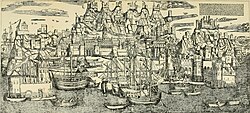
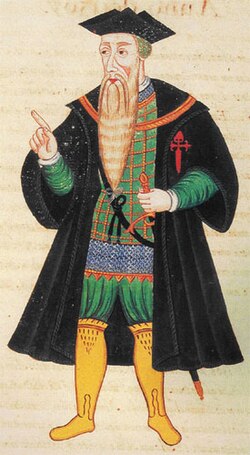
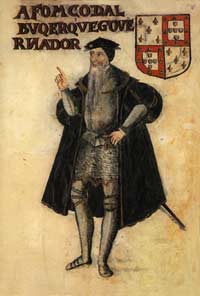
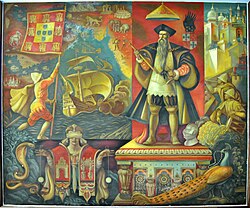
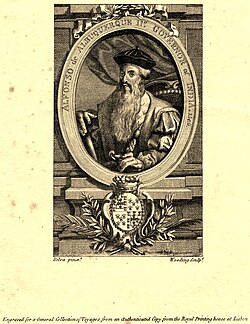
Afonso de Albuquerque (c. 1453 – 16 December 1515) was a towering figure of the Age of Discovery. A Portuguese general, admiral, and statesman, he served as the 2nd Viceroy of Portuguese India from 1509 to 1515. Through a combination of strategic brilliance and ruthless military execution, Albuquerque expanded Portuguese influence across the Indian Ocean, transforming a series of trading posts into a cohesive maritime empire.
His vision was not merely to trade, but to control the critical "choke points" of global commerce, ensuring that the Portuguese Crown dominated the flow of spices and luxury goods from the East to Europe.
Key Facts
- Role: 2nd Viceroy of Portuguese India (1509–1515).
- Major Conquests: Goa (1510), Malacca (1511), and Hormuz (1515).
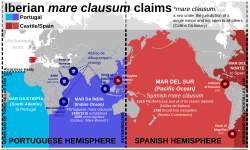
- Strategic Goal: Establishing a mare clausum (closed sea) policy to control Indian Ocean trade routes.
- Legacy: Founded the city of Goa as the center of Portuguese power in Asia.
- Death: Died in 1515 within sight of Goa; later interred in Lisbon.
Early Life and Military Ascent
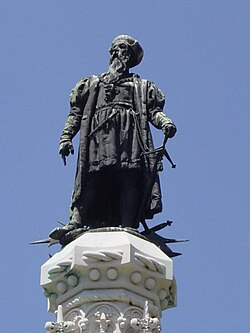
Born in Alhandra, Kingdom of Portugal, Albuquerque's career began in the crucible of North African warfare. In 1471, he participated in the conquest of Tangier and Arzila in Morocco. His early experience was diverse, ranging from the War of the Castilian Succession at the Battle of Toro in 1476 to assisting Ferdinand I of Naples in repelling an Ottoman invasion of Otranto in 1480.
His proximity to power was cemented when he became the master of the horse and chief equerry (estribeiro-mor) to King John II. This blend of courtly influence and battlefield experience prepared him for the immense challenges of the Indian Ocean.

The Strategic Conquests of the Indian Ocean
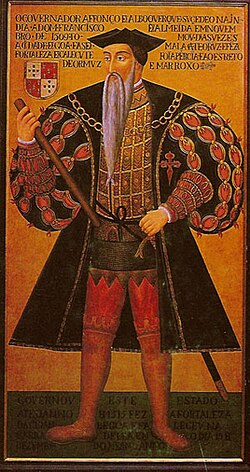
Upon becoming Governor of Portuguese India, Albuquerque implemented a strategy of seizing key ports to control the sea lanes. This approach focused on three primary geographic pillars: the Arabian Gulf, the western coast of India, and the gateway to the Far East.
The Capture of Goa (1510)
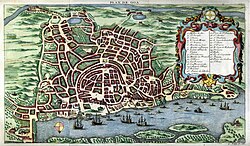
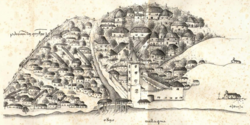
In November 1510, Albuquerque returned to Goa with a renovated fleet. In a fierce battle, he seized the city from Ismail Adil Shah and his Ottoman allies. While the conquest was bloody, Albuquerque sought to stabilize the region by gaining the support of the local Hindu population. He appointed Timoji, a local leader, as the chief Aguazil—an administrator and representative for the Hindu and Muslim people—to ensure smooth governance through an understanding of local customs.
The Fall of Malacca (1511)
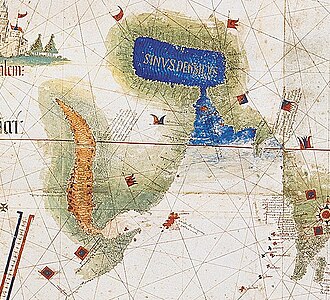
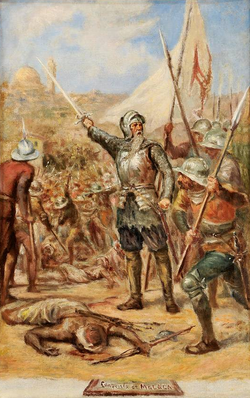
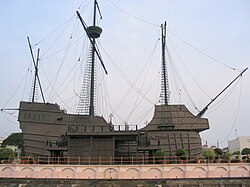
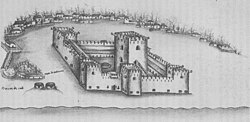
Recognizing Malacca as the primary gateway to the "Spice Islands," Albuquerque sailed there in April 1511 with approximately 900 Portuguese and 200 Hindu mercenaries. Despite opposing orders from some of his peers, he captured the city, effectively centralizing Portuguese government in the Indian Ocean. To defend the city, he constructed a fortress using materials from local mosques and cemeteries; the surviving gate is still known as A Famosa.
The Control of Hormuz (1515)
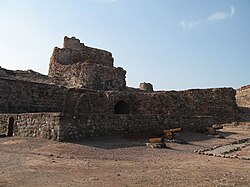
To secure the Persian Gulf, Albuquerque targeted Hormuz. In March 1515, he utilized a daring political maneuver, eliminating the powerful Persian vizier Reis Hamed to bring the terrified king of Hormuz under Portuguese vassalage. This ensured that the entrance to the Persian Gulf remained under Portuguese control for over a century.
Expansion and Diplomacy
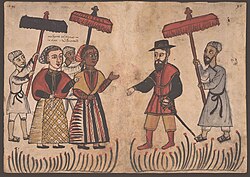
Albuquerque's ambitions extended beyond military conquest. He sought to establish alliances with distant Christian powers to encircle Muslim influence. In 1512, he received an envoy from the regent queen Eleni of Ethiopia, whom he believed to be a representative of the legendary Prester John. This diplomatic connection was viewed with great joy by King Manuel I and Pope Leo X.
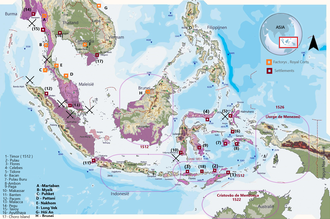
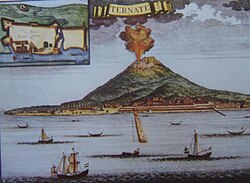
Furthermore, Albuquerque pushed the boundaries of Portuguese exploration. In 1512, he dispatched António de Abreu and Francisco Serrão to locate the secret "Spice Islands" (Maluku Islands). This expedition successfully reached the Banda Islands, securing direct access to nutmeg and cloves.
Summary of Major Campaigns
| Location | Year | Outcome | Strategic Significance |
|---|---|---|---|
| Goa | 1510 | Conquest | Established a permanent Portuguese capital in India. |
| Malacca | 1511 | Conquest | Controlled the trade route to China and the Spice Islands. |
| Maluku Islands | 1512 | Exploration | Direct access to cloves and nutmeg. |
| Hormuz | 1515 | Vassalage | Controlled the entrance to the Persian Gulf. |
Death and Lasting Legacy
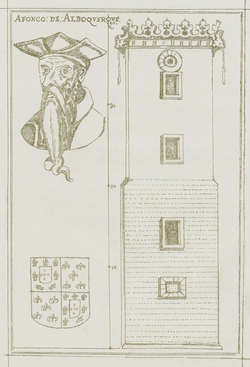
Afonso de Albuquerque died on December 16, 1515, just as he reached the shores of Goa. His death was met with widespread mourning by both the Portuguese and the local population. He was initially buried in the Church of Nossa Senhora da Serra, which he had built in 1513, before his remains were moved to Lisbon in 1566.
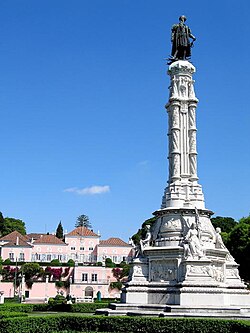
His legacy lived on through the writings of his son, Brás de Albuquerque, and in the epic poetry of Luís Vaz de Camões in The Lusiads. He is remembered as the man who forged the first global maritime empire, though his methods were often characterized by extreme harshness.
Frequently Asked Questions
What was Albuquerque's primary strategy for the Portuguese Empire?
His strategy was to seize key strategic "choke points"—such as Hormuz, Goa, and Malacca—to control the Indian Ocean's trade routes and establish a mare clausum, effectively shutting out competitors from the spice trade.
Why was the conquest of Goa significant?
Goa provided the Portuguese with a permanent, fortified base of operations in India, serving as the administrative capital of the Portuguese State of India for centuries.
Who was the "Prester John" envoy?
The envoy was a representative from Ethiopia sent by Queen Eleni. Albuquerque received him in Goa in 1512, hoping to form a Christian coalition against the growing influence of Muslim powers in the region.
What is "A Famosa"?
A Famosa is the surviving gate of the fortress Albuquerque built in Malacca in 1511 to defend the city against Malay counterattacks.
How did Albuquerque handle the local population in Goa?
While the initial conquest was violent, he sought stability by appointing a local Hindu leader, Timoji, as the chief Aguazil to act as an intermediary and administrator for the local people.