Collaboration in Wartime: Historical Examples and Political Consequences
Collaboration occurs when individuals or organizations cooperate with an enemy occupying force or a foreign power, often at the expense of their own nation or community. Throughout history, this phenomenon has manifested in various forms, ranging from ideological alignment and political ambition to pragmatic survival and coerced cooperation.
While often viewed through the lens of betrayal, collaboration is a complex social and political mechanism. It can involve high-ranking government officials establishing puppet states or ordinary citizens attempting to maintain daily life under occupation. The consequences for those labeled as collaborators vary wildly, from public humiliation and execution to legal immunity depending on the post-war political climate.
Key Facts
- Quisling: A term derived from Vidkun Quisling, the Norwegian minister-president, now used as a synonym for a high-profile government collaborator.
- France: An estimated 10,500 collaborators were executed following the liberation of France.
- Puppet States: The Independent State of Croatia served as a semi-independent entity under Nazi German influence.
- Legal Consequences: Modern Ukraine has enacted laws where collaboration with Russian forces can lead to 15 years in prison.
- Motivations: Collaboration is driven by a mix of fascism, anti-communism, greed, pragmatic survival, and personal ambition.
Collaboration During World War II
During World War II, collaboration was widespread across German-occupied Europe and Japanese-occupied China. The degree of cooperation varied from government officials and celebrities to ordinary citizens. Notable figures included the Dutch actor Johannes Heesters and the English-language radio personality William Joyce, better known as Lord Haw-Haw.
The French Experience
In France, a critical distinction was made between the collaborationniste (collaborationist) and the collaborateur (collaborator). Collaborationists were typically those enrolled in pseudo-Nazi parties who were driven by fascism or anti-communism. In contrast, collaborators acted for pragmatic reasons, such as civil servants maintaining government functions, police officers keeping public order, or individuals pursuing financial gain.
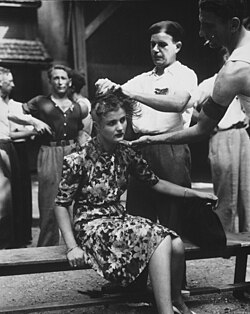
This category also included "horizontal collaborators"—women who had relationships with German soldiers. Following the Allied liberation, these women often faced public humiliation, including having their heads shaved.
The Vichy government, while collaborating with Germany, paradoxically arrested around 2,000 people for passing information to the Germans. This was a strategic move to centralize collaboration and maintain a state monopoly on Franco-German relations to preserve some semblance of sovereignty.
Resistance also existed within the civil service. Jean Moulin, the first President of the National Council of the Resistance, refused to sign a German declaration condemning French Senegalese troops for a massacre that Moulin knew was actually carried out by German forces. He was subsequently imprisoned and took drastic measures to avoid revealing secrets under torture.
Collaboration in Northern and Eastern Europe
In the Low Countries, collaboration was organized through movements like the VNV and DeVlag in Flanders, and the Rexist movement in Wallonia (Belgium). In Norway, Vidkun Quisling, a former minister of defence, became minister-president in 1942. His attempts to "Nazify" Norway were met with fierce resistance from the general population.
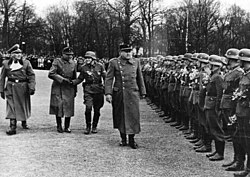
In Poland, collaboration was less institutionalized and is generally viewed as marginal. However, the Soviet Union established the Lublin government in 1944 to operate in opposition to the Polish government-in-exile.
Balkan and Mediterranean Collaboration
In Greece, three successive prime ministers—Georgios Tsolakoglou, Konstantinos Logothetopoulos, and Ioannis Rallis—cooperated with Axis authorities. Rallis established the Security Battalions, anti-communist military corps that helped Germans fight the Resistance and deport Greek Jews. Unlike in other nations, many members of these corps avoided punishment due to the subsequent Greek Civil War and the "White Terror."
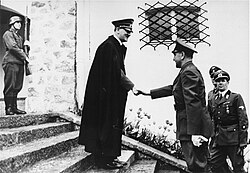
In Yugoslavia, the Independent State of Croatia functioned as a puppet state. Other collaborators included Leon Rupnik in southern Slovenia and the Serbian Government of National Salvation. Additionally, the royalist Chetniks engaged in tactical collaboration with the Axis after 1941.
Collaboration in Asia and Other Regions
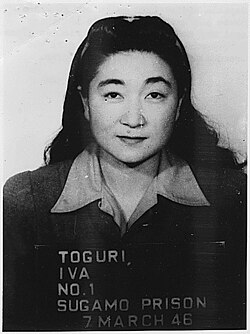
In Vietnam, some expatriates in France were inspired by Nazi ideas of an authoritarian corporatist state and an organic ethnocultural community, fearing that colonialism had destroyed the social order necessary to oppose bolshevization. Meanwhile, the Amicale annamite, a group of students and professionals in Paris, focused on opposing French colonial rule and improving conditions for Vietnamese POWs.
Collaboration also occurred within Germany itself. Franz Oppenhoff, a non-Nazi, accepted the mayoralty of Aachen under Allied military command in 1944, only to be assassinated by order of Heinrich Himmler in 1945.
Summary of Collaboration Examples
| Region/Conflict | Key Collaborators/Entities | Primary Motivation/Nature | Outcome/Consequence |
|---|---|---|---|
| Norway (WWII) | Vidkun Quisling | Nazification of Norway | Name became synonymous with traitor |
| France (WWII) | Vichy Government | Pragmatism and Sovereignty | ~10,500 executions post-war |
| Croatia (WWII) | Independent State of Croatia | Puppet State / Fascism | Semi-independence under Axis |
| Greece (WWII) | Security Battalions | Anti-communism | Avoided punishment due to Civil War |
| Ukraine (Modern) | Pro-Russian spotters | Political/Regional alignment | Up to 15 years imprisonment |
Collaboration in Modern Conflicts
The pattern of collaboration continues in contemporary warfare. During the Soviet-Afghan War and later conflicts involving the Coalition of the Willing in Iraq and Afghanistan, local individuals and institutions collaborated with foreign forces.
In the Israeli-Palestinian conflict, collaboration with Israel is viewed as a severe social stain. In some cases, this has led to extrajudicial killings, such as the 2009 case of 15-year-old Raed Sualha. More recently, Hamas has labeled groups like Yasser Abu Shabab's Popular Forces as traitors for collaborating with Israel to control aid routes in Rafah.
Similarly, during the Syrian, Iraqi, and Libyan Civil Wars, various actors provided assistance to the Islamic State (ISIL/ISIS). In the current Russian invasion of Ukraine, the government has created a registry of collaborators, specifically targeting those acting as spotters for Russian shelling.
Frequently Asked Questions
What is the difference between a collaborator and a collaborationist?
Using the French example, a collaborationist is someone who ideologically believes in the occupying power's system (such as fascism), while a collaborator is someone who cooperates for pragmatic reasons, such as maintaining public order, financial gain, or survival.
Who was Vidkun Quisling?
Vidkun Quisling was a Norwegian Army major and former minister of defence who became the minister-president of Norway in 1942 under Nazi influence. His betrayal was so significant that his name became a common noun for a traitor who collaborates with an enemy.
How were collaborators punished in France after World War II?
Punishments ranged from public humiliation (such as shaving the heads of women) to imprisonment and execution. It is estimated that 10,500 collaborators were executed, some through legal trials and others extrajudicially.
Why were some Greek collaborators not punished after the war?
Unlike in other European countries, many members of the Greek Security Battalions avoided trial due to the political instability following liberation, specifically the Dekemvriana events, the White Terror, and the subsequent Greek Civil War.
What are the current penalties for collaboration in Ukraine?
Under laws enacted by President Volodymyr Zelenskyy, individuals found collaborating with Russian forces, supporting Russian aggression, or publicly denying it can face up to 15 years in prison.