Cell Biology: The Fundamental Unit of Life
Every living organism, from the smallest bacterium to the largest whale, is composed of cells. The cell is the basic structural, functional, and biological unit of all known living organisms. The study of these microscopic powerhouses allows scientists to understand how life grows, reproduces, and maintains homeostasis.
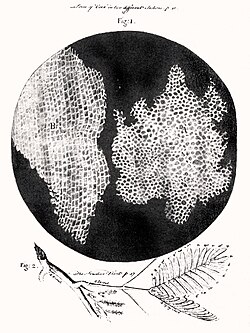
The history of cell research dates back to 1665, when Robert Hooke first observed cells in cork, giving the unit its name.
Key Facts
- Two Main Types: Life is divided into prokaryotes (simple, no nucleus) and eukaryotes (complex, with a nucleus).
- Genetic Material: DNA serves as the blueprint for all cellular functions.
- Energy Production: Mitochondria provide energy for animal cells, while chloroplasts enable photosynthesis in plants.
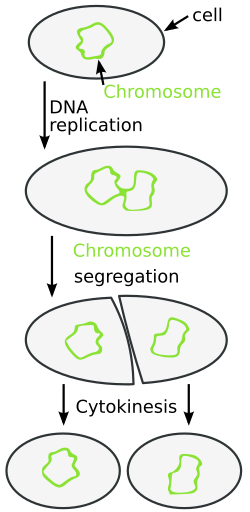
- Reproduction: Prokaryotes divide via binary fission, whereas eukaryotes use mitosis or meiosis.
- Symbiogenesis: The theory that eukaryotes evolved from a merger of an archaean and an aerobic bacterium.
Types of Cells
Prokaryotes
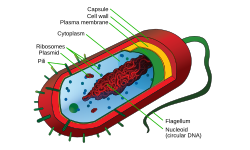
Prokaryotes are single-celled organisms that lack a membrane-bound nucleus. This group includes Bacteria and Archaea. Their structure is generally simpler than that of eukaryotes, though they possess a cell membrane and ribosomes for protein synthesis.
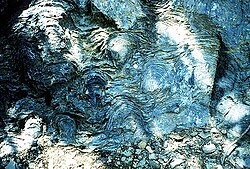
Some prokaryotes, such as cyanobacteria (blue-green algae), are responsible for some of the oldest fossils on Earth, known as stromatolites.
Eukaryotes
Eukaryotes are more complex cells characterized by a defined nucleus and specialized membrane-bound organelles. This category encompasses animals, plants, fungi, and protists.
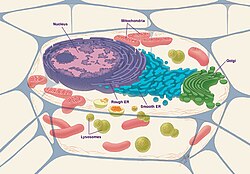
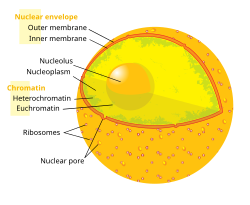
The defining feature of the eukaryotic cell is the nucleus, which houses the cell's DNA complexed as chromatin and contains the nucleolus.
Cellular Structure and Organelles
While all cells share certain basic components, their internal architecture varies based on their function.
The Universal Components
- Cell Membrane: A protective outer layer that regulates what enters and exits the cell.
- Cytoplasm: The jelly-like substance filling the cell.
- Ribosomes: The molecular machines responsible for protein synthesis.
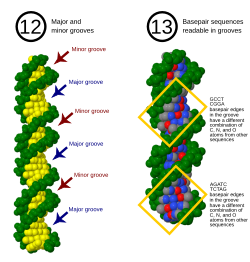
- DNA: The double-helix molecule that carries genetic information.
Specialized Organelles
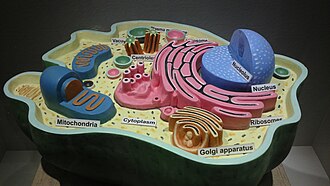
Eukaryotic cells contain organelles—specialized structures that perform specific tasks:
- Mitochondria: The powerhouses of the cell that generate energy.
- Endoplasmic Reticulum (ER): A network involved in protein and lipid synthesis.
- Golgi Apparatus: The center for sorting and packaging proteins.
- Lysosomes and Peroxisomes: Organelles dedicated to waste disposal and detoxification.
- Vacuoles: Storage sacs, which are particularly large in plant cells.
- Cytoskeleton: A structural framework that provides shape and facilitates movement.
Comparing Animal and Plant Cells
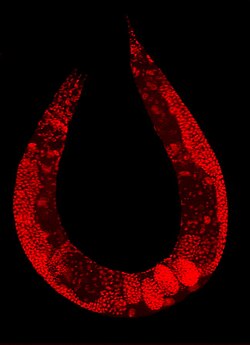
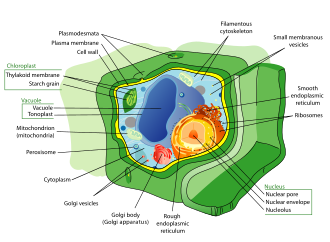
Animal and plant cells are both eukaryotic but have distinct differences to suit their lifestyles. Animal cells often contain centrosomes and lack a rigid cell wall. In contrast, plant cells possess a sturdy cell wall and chloroplasts for capturing sunlight.
| Feature | Prokaryotes | Animal Cells | Plant Cells |
|---|---|---|---|
| Nucleus | Absent | Present | Present |
| Cell Wall | Present | Absent | Present |
| Mitochondria | Absent | Present | Present |
| Chloroplasts | Absent | Absent | Present |
| Division Method | Binary Fission | Mitosis/Meiosis | Mitosis/Meiosis |
Cellular Processes and Life Cycle
Growth and Division
Cells must replicate to grow or repair tissue. Prokaryotes use binary fission, a simple splitting process. Eukaryotes use more complex methods: mitosis for somatic (body) cell growth and meiosis for the production of gametes.
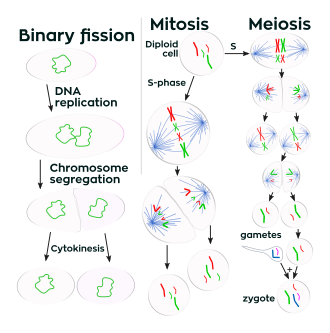
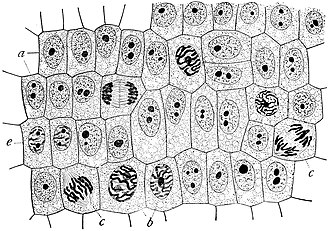
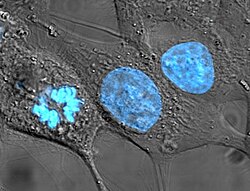
During the cell cycle, DNA condenses into visible chromosomes during mitosis, whereas it remains diffuse during interphase.
Differentiation and Death
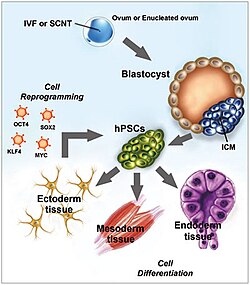
In multicellular organisms, cells undergo differentiation—the process by which a stem cell becomes a specialized cell type (e.g., muscle or nerve cell) through post-translational modifications.
Cells eventually reach the end of their life cycle through various forms of cell death, including apoptosis (programmed cell death), necrosis, and autophagy.
Origins and Evolution
The theory of symbiogenesis suggests that eukaryotic cells evolved through a series of mergers. Approximately 2.2 billion years ago, a merger between an archaean and an aerobic bacterium created the first eukaryotes with mitochondria. Later, about 1.6 billion years ago, a second merger added chloroplasts, leading to the evolution of green plants.
![In the theory of symbiogenesis, a merger of an archaean and an aerobic bacterium created the eukaryotes, with aerobic mitochondria, some 2.2 billion years ago. A second merger, 1.6 billion years ago, added chloroplasts, creating the green plants.[150]](/images/e9/cb/e9cb97de8e68d89d1e7e206794ffe6c0406cbffe0cc8b1aa6226645ea032242a.webp)
Frequently Asked Questions
What is the main difference between prokaryotes and eukaryotes?
The primary difference is the presence of a nucleus. Eukaryotes have a membrane-bound nucleus that houses their DNA, while prokaryotes have their genetic material floating freely in the cytoplasm.
How do plant cells differ from animal cells?
Plant cells have a rigid cell wall and chloroplasts for photosynthesis, both of which are absent in animal cells. Plant cells also typically have larger central vacuoles.
What is binary fission?
Binary fission is a form of asexual reproduction used by prokaryotes where a single cell duplicates its genetic material and divides into two identical daughter cells.
What is symbiogenesis?
Symbiogenesis is the evolutionary theory that complex eukaryotic cells originated from the symbiotic merger of simpler prokaryotic organisms, specifically leading to the creation of mitochondria and chloroplasts.
What is the role of the cytoskeleton?
The cytoskeleton is a network of protein fibers that helps the cell maintain its shape, organizes the organelles, and enables the cell to move or transport materials internally.