CEDAW: The International Bill of Rights for Women
The Convention on the Elimination of All Forms of Discrimination Against Women (CEDAW) is a landmark international treaty adopted by the United Nations General Assembly in 1979. Often described as an international bill of rights for women, CEDAW provides a comprehensive framework for states to eliminate discrimination and ensure gender equality in all spheres of public and private life.
Adopted on December 18, 1979, in New York City, the treaty officially entered into force on September 3, 1981, after reaching the required 20 ratifications. Today, it serves as the primary global instrument for monitoring and promoting the human rights of women and girls.
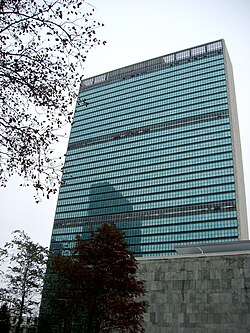
Key Facts
- Adopted: December 18, 1979, by the UN General Assembly.
- Effective Date: September 3, 1981.
- Global Reach: Ratified by 189 states.
- Depositary: Secretary-General of the United Nations.
- Official Languages: Arabic, Chinese, English, French, Russian, and Spanish.
- Core Purpose: To eliminate all forms of discrimination against women and girls.
Core Provisions and Global Implementation
At its heart, CEDAW defines discrimination against women and mandates that states parties take all appropriate measures to eliminate it. The treaty covers a wide range of areas, including political participation, education, employment, and health.
Synergy with UN Security Council Resolutions
CEDAW works in tandem with UN Security Council Resolutions (UNSCR) 1325 and 1820. Together, these instruments share a unified agenda to advance women's human rights, specifically focusing on:
- Increasing women's participation in decision-making processes at all levels.
- Rejecting violence against women, recognizing that such violence maintains subordinate status and hinders advancement.
- Ensuring equality under the law and protecting women and girls through the rule of law.
- Requiring security forces and systems to protect women from gender-based violence.
- Acknowledging that systemic discrimination creates distinct burdens for women and girls.
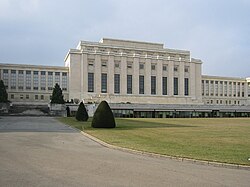
Membership and the Role of Reservations
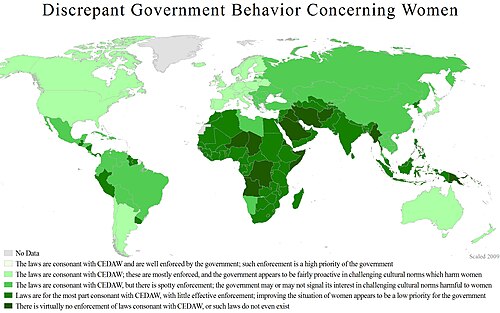
While 189 states are parties to the convention, the level of commitment varies. Some nations have signed the treaty but have not yet ratified it, such as the United States and Palau. A few states, including Iran, Somalia, Sudan, Tonga, and the Holy See, are not signatories.
A significant aspect of CEDAW's implementation is the use of reservations—formal statements made by a state to exclude or modify the legal effect of certain treaty provisions. As of May 2015, 62 states had entered reservations.
Most Reserved Articles
- Article 29: The most reserved article (39 reservations), concerning the settlement of disputes regarding the treaty's interpretation. These are generally uncontroversial as the convention expressly allows them.
- Article 16: Concerns equality in marriage and family life, with 23 reservations.
- Article 2: Concerns general non-discrimination. Despite 17 reservations, the CEDAW Committee has stated in General Recommendation No. 28 that reservations to this article are impermissible as they contradict the treaty's core purpose.
The Committee on the Elimination of Discrimination Against Women
The treaty is monitored by the Committee on the Elimination of Discrimination Against Women, a body of experts that reviews reports from state parties and issues guidance to help countries implement the treaty's goals.
General Recommendations
The Committee issues General Recommendations to clarify the scope of the treaty. Notable examples include:
- Recommendation No. 12 (1989): Addressing violence against women.
- Recommendation No. 14 (1990): Addressing female circumcision.
- Recommendation No. 24 (1999): Focusing on women and health.
- Recommendation No. 28 (2010): Clarifying core obligations under Article 2.
Summary of Treaty Details
| Feature | Detail |
|---|---|
| Total Parties | 189 |
| Signatories | 99 |
| Effective Date | September 3, 1981 |
| Most Reserved Article | Article 29 (Dispute Resolution) |
| Key Monitoring Body | Committee on the Elimination of Discrimination Against Women |
Frequently Asked Questions
What is CEDAW?
CEDAW stands for the Convention on the Elimination of All Forms of Discrimination Against Women. It is an international treaty adopted by the UN in 1979 that acts as a comprehensive bill of rights for women globally.
What is a reservation in the context of CEDAW?
A reservation is a formal declaration by a state party that it does not intend to be bound by a specific article or provision of the treaty, often due to constitutional or cultural reasons.
Which countries have not ratified CEDAW?
While 189 states are parties, the United States and Palau have signed but not ratified it. The Holy See, Iran, Somalia, Sudan, and Tonga are not signatories.
How does CEDAW address violence against women?
CEDAW addresses violence through its core provisions and specific guidance from the Committee, such as General Recommendation No. 12, and by aligning with UN Security Council Resolutions 1325 and 1820 to demand protection from gender-based violence.
What is the role of the CEDAW Committee?
The Committee consists of experts who monitor the implementation of the treaty by reviewing state reports and issuing General Recommendations to interpret and apply the convention's articles.