Cape Colony: The History of the British Settlement at the Cape of Good Hope
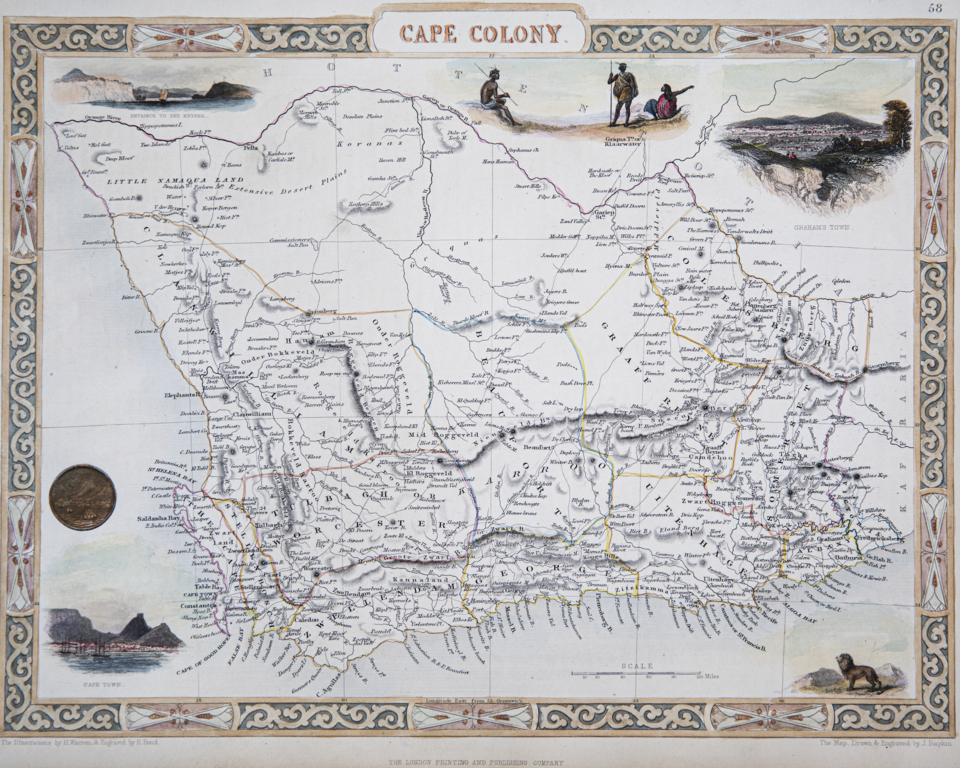
The Cape Colony, also known as the Cape of Good Hope, was a pivotal British colony located in present-day South Africa. Spanning a complex history of shifting allegiances, it existed under British rule from 1795 to 1802, and again from 1806 to 1910. Its strategic location made it a vital waypoint for trade routes to the Far East, eventually evolving from a military outpost into a self-governing colony before merging to form the Union of South Africa.
Before the British arrival, the region was a corporate colony established in 1652 by the Dutch East India Company (VOC). This early period laid the foundation for the region's demographics, as VOC traders imported thousands of enslaved people from the Dutch East Indies and other African regions to support the settlement.
Key Facts
- Timeline: British rule occurred in two phases (1795–1802 and 1806–1910).
- Capital: Cape Town served as the administrative center.
- Governance: Transitioned from a Crown colony to a self-governing colony in 1872.
- Demographics (1904): The population was 59.12% Black, 24.05% White, 16.39% Coloured, and 0.42% Asian.
- Legacy: Merged into the Union of South Africa in 1910, later becoming the Cape Province.
The Transition from Dutch to British Rule
The shift in power began in 1795 when France occupied the Dutch Republic. To prevent the French from accessing India, Great Britain occupied the Cape, defeating the VOC militia at the Battle of Muizenberg. While the territory was briefly returned to the Batavian Republic (a Dutch revolutionary state) in 1803 under the Treaty of Amiens, the British re-occupied it in 1806 following the Battle of Blaauwberg.
By 1814, the Dutch government formally ceded sovereignty to Britain via the Convention of London. At the time of occupation, the white population was small—roughly 25,000 people—concentrated mostly in Cape Town and the fertile farming districts of the Boland.
Colonization and Social Upheaval
British administration brought significant social changes. The arrival of the 1820 Settlers in Port Elizabeth expanded the eastern border, and the British government abolished slavery in 1834. However, these changes created friction. The Boers (descendants of Dutch settlers) resented the imposition of English language and culture, as well as the new social reforms.
This resentment triggered the Great Trek, a mass migration of Boers moving inland to establish independent Boer Republics. Despite these tensions, the British continued to expand the colony's borders, eventually annexing Griqualand West and Griqualand East in 1877.
The Path to Self-Governance
Political evolution accelerated in the mid-19th century. In 1853, the Cape became a British Crown colony with a representative government. A landmark development in 1854 was the establishment of the Cape Qualified Franchise, a multi-racial voting system where eligibility was based on property ownership rather than race.
In 1872, the colony achieved responsible government, meaning an elected Prime Minister and cabinet held full responsibility for internal affairs. The first Prime Minister, John Charles Molteno, led a period of economic growth and increased political inclusiveness.
Territorial Expansion and Integration
Toward the end of the 19th century, the colony continued to grow. The Warren Expedition of 1885 led to the annexation of the republics of Stellaland and Goshen. This resulted in the creation of British Bechuanaland, which was later incorporated into the Cape Colony in 1895.
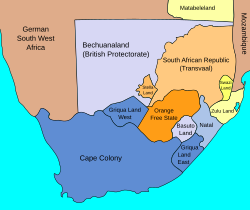
The era of the Cape Colony ended on May 31, 1910, when it united with three other colonies to form the Union of South Africa. The territory was renamed the Province of the Cape of Good Hope, eventually being partitioned into the Eastern Cape, Northern Cape, and Western Cape provinces in 1994.
Colonial Summary
| Category | Details |
|---|---|
| Official Languages | English, Dutch |
| Currency | Pound sterling |
| Legislature | Parliament (Legislative Council & House of Assembly) |
| Area (1822) | 331,907 km² |
| Population (1904) | 2,409,804 |
Frequently Asked Questions
Why did the British want to control the Cape Colony?
The British sought control of the Cape of Good Hope primarily to secure the sea routes to the Far East and India, ensuring that rivals—specifically Napoleonic France—could not use the territory as a strategic base.
What was the Great Trek?
The Great Trek was a mass migration of Boer settlers moving from the Cape Colony into the interior of South Africa. This was driven by their opposition to British cultural imposition and the abolition of slavery in 1834.
What was the Cape Qualified Franchise?
The Cape Qualified Franchise was a voting system introduced in 1854 that allowed men to vote regardless of their race, provided they met a universal minimum level of property ownership.
When did the Cape Colony cease to exist?
The Cape Colony ended on May 31, 1910, when it merged with three other colonies to form the Union of South Africa, at which point it became the Cape Province.
Who was the first Prime Minister of the Cape Colony?
John Charles Molteno became the first Prime Minister in 1872 after the colony achieved responsible government.